
Write something

Apr 29 •
Media coverage
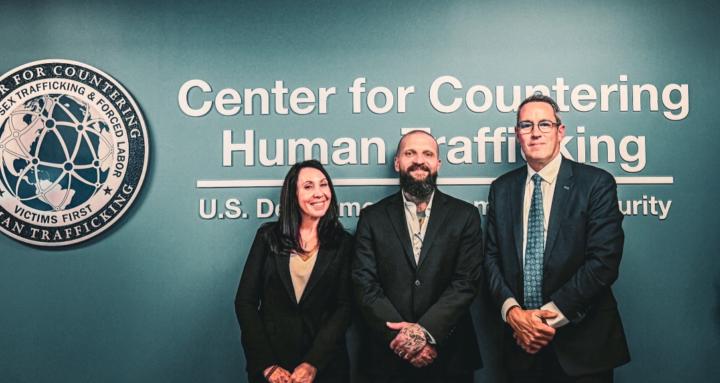
Holy frijoles, my social media feed has blown up with articles of Ben's recent trip to (infiltration of?) of the infamous island. Glad you're home safe, Ben. I'm intensely curious to know if there was something specific you were looking for because somehow I doubt it was simply a publicity stunt (though even that would be brilliant), but I'm content in living in curiosity, I know if there's anything to say it'll be said when it's time. I got butterflies in my stomach when I first saw that Ben and Ryan had joined forces in this collaboration. I don't know if everyone out there really comprehends how very real and forward moving this all is. These efforts being powered by men and women of intensely strong conviction and action working together... Gives me goosebumps. Be careful and stay safe. If anyone knows what y'all are truly up against, it's you guys. You all have my genuine admiration and support in any way I'm able to give it.
Apr 6 •
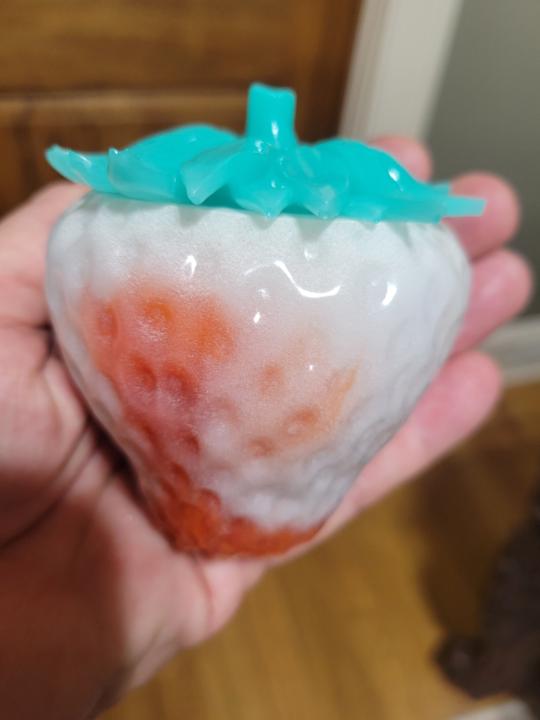
Making Epoxy Items for Charities & Nonprofits
This is what I do in my spare time at night. I make hundreds of epoxy items for volunteer hand outs and silent auctions for various nonprofits and charities. I will make over 500 items for the following charities this year: *Lake Lanier Association *Keep Hall Beautiful *Chattahoochee River Keepers *Paddle 4 Tomorrow *Banks County Chamber of Commerce *Senior Citizens Center
Mar 29 •
A little update…
The past few weeks have been heavy. Not the kind of heavy people see… the kind you carry quietly. The kind that sits in your chest, follows you into your thoughts, and makes even the simplest things feel like a fight. Between what’s happening in Lebanon, the memories that come with it, the losses, the images that don’t leave… me at war in Iraq, various critical incidents I’ve dealt with at work….it caught up to me. More than I expected. And I’ll be honest… there were moments I didn’t want to get up. Moments where my mind was louder than anything around me. But here’s the part people don’t talk about. There’s no crowd when you’re fighting that battle. No recognition. No one sees the decision to get up anyway. No one sees you take that breath and push yourself back into the day when everything in you is telling you to shut it down. That’s the real fight. And the past few days, that’s exactly what it’s been for me. Quiet. Internal. Grinding. Running when I didn’t feel like it. Training when my mind was elsewhere. Forcing myself to move, to reset, to take back some level of control. Because I know what happens if you don’t. You don’t need motivation for that fight. You need discipline. You need to make the decision that you’re not staying in that place… even when it would be easier to. Some days it’s not about being at your best. It’s about not giving in. So if you’re in that place right now… understand this: Getting up counts. Taking a step forward counts. Choosing not to stay in the dark… that counts. I’m working through it. Still am. And if you are too… keep going.
Feb 11 •
“I see humans but no humanity.”
Because if we’re honest, this is what can happen in our profession. It happened to me when I was at war. Civilians became like cattle to me. I knew I was going down a dark path. In law enforcement, in the military, in emergency services, we see people at their worst. Over and over again. We see overdoses. We see sudden deaths. We see domestics that spiral into chaos. We see violence, betrayal, addiction, cruelty. If you do this job long enough, something subtle begins to happen. You stop seeing people. You start seeing patterns. You stop seeing fathers. You see “another DV suspect.” You stop seeing a struggling kid. You see “another repeat offender.” You stop seeing pain. You see “another call holding.” Desensitization isn’t a character flaw. It’s a survival mechanism. But if we’re not disciplined, that mechanism becomes permanent. And that’s where the danger lives. Because the moment we lose our humanity, we lose our judgment. We lose our presence. We lose the very thing that separates professional force from reckless force. Control without compassion becomes cold. Authority without empathy becomes brittle. Power without humanity becomes dangerous. I’ve felt it creep in before. After long shifts. After stacked calls. After nights where the heart rate spikes and the mind narrows. The job can harden you. But hardness alone is not strength. Strength is remaining steady under pressure without becoming calloused. Strength is regulating yourself so you don’t let cynicism write your character. Strength is remembering that the person in front of you — even at their worst — is still human. We are allowed to be disciplined. We are required to be decisive. We must be capable of force when necessary. But we cannot afford to lose our humanity in the process. Because the public doesn’t just need strong first responders. They need strong, grounded, self-aware ones. The badge. The uniform. The shield. They don’t give you humanity. You bring that with you.
Feb 2 •
Time Management
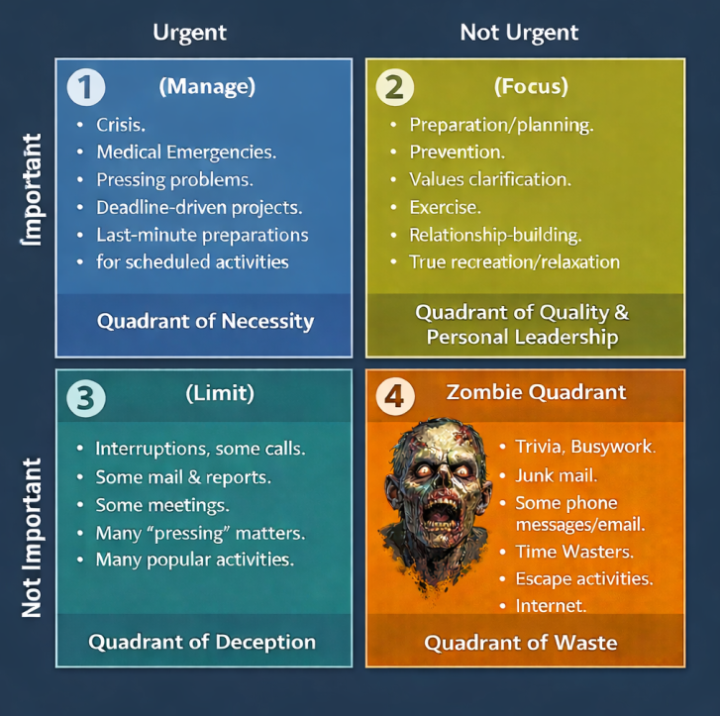
Time is one of our most valuable assets. You can't beg, borrow or buy more, so use what you have wisely. Below is an Eisenhower Matrix where tasks are broken out into a 4 quadrant matrix of Urgency and Importance. Manage emergencies (Q1), limit distractions (Q3), avoid the Zombies (Q4) and spend as much time as possible planning and building relationships (Q2). If you intentionally spend time in Q2, you will likely feel better, be more productive and find you have built deeper and stronger connections.
1-30 of 45
skool.com/owenarmy
We train others to combat human and narcotics trafficking, how to turn dope houses into hope houses, and how to transform pain into purpose.
Leaderboard (30-day)
1

+2
Powered by