Activity
Mon
Wed
Fri
Sun
Nov
Dec
Jan
Feb
Mar
Apr
May
Jun
Jul
Aug
Sep
Oct
What is this?
Less
More
4 contributions to Castore: Built to Adapt

9d •
HRT
I struggle w hrt. I feel amazing on it. I microdose it. I’m doing a progesterone world or cream either one and a tropical estradiol after an extremely small dose at that dose. I feel amazing except my body. Mainly my stomach is super bloated. You don’t know how to fix this.

0 likes • 9d
I'd suggest following Taylor Reid Wiliams on Youtube who addresses HRT and peptides for women. https://www.youtube.com/@taylorwilliamscoaching
9d •
Dr Reviews Grey Market Peptide Scams
Worth a view. Yes your Vendor source matters. There's been a few individuals in the forum recently claiming they are "experts" and have so-called "extensive knowledge" who have criticized posts like this about China grey market testing reviews. When challenged, they can't back up their position with any verifiable evidence. Any vendor whether their product is made in China or US should be able to provide COAs that can be confirmed with a reputable 3rd party testing laboratory. Here’s a link to industry group American Peptide Association on how to read a COA. https://americanpeptide.co/blogs/blog/how-to-read-a-peptide-certificate-of-analysis Be aware of fake COAs that can't be cross-checked with 3rd party labs. Not manufacturer test, but independent test. Recent Clinical Paper (link is for pre-print) "Evaluation of Research Grade Peptides Marketed Directly to Consumers Reveals Extensive Variability in Purity and Measured Abundance." https://www.preprints.org/manuscript/202604.1748 "A total of 6441 peptide samples across fourteen compounds, including BPC-157, cagrilintide, CJC-1295, GHK-Cu, ipamorelin, PT-141, retatrutide, semaglutide, sermorelin, survodutide, TB-500, tesamorelin, thymosin beta-4, and tirzepatide, were analyzed." "The main finding of the study, that 41.6% to 71.1% of gray market peptides failed fundamental safety standards..." "..measurable endotoxin contamination was present in 15% of samples."
15d •
SS-31 (elamipretide) + PQQ + CoQ10 + NR/NMN Protocol
@Anthony Castore Recently saw something on SS-31 protocol and adding oral PQQ, CoQ10, plus oral NAD+ precursors so thought would share and why adding these oral supplements in addition might be beneficial. I'd like to hear thoughts of others. Combining SS-31, CoQ10, and PQQ creates a powerful triple-action synergy for a full-spectrum mitochondrial reset. When you stack them, they address three distinct pillars of cellular health simultaneously: structural protection, energetic fuel, and system expansion. The multi-layered synergy works through a step-by-step process inside the cells: Before your cells can efficiently build or fuel energy, they need stable scaffolding. - SS-31 targets the inner mitochondrial membrane and binds to cardiolipin. - By stabilizing this membrane, SS-31 physically repairs the "factory floor". - This structural optimization ensures that the electron transport chain is perfectly aligned, creating an optimal environment for CoQ10 and PQQ to do their jobs. With the factory stabilized by SS-31, CoQ10 can work at maximum efficiency. - CoQ10 shuttles the electrons through the newly stabilized membrane to generate ATP. - Crucially, PQQ directly regenerates used CoQ10 back into its active antioxidant form (ubiquinol). This creates a direct chemical loop: PQQ recycles CoQ10, keeping the electron delivery system running continuously without burning out. While SS-31 repairs existing structures and CoQ10 fuels them, PQQ ensures you don't run out of capacity. - PQQ triggers the master switch (PGC-1α) to replicate mitochondrial DNA and generate brand-new organelles. - As PQQ creates these new mitochondria, SS-31 is available to properly structure their inner membranes, and CoQ10 is waiting to fuel their electron transport chains right from the start. Instead of just increasing energy output (CoQ10) or just building new cells (PQQ), adding SS-31 ensures that your existing and newly created mitochondria are physically healthy, structurally sound, and protected against oxidative stress. Longevity researchers and advanced biohackers often refer to this trio as a comprehensive "mitochondrial longevity stack.
0 likes • 12d
@Martin Sherman Haven't tried MA-5 yet, but researching it. Thanks for info!
0 likes • 12d
@Martin Sherman Looked at some of Doris Loh's info and how it fits into some of the clinical trials at higher dose Melatonin, and it seems like her work relies heavily on laboratory physics models rather than human patient outcomes. Clinical trials typically evaluate melatonin for sleep and circadian rhythms, but recent studies also highlight its metabolic impacts, while the independent theory of Doris Loh views melatonin as a biophysical regulator of cellular clumping. What Clinical Trials Show About 5mg Melatonin Most clinical trials investigate melatonin for jet lag, shift work, and insomnia. However, modern trials are also exploring how daily dosing impacts the rest of the body: - Metabolic and Glucose Impacts: A 2026 randomized, double-blind clinical trial published in Diabetes Care evaluated a daily 5mg oral melatonin dose. The study discovered that taking melatonin can worsen glucose tolerance and blunt insulin responses. This effect was especially severe in individuals carrying a common genetic variant (MTNR1B), which is linked to an increased risk of type 2 diabetes. - The "Bulk Dosing" Standard: Traditional clinical trials focus on systemic absorption and how a dose impacts sleep or specific organs as a whole. The Biophysical Theory of Doris Loh looks at melatonin through the lens of physics and chemistry rather than traditional biology. Her core hypothesis focuses on Liquid-Liquid Phase Separation (LLPS) and how melatonin functions at a cellular level: - The Mechanism (Cellular Clumping): Proteins and RNA inside cells naturally separate into droplets, similar to oil in water, forming "membraneless organelles". When this process malfunctions (aberrant phase separation), proteins dry out and form hard, toxic clumps. According to Loh, this driving force is behind diseases like dementia (amyloid-β plaques), cataracts, and cancer. - Melatonin as a "Biophysical Buffer": Loh argues that melatonin's primary job is not just to make us sleepy, but to act alongside ATP (cellular energy) to keep cell fluids moving. Her papers state that melatonin reduces cellular viscosity, traps necessary water molecules around proteins, and dissolves toxic aggregates before they can cause damage. - Viruses and Cancer: She proposes that viruses like SARS-CoV-2 hijack phase separation to build "viral factories" inside cells. In oncology, she asserts that melatonin switches roles to act as a pro-oxidant that deliberately breaks down the protective fluid sanctuaries of cancer cells. - Dosing Implications: Because of this broad cellular role, Loh's theories often support using precisely calibrated or higher doses of exogenous melatonin to combat acute infections, cancer, or neurodegeneration, deviating from standard micro-dose sleep guidelines.
Aug '25 •
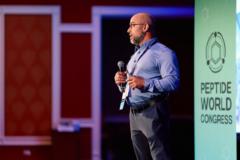
The Coach’s Protocol — Pulling Back the Curtain
The members have spoke and I listened....Most coaches talk about principles. Some share theory. Very few show you exactly what they do themselves. about to change that. I’m opening up my personal playbook, the protocol I run on myself, to show you how I structure my training, nutrition, supplementation, peptides, and recovery strategies to stay at the top of my game. This isn’t a “one-size-fits-all” plan. It’s the real system I use, built from: - Lab data and cellular feedback loops - Peptide science and mitochondrial optimization - Periodized training matched to performance goals - Nutrition timing dialed to physiology, not fads You’ll see the exact tools, dosages, timing, and reasoning I use and how I adjust based on metrics, recovery, and results. If you’ve ever wondered how a coach integrates the science into a living, breathing system… this is your chance to see it in action. Drop a 🔥 below if you want to see the full breakdown of The Coach’s Protocol.I will likely do this as a webinar. Let me know your thoughts who would be interested in seeing this to kick off our monthly case study feature.
0 likes • 15d
🔥. 👍👍
1-4 of 4

@patrick-skool-9891
"Is ait a mac an saol" Irish proverb which simply means "Life is strange." Otherwise, just a man with a (spoiled) dog.
Active 2d ago
Joined Sep 30, 2026
Scottsdale, AZ
Powered by