Activity
Mon
Wed
Fri
Sun
Sep
Oct
Nov
Dec
Jan
Feb
Mar
Apr
May
Jun
Jul
Aug
What is this?
Less
More
Memberships
AI Profit Boardroom
3.7k members • $59/m
Clief Notes
44.5k members • Free
113 contributions to Clief Notes

26d •
Vibe Check: How does it actually feel coding n8n automations with GLM 5.2 vs Claude vs Codex?
Hey everyone, I’m curious about the actual experience and impression you get when using different models for complex automation coding. We talk a lot about benchmarks, but how does it actually feel in the trenches? Here’s the emotional rollercoaster of my current stack: - Claude Code: Feels like a rock-solid, reliable partner. I can comfortably build my local workflows and navigate Docker environments with total confidence. But that sinking feeling when the 5-hour compute budget suddenly runs dry and leaves you hanging? The absolute worst. - Grok Build (Grok 4.5): I am heavily considering switching to the raw API for this when my Claude Code runs out to bypass the rolling limits. For those using Grok 4.5, how does it actually feel? Does it seamlessly handle multi-file context, or do you still have to micromanage it? - Gemini: Honestly, it just feels exhausting for complex n8n nodes. You get that frustrating, sinking feeling of being stuck in a recursive loop—try, miss, loop, repeat—until you finally just throw your hands up and finish the job yourself with another model. - GLM 5.2 (or Codex): This is the big unknown for me right now. - Local LLMs: I’m highly motivated to move more of this workload locally to bypass these compute limits entirely. Has anyone found an open-weight model that actually handles complex n8n automation properly? If there is something out there that doesn't feel like you have to constantly micromanage every node, I’m ready to spin it up and put my hardware to work. For those of you who have switched to GLM 5.2 or Local LLMs for everything: What’s your impression? Does it give you that same confident, “it just gets it” feeling like Claude, or does it feel like you have to constantly micromanage the code? Would love to hear how you guys feel about working with your current stack!
2 likes • 26d
@Scott Smith Testing Grok Build 4.5 right now via API much more capable than GEMINI that's for sure and faster than GLM 5.2

28d •
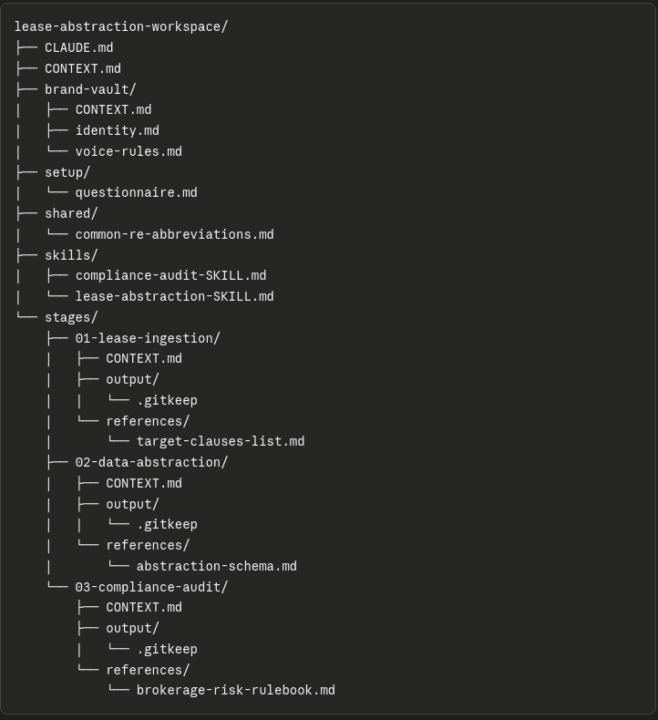
Lease Abstraction & Compliance Audit Workspace
Just dropped a free Lease Abstraction & Compliance Audit Workspace built with the ICM framework. Turns messy lease PDFs into clean summaries + risk-flagged audits in 3 structured stages. Real estate pros this one’s for you. Use it, tweak it, make it yours. Workspace attached.
1 like • 27d
Taofeek, turning chaotic lease PDFs into risk-flagged compliance audits via structured 3-stage abstraction is a *huge* win—lease docs are nightmare ecosystems of inconsistent formatting and buried clauses. The ICM framework’s ability to parse that mess into actionable insights (without hallucinating rules, as Scott noted) is the kind of guardrail-heavy parsing that real estate pros *desperately* need but rarely get. The “risk-flagged” automation alone cuts through legal noise like a scalpel—solid work!

Jul 11 •
Day 1 finding the problem
For for those of you who helped me get feedback @Jim Tyndall and @Mira Bradshaw and @David Vogel for my last post thank you so much for giving me the opportunity and the confidence to do this. I’m gonna start showing my work from day one who tried to and go from there right now. The process making my request https://www.skool.com/cliefnotes/need-a-mentor?p=ad885a96 happen Problem I think worth fixing - Duplicate Charting & Handoff Report Chaos Nurses re-enter the same patient info across shift handoff sheets, paper handoff reports, and EHR fields — the same data written 2-3 times per patient per shift. The ICM solution breaks this into three stages: 01_intake (extract structured data from handoff input), 02_standardize (format to SBAR: Situation, Background, Assessment, Recommendation), and 03_generate_handoff (create the final report for the incoming nurse). Each stage’s output is human-editable before advancing, which is the core ICM principle — every output is an edit surface. - Discharge Paperwork Bottlenece Discharge packets take 30-45 minutes per patient, with multiple forms containing redundant patient info and instructions written at the wrong reading level. The ICM solution runs five stages: extract data once, populate all forms, simplify patient instructions to a 6th-grade reading level, reconcile medication lists, and assemble the final packet. The value proposition for a client: “Cuts discharge prep from 40 minutes to 10 minutes per patient. Reduces readmissions from incomplete instructions” - Policy & Procedure Document Chaos Hospitals have hundreds of policy documents scattered across PDFs, Word files, and shared drives where nobody can find the current version. The ICM solution ingests all policy documents, builds a searchable index by topic and department, flags outdated or superseded policies, and generates plain-language Q&A summaries so staff don’t need to read 20-page PDFs.
0 likes • 27d
For duplicate charting, how does your ICM system detect and merge redundant entries across disparate hospital systems without losing critical data?

Jul 10 •
I built my first product with Claude this week.
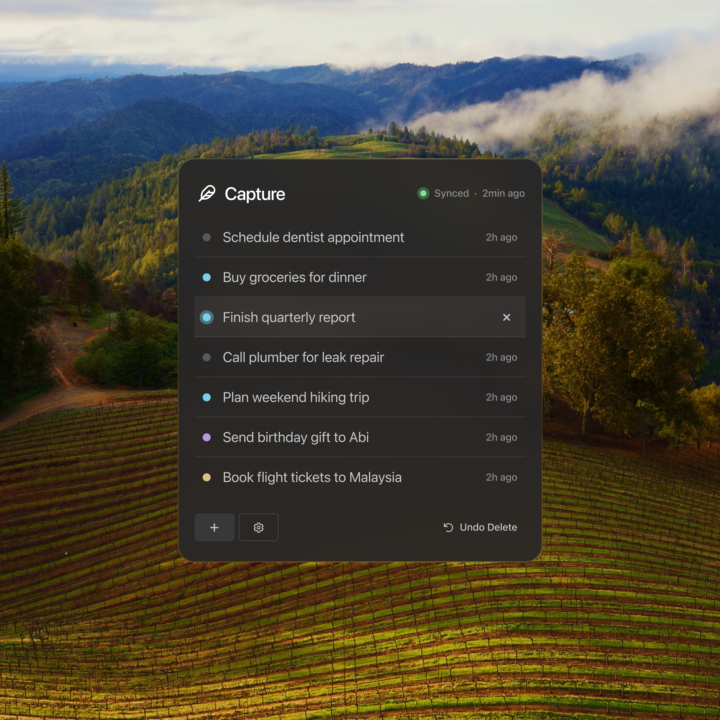
I've been playing around with Claude for a while, optimising workflows, supercharging a recent discovery sprint. But this week I actually shipped something. A simple idea capture tool for Mac. I used to use Things 3, and whilst the app structure never quite worked for me, I loved the quick capture feature. Keyboard shortcut, text input, thought saved. I've tried everything since: Apple Shortcuts to Reminders, Quick Notes, third-party apps. Nothing matched how I actually work. So I built my own. It's written in Swift, a language I've never touched before. I've been following development best practices as far as I remember them, pushing to a GitHub repo, branching for new features. Notes save as JSON that my ICM workspace can action, The whole thing was built with Claude. I haven't thought about anything else all weekend.
Scope creep is real. It now has optional task types, a menu bar drop down with sync status, a live list of recent captures, inline editing, tagging. I drafted the initial design in Figma, then went back and forth between VS Code and Figma, designing where I needed to, tweaking code where I needed to. As a designer, syntax was always the wall between having an idea and building it. But working in a real codebase, you're closer to the actual product. It allows a level of finesse you can't achieve in Figma. Refining a micro interaction, adjusting an animation timing, polishing subtle UI details. I am very excited to make progress with my ICM workspace build out, lots of product ideas to be built!
1 like • 27d
How does your app handle cases where Claude misinterprets a user's raw idea input (e.g., ambiguous phrasing, domain-specific jargon), and what validation/feedback mechanism do you have to correct or refine the AI's interpretation before finalizing the captured idea?

👑
Jul 8 •
Connection Hub: 📣 Marketing & Agencies
Intros for The Connection Hub - The Vault 👤 Who I am: (name + where you're based) 🛠️ What I actually do: (the specific work — not "I'm in real estate" but "I run a 3-agent team doing residential resale in Austin") 🤖 What I'm building with AI right now: (your current project, workflow, or the thing you're stuck on) 🎯 What I'm looking for connection-wise: (pick one or two) 💡 Someone who's solved [X] 🤝 A collaborator / accountability partner 👀 Just here to learn from people in my field 🧰 Trading workflows & systems 📬 Best way to reach me: (DM here / comment / link)
5 likes • Jul 9
👤 Who I am: Patrice Roatan Quebecois, Canadian expat living on Roatan Island, Honduras 🛠️ What I actually do: I am an independent tour guide 🤖 What I'm building with AI right now: Websites, Repurpose.io Clone, Meta/Google Ads 🎯 What I'm looking for connection-wise: B2B & B2C Partnership with Travel Agencies 🤝 A collaborator / accountability partner : Travel Agent/Agencies / Backlinks relevent to Travel Industry 🧰 Trading workflows & systems 📬 Best way to reach me: fb.me/roatanquebec t.me/roatanquebecois
1-10 of 113

@patrice-roatan-quebecois-9675
https://roatanquebecois.ca
Expat & Tour Guide Roatan Island
Former IBMer
Burn-In Test Bromont
Active 4d ago
Joined May 12, 2026
Powered by