Activity
Mon
Wed
Fri
Sun
Mar
Apr
May
Jun
Jul
Aug
Sep
Oct
Nov
Dec
Jan
Feb
What is this?
Less
More
Owned by Olivia
Helping time-strapped entrepreneurs make real progress — even in the chaos of everyday life.
Profit + freedom + wild joy for mom entrepreneurs
Memberships
The Shine House
20 members • Free
Growers
2.2k members • Free
AI Online Educators & Coaches
416 members • Free
Aligned AF Community
275 members • $49/month
FutureProof: The Evolution Lab
142 members • $18/month
Writing With Julia
239 members • $1/month
Evergreen Empire®
63 members • Free
Skoolers
191.2k members • Free
Tech Mastery For Entrepreneurs
532 members • Free
11 contributions to Healthy People Have Gardens

5d •
Do I have enough at home to survive for at least 10 days?
On Monday I got tested on whether I am walking my talk. I was heading to town (an hour from my house), and just as I was making a turn towards my first stop, my car started making a horrible noise. Fortunately, I was only three blocks away from a mechanic shop. So I limped my car into their parking lot. I was warned that they were booked 2-3 weeks out, but then I explained my situation and they drove it around the lot, and they put me on the schedule for next week. So it looked like I wouldn't have transportation to town (grocery, pharmacy, bank) for at least 10 days. I had to do a quick scan of the basics for the family and 83 farm animals. Do we have enough on hand? I knew the humans would be ok. Even though we were out of kid snacks, we had actual food. There would be a little protesting, but he would live. Do we need pharmacy stuff? Do I have enough rabbit food? Do I have enough cash for fuel and hay? Sooo, if YOU were stuck without warning, and couldn't get to resources for 10 days, would you survive, without having to survive on stale graham crackers? Weather events, mechanical issues, illness, supply chain disruptions or busy sports seasons all can interfere with access. In the next week I will be posting in the classroom, a 7 day workshop I ran this Fall on how to prepare your home for extended disruptions. It isn't from a place of scarcity or fear, but to help build and maintain a buffer for your family, to insulate against the unforseen events that we can all experience, so you can keep rolling forward. What is one thing in your house that you know right now isn't ready for a 10+ day disruption?

🔥
1 like • 15h
I think we could make do with what we have now if needed….the boys wouldn’t necessarily be HAPPY about it, but we could do it! 😅
🔥
11d •
I want a veggie garden!
I am so determined to have some veggies and herbs this year, despite the fact that the silly HOA doesn’t allow vegetable gardens in the front yard and my back yard is mostly shade. So I’m trying to plan how to use containers throughout my perennial beds to make it work!
🔥
1 like • 7d
@Kate DuBois I’d love to have some traditional veggies (I have a potentially futile goal of getting all of my boys - husband included - to eat more) like tomatoes, lettuce, sweet peas, zucchini, etc. I also love having a container of basil, parsley, mint (Kentucky Colonel is my favorite!), cilantro, and chives. That can work well on my deck. Tomatoes do NOT like my deck - powdery mildew heaven. I like your idea of picking pretty perennials, and maybe trellising in containers. That could maybe help me sneak some things into my western exposure front yard without the HOA getting upset.
🔥
1 like • 7d
@Kate DuBois oh and maybe some other shrubs like serviceberry! You got me thinking with the honeyberry.
7d •
Don't forget the onions... A case for "boring" veggies.
In January, in cozy clothes we are seduced by fancy colors and great marketing in seed catalogs, dreaming of warmer days. But it is super easy to skip straight to the 20 pages of tomatoes and forget a really important step that will make your life much easier in August. What do you actually eat, and how much? In August, what are you going to do with 45 pounds of tomatoes? Will you genuinely have time to learn to process it every week? Does your kitchen have space for 45 lbs of tomatoes? Many crops mature at the same time, such as zucchini, tomatoes, eggplant, corn and peppers. So there will need to be room and time for them too. An alternative is to focus on things that you eat regularly, that store with minimal processing and spread out the harvest season. Onions, garlic, carrots, potatoes, lettuce (with staggered planting), cabbage, chard, peas, snow peas, kale, spinach, winter squash, berries, broccoli, sweet potatoes and herbs. All take minimal work for storage, and mainly harvest either before or after August. Trying to learn how to garden AND preservation skills like canning at the same time is a recipe for overload and rotten fruit disaster. This is a huge reason why I regularly say that the concept of "bugging out" is a myth. The learning curve is too steep to be realistic. For your first few years, take a look in your fridge, take inventory, and only look at those sections in the catalog on your first pass through. Then add a few plants of the things that you enjoy fresh during summer. Think, melons, corn on the cob, caprese salad, or pesto (basil). A staple summer treat for our house is sliced spicy radishes (Zlata or Spanish radish). I also love tabbouleh (slicer tomato, cucumber, parsley, and mint). 1 flavorful early slicer tomato like Brandywine, one mid season tomato (I like Mr Stripy), and 2 cherry tomatoes are great for a family of 3 or 4 for fresh eating. Beyond that, start with a reasonable mix of some foods you eat often. Don't worry about fancy colors or rare heirlooms. Focus on flavor and compatibility with your growing area and you will be headed for success.
🔥
1 like • 7d
We always run out of garlic! And onions, actually. Mainly yellow, though I do like having red for salads.
29d •
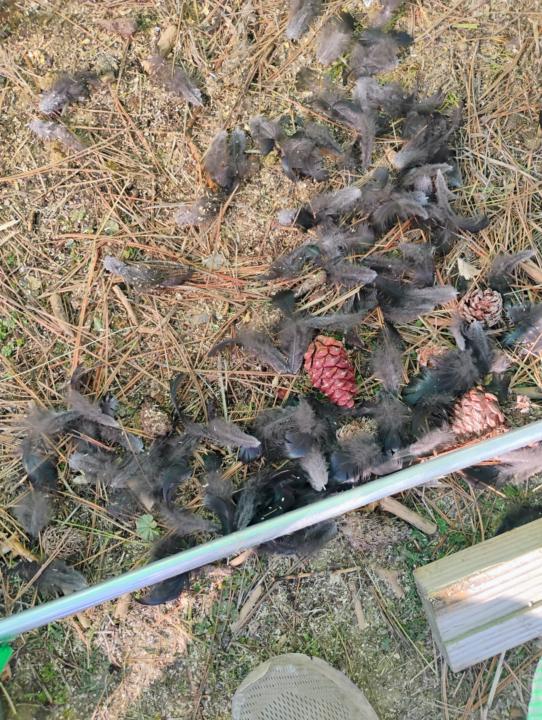
When something eats your chickens...
We only had 2 chickens, since that is all we need. I just turned them loose in the new poultry run two days ago, and this morning I was greeted with only one chicken and a pile of feathers. This particular property has been really troublesome since we moved here 4 years ago. In the last year we have lost a LOT of animals to predators, which is ironic since I used to have an egg farm 3 miles from a literal wilderness area and never lost a hen to wildlife (my blue heeler was responsible for a few though). The steps I went through today: Figure out what species might be responsible. We have almost every predator in North America in our immediate area. The trick is to narrow down the choices. Our ground is frozen, so there weren't any footprints to help. The poultry run is a greenhouse covered in fitted heavy plastic. The edges were mostly sealed down, so it was not a bear, mountain lion, large dog or wolf, or an avian predator like an owl, eagle or hawk. The trail of feathers went under the adjacent fence, which eliminates a bobcat (they jump over). The remaining possible choices are skunk, raccoon, fox, and maybe a coyote. With my dog, we found more feathers 150 feet away in a patch of snow. There were rough tracks slightly smaller than the tracks my dog left in the snow with more feathers, so by elimination it was most likely a coyote or fox. Now what to do: Add extra safeguards specific to the offending predator. This is the concern. The edges of the barn were lifted up and the retreating predator then squeezed under a wire goat fence. Even decent fencing was not enough. Additionally, the rabbit barn is 3 sided, so it will need to be secured before dark as well. The poultry space was an " important but not urgent" project I have been working on, but it instantly got upgraded to "life and death mission critical" (on top of moving hay out to the main farm). All of the birds (one chicken and 3 ducks) will have to be in lockdown in rabbit cages until I can get things upgraded.
🔥
1 like • 27d
Oh no!! I’m sorry for your chicken, but greatly appreciate your explanation of the steps you took to identify the culprit and and prevention techniques.
Jan 6 •
Joys of the learning curve...
On Sunday, I wrote you all a beautifully worded and succinct overview of the 10 things I would start with for building a healthy and self-sustainable lifestyle. It was a collection of concepts and actions I WISH I had started with from the beginning, and have since had to halt other progress to focus on so I could move forward. Some were lifelong habits and mindset shifts, others were the starting point for a bigger lifestyle shift. And just as I was about to post it, it went POOF! and disappeared. In hindsight, it was probably a bit long. So I will be sharing them this week in smaller nuggets. Each of the ideas will be fleshed out into more involved trainings in the classroom. I am really looking forward to input from you folks, though, to guide what feels the most useful for where you are now. The umbrella of building a healthy lifestyle and self-sustainability is filled with micro-lessons that could dive off into many directions. I have been studying this for 30 years, and practicing it for almost 20, which ends up being a LOT of different ideas. For now, the core categories are - Functional Health - Mental Health and Stress Management - Systems/ Planning - Food/Medicine Self-sustainability My goal is for members of this community to begin building a sustainable, resilient lifestyle and skillset that will help them endure whatever chaos life throws at them. It is inevitable that there will be literal and metaphorical storms in the future. I hope to help people set their lives up in a way that they feel prepared to ride them out. Depending on where you are in your life, some of these will resonate more with you than others. All of them are actually intertwined and have overlaps. You can't be physically healthy if you are stressed out. It is REALLY hard to develop or build self-sustainable food systems if your health is a mess. All of them are easier and faster with systems and planning. You will be less likely to stick with any system, habit or lifestyle if you are battling demons. And being "away from it all in the middle of nowhere" actually dramatically amplifies mental, physical and system health issues, rather than erasing them.

🔥
1 like • Jan 9
Main priority right now - managing stress. Dealing with some things that are outside of my control...that have now taken control of my body and sleep, which is no good. I need to regain my peace.
🔥
1 like • Jan 9
@Kate DuBois I LOVE all of these suggestions! Thank you! 🥰
1-10 of 11

🔥
@olivia-radcliffe-1540
Business + AI expert for moms, HeartHealing® therapist, author, podcast host, homeschool mom. Building a life of freedom, creativity & connection!
Active 5h ago
Joined Nov 18, 2025
INFJ
Cincinnati, Ohio