Activity
Mon
Wed
Fri
Sun
Nov
Dec
Jan
Feb
Mar
Apr
May
Jun
Jul
Aug
Sep
Oct
What is this?
Less
More
Selah Wellness
7
$9/m
84 contributions to Selah Wellness
2d •
Today’s Selah’s Social - Resin Art CreatIons
The Selah Social was so fun today, thank you Holly for the opportunity for us to learn and create something new. What I created today - Resin Art Bookmarks The Bear has two sides one represents northern lights and the other side is mother of pearl, the charm is a Hummingbird, this bookmark represents some things that God created for us to enjoy and I love each of these. The other bookmark is for my husband, the sand is a beach and the blue represents the ocean (the blue glows in the dark.) It was fun doing this art project.

3d •
Ask Me Anything: Sleep Edition😴
Ask me anything about: - Bedtime routines that actually work with kids in the house - What "good sleep hygiene" really means (and what's just noise) - How to wind down when your brain won't shut off - Whether that 9pm scroll session is sabotaging you (spoiler alert: yes) Drop your questions below 👇
0 likes • 3d
How do you navigate wide awake in the middle of the night and getting back to sleep again? PS: the times that I do wake up in the middle of the night I always ask God “ Who am I to pray for?” If I have not heard anything sometimes it takes a bit to get bank to sleep that is where I am going with my question.
5d •
The Numbers Don't Lie
According to a 2024 CDC/National Health Interview Survey report: 😴More than a quarter of American adults don't get the recommended 7+ hours of sleep a night. 😴Only about 55% of adults wake up feeling well-rested most days. 😴Women specifically report more trouble falling asleep AND staying asleep than men — and are less likely to wake up rested. Translation: the fatigue you feel isn't in your head. It's documented, it's widespread, and it's disproportionately hitting women. Why it matters: Chronic short sleep is linked to a weaker immune response, higher inflammation, and slower recovery — exactly what you don't want walking into cold-and-flu season with a house full of germy kids. Do you feel you get the recommended 7+ hours of sleep?
Poll
3 members have voted
2 likes • 5d
I feel that most of the time I get more than 7 hours of sleep. I know that not using anything electronic at least an hour before beds helps me, this includes an e reader. I find that reading a book (physical copy) before bed helps to wind down my mind and relax me for a good nights sleep.
Sep 3 •
Welcome To The Rabbit Hole🐇
Welcome to something new inside Selah Wellness! I’ve been wanting to create a space for us to learn, think, wonder and explore—not necessarily about the things you’d expect to find in a Christian wellness community. So welcome to The Rabbit Hole. Each month, we’re going to choose something fascinating to explore together. It might be a book, documentary, movie, podcast, scientific idea, cultural phenomenon, historical story or even a controversial topic. It doesn't have to be Christian. Actually, I think some of the most interesting conversations happen when we take an idea from the world around us and ask: What do we think about this? And what does our faith have to say about it? This isn't about finding the "right" answer or forcing Scripture onto every topic. It's about becoming women who are curious, thoughtful and discerning—women who can engage with ideas, culture and the world around us while remaining rooted in Christ. Think of it as your monthly invitation to go down the rabbit hole with us. 🐇 And for our very first one we're going to explore the book Dopamine Nation. I know not everyone is a reader, so if you can, grab the audiobook and listen along. You will also find the resources for all of our Rabbit Hole Topics in the Classroom. Our Rabbit Hole Theme will also be pinned at the top of the page so if you'd like to have start a conversation or contribute, please comment under this post specifically to keep the community chat from become too chaotic.
1 like • 27d
@Holly Hallwachs I bought the book and will start this week to read. Looking forward to this read and what changes I need to make. Thanks for suggesting this book.
1 like • 6d
@Holly Hallwachs I am not at chapter 9 yet finishing off chapter 4.
10d •
Stress Poll
Where does your stress hit first? Vote below — curious what this group carries most. Then post is the comments one thing that you have found helps you manage this stress.
Poll
5 members have voted
3 likes • 10d
To manage stress in my life, I ask myself; is this something I can control or not? If not then I know I need to let it go. Another question I ask myself is; Where is my focus? In my season of life recently I have been stressing about where does God want us to move to after John retires? At times I feel so overwhelmed but I have been reminded that God has orchestrated every one of our moves and why would He stop now. This is an area of where I need to trust God for our future.
1-10 of 84
@norma-huffman-4013
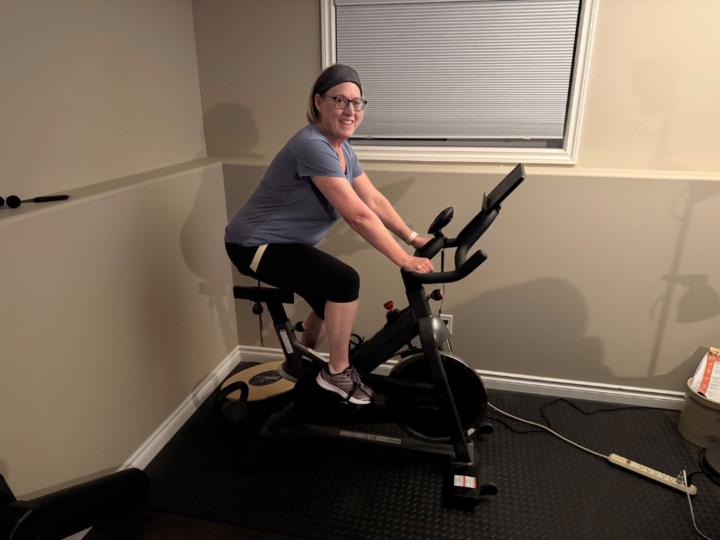
Hi, I am a wife (41 years) Nana to 5 soon 6 grandkids love biking and lifting weights excited to grow into a healthy lifestyle in my retirement years
Active 21h ago
Joined Mar 17, 2026