Activity
Mon
Wed
Fri
Sun
Aug
Sep
Oct
Nov
Dec
Jan
Feb
Mar
Apr
May
Jun
Jul
What is this?
Less
More
Memberships
Female Veterans Connecting
16 members • Free
TG
THE GLOBAL LIFESTYLE HUB
7 members • Free
Cosmo Talks in Spirit
21 members • Free
STR8 DABN ENTERTAINMENT & LIFE
35 members • Free
Prostate Paladin
15 members • Free
Carl El Mazmorrero (Fan Club)
12 members • Free
All Things Sports Network
10 members • Free
Musicians Secrets Campus
10 members • Free
Music Visualizer And Lyrics
10 members • Free
4 contributions to Prostate Paladin

3d •
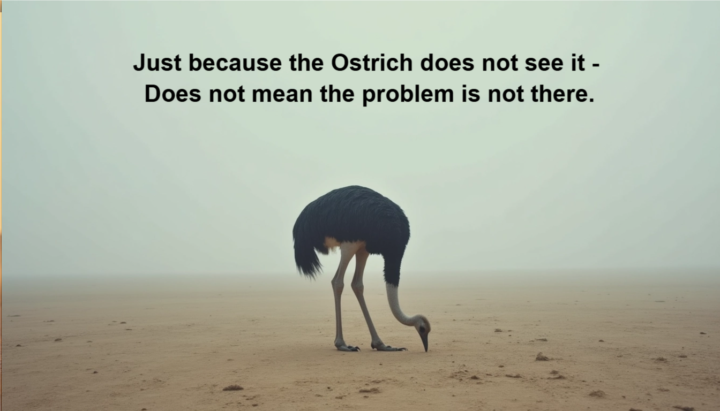
Burying your Head in the Sand - Never Solves the Problem
I saw a picture of an ostrich with its head in the sand this week and it made me think. We all know the image. The ostrich hides its head so it cannot see the danger. And we laugh, because the danger is obviously still there. The ostrich with its head in the sand still gets eaten. Then I remembered that is exactly what I did for years. I was getting up all night. My stream had slowed right down. Somewhere in the back of my head I knew something was going on, and I just... did not look at it. Head in the sand. If I did not think about it, it was not real. It took a friend in an airport telling me straight before I pulled my head up. I think a lot of us do this. Not because we are stupid. Because looking feels harder than not looking. So I am curious about this group. What is the thing you kept your head in the sand about - prostate or otherwise - until something or someone made you look? And what got you to finally look? https://www.skool.com/prostate-paladin-4886/about

1 like • 2d
That’s a really honest reflection, Alex 🙏 The ostrich analogy is powerful because it captures exactly how easy it is to ignore something uncomfortable even when the signs are already there. Most people don’t avoid things because they don’t care, but because acknowledging it makes it feel more real and harder to deal with. It’s good that you can look back on it now and turn that experience into awareness for others.
0 likes • 2d
@Alex Beviss That’s a really important point, Alex 🙏 It sounds like the gap isn’t just information, but awareness and ownership of it before there’s a problem. The idea of having a baseline by a certain age makes a lot of sense because it shifts things from reactive to proactive. Do you think most people avoid it because of fear, or simply because it feels like something “for later” until it suddenly isn’t?
4d •
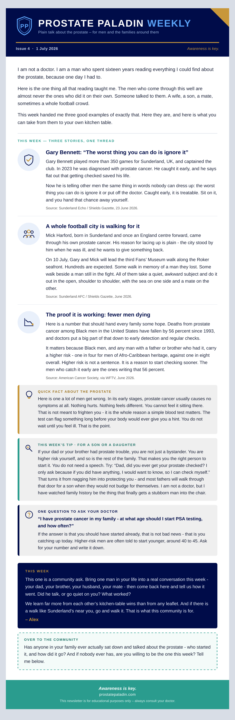
Prostate Paladin Weekly - Issue 4 (1 July 2026)
Encouraging news this week on getting the word out. Gary Bennett said it plainly - "the worst thing you can do is ignore it" - and he and Mick Harford are leading a whole football city on a walk to raise awareness (the Sunderland Fans' Walk, 10 July). I love seeing this. It hands every family a place to start the conversation with the men they love. And here is the proof it works: deaths from prostate cancer among Black men are down 56% since 1993. I will happily admit that in 1993 I had no idea what a prostate even was, and I did not care. I was 33, and I had not yet met my prostate demons. That came later. I did not start reading about it until 2010, when I had to. You do not have to learn it the slow way like I did. Start the conversation today. https://www.skool.com/prostate-paladin-4886/about
1 like • 2d
@Alex Beviss That makes a lot of sense, Alex 🙏 It’s interesting how much culture can influence not just awareness, but what people feel comfortable even acknowledging in the first place. I can see how in some environments the “tough it out” mindset would make it harder for these conversations to take hold. And you’re right about the awareness cycles too - it often feels like there’s a burst of attention during certain months, and then it fades again, even though the underlying issue is still there. Do you think the key is making it part of everyday conversation so it doesn’t rely on awareness months to keep it alive?
0 likes • 2d
@Alex Beviss I agree with you, Alex. Normalising the conversation seems like the real shift we need. Once it becomes something people can talk about openly without discomfort, awareness campaigns become more of a support rather than the main driver. Do you think that shift starts more in communities like this, or through wider cultural change first?
9d •
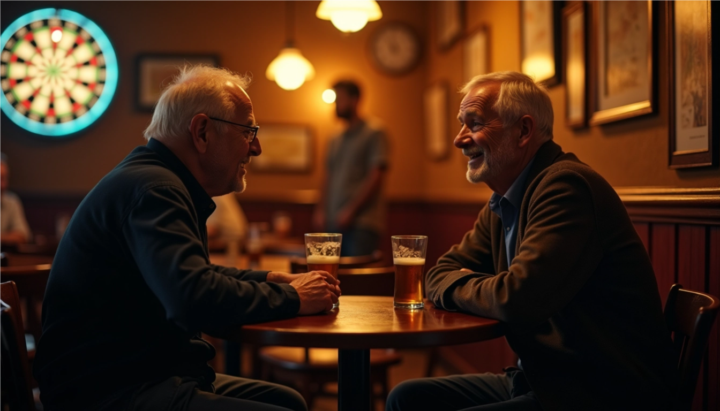
Why don't men want to talk about their prostate?
This question haunts me. In today's world, there is no reason not to know. I understand the older generation not wanting to talk about it. We came from a time when you did not talk about your business, your family, or anything really. Men were supposed to be an island, and women were the bedrock of the family. Men sixty and older did not talk about their prostates because anything below the belt might lead to an uncomfortable conversation. People might think you were less of a man to admit you had an issue "down there." It seems ridiculous now, but it was a fact of growing up in the 70s, 80s and 90s. Nobody really talked. If you were lucky enough to find someone to share your life with, then you could open up. Today everyone shares everything. Publicly, proudly. Nothing seems sacred. So why do men still not talk about the prostate? Why are there still stories about men diagnosed with a cancer they did not know they had and did not see coming? Here is the truth. I did not know I had a prostate issue either. Sixteen years ago a friend pointed it out to me at an airport. Without him, I might never have known to look. Early detection is the key to prostate cancer. Caught early, men survive and go on for decades. Do not be one of those men. Do not let yours be the family where the cancer spread because nobody knew. Get checked. Remove the doubt. So here is my question for you. Vote in the poll below, then put your reasons in the comments. That is where the real conversation starts. Why do you think the man in your life will not talk about his prostate?
Poll
2 members have voted
0 likes • 5d
@Alex Beviss That makes a lot of sense, Alex 🙏 If the conversation becomes normal outside the doctor’s office, it probably removes a lot of the fear before it ever gets to that point. It’s easier to act when it doesn’t feel like something shameful or “taboo.” Do you think communities like this could be one of the biggest ways to create that shift, since they give men a space to hear and learn from each other?
1 like • 2d
@Alex Beviss That’s good to hear 🙏 It really feels like that shift starts happening when people realise they’re not the only ones thinking or experiencing it. Having spaces where it can be talked about openly makes a big difference in breaking that silence. Appreciate the perspective you’re sharing here.
7d •
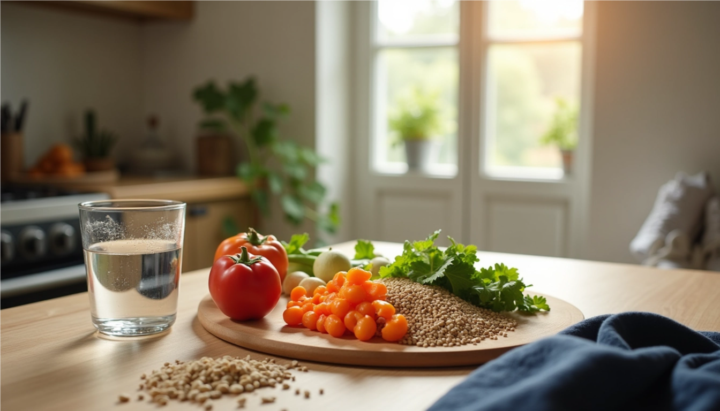
Everything we have been told our entire lives
A large study of more than 28,000 people looked at who followed the basic cancer-prevention advice - healthy weight, regular movement, more plants and whole grains, less red and processed meat and alcohol. The ones who stuck with it had a lower risk of dying. Not one supplement on the list. I will be honest, I take supplements myself and I think they have helped me. But I also changed how I eat and how I move, and that may be what actually did the work. I am not a doctor, so I hold that loosely. What I do not hold loosely is this: the boring basics have the strongest evidence behind them, and they cost nothing. What is the one basic you already know you should do but keep putting off - the walk, the plate, the weight, the drink? Name it here. Saying it out loud is how it starts. https://www.skool.com/prostate-paladin-4886/about
1 like • 5d
@Alex Beviss That’s a really powerful turning point, Alex 🙏 It’s interesting how something like a routine check can completely shift perspective when the numbers make things real. Even when things feel “okay” on the surface, it sounds like that moment gave you a clear signal that something needed to change. Do you think that experience made it easier to stay disciplined with your food choices afterwards, or was it still a daily challenge to adjust?
0 likes • 5d
@Alex Beviss That makes a lot of sense, Alex 🙏 Sometimes having a clear health warning can be the push people need to finally make changes they’ve been putting off. It’s encouraging though that you saw it as something you could still influence rather than something out of your control. Looking back now, do you feel better overall since making those changes - not just physically, but mentally too?
1-4 of 4

@natasha-pillayn-8939
Passionate about online communities, growth, engagement, and connecting with ambitious people.
Active 2d ago
Joined Jun 24, 2026