Activity
Mon
Wed
Fri
Sun
Jan
Feb
Mar
Apr
May
Jun
Jul
Aug
Sep
Oct
Nov
What is this?
Less
More
Memberships
E-commerce
730 members • $5/m
Python Developers
910 members • Free
Freedom Life Community
3.3k members • Free
The Web Academy
155 members • Free
Work From Home
406 members • Free
Upscale (Free)
24.8k members • Free
University of Code
5.3k members • Free
JavaScript
303 members • Free
Dev Mastery (Lite)
3.3k members • Free
14 contributions to JavaScript

Sep 6 •
Map vs Object – Which Should You Use?
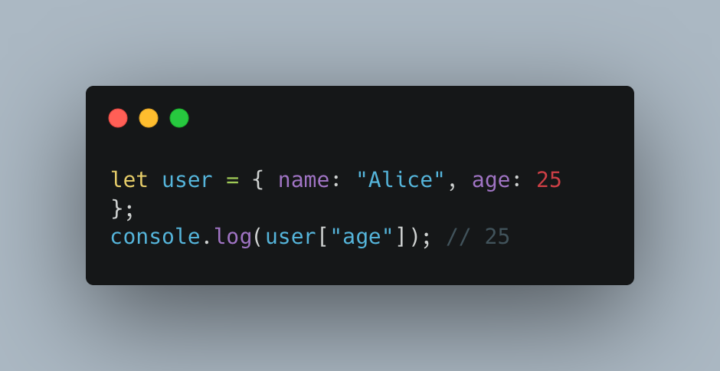
The more I continue to develop Gextron dot com, I catch myself using Map a lot more than plain objects. They're both let you store key-value pairs, but they're not the same thing... Object: - Keys are always strings - Great for config records or user objects - Easy to convert to JSON (which is really important) But are really annoying when you want to loop over the object. You don't get direct access to both keys and values the way you do with a Map. You have to use helper functions like Object.keys(), Object.values(), or Object.entries() [IMG 2] Maps is a lot cleaner. - Always preservers insertion order - Fast for frequent add/remove operations - Helpful helpers: .size, keys(), values(), entries() 👉 Takeaway: Map is built for iteration, while Object needs workarounds. What about you⁉️ Have you ever switched from Object → Map and instantly solved a bug or performance issue?

0 likes • Sep 7
Great analysis 👌 I find myself using Maps more often when dealing with dynamic collections or when I need to query them frequently. The built-in iteration methods make the code much cleaner than Objects. However, I still use plain Objects for structured data (like configurations or JSON payloads) because they're simpler to serialize. Based on my experience with Gextron, I'm wondering if there's a noticeable performance gain when using Maps, or if the focus is more on code readability and maintainability.

Sep 3 •
Introduction
Hi everyone, I am Gurveer and currently a BCA student. I am here as part of this community so that i can build a good network where i can learn Java script and lot of things coz i have just started my journey😁.
0 likes • Sep 6
Hello I love JS and I start the programming with JS. So I am Interested.
Aug 29 •
Next wave of Webar Technologies
Webar is moving beyond simple 3D object placement and moving to a richer and more intelligent web layer. Some new technologies are leading this change. -BEBXR device API maturity The browser level support for the AR session stabilizes, enabling the cross -device experience without plug -in. This includes support for hit tests, anchors and planes by default in chrome, safari and edges. -8thwall & niantic's Ardk on Web Luxury slams (simultaneous localization and mapping) are now executed in the browser, allowing not only flat surfaces, but also Marsis AR that understands the environment in real time. -Real -time obstruction and depth detection The use of WebGL2 and WebgPu allows developers to create realistic obstruction, shadows and physics, so AR objects are naturally mixed into the environment. Combined with the LIDAR support of the latest iOS devices, AR interaction is much more reliable. -Create AI + AR pipeline The use of a new workflow creates a texture, 3D assets, or all AR scenes on the spot, reducing the cost of production and enabling personalized experience depending on the scale. -WEBRTC for multi -user AR Collaborative AR experience is being realized directly in the browser. WeBRTC enables low burden streaming and synchronization, allowing multiple users to interact in real time with the same AR scene. Outlook: Webar is no longer an experimental demo technology. By converging WebxR, WebGPU and AI -based assets, it has become an executable platform for e -commerce, education, education, game and industrial applications. All can be accessed immediately through links. Future major tasks: technical ability balance and useful balance. The most influential web AR will have no friction, not the future.
Aug 26 •
Universal rendering becomes the default
The old debate on client -side server rendering is disappearing. The latest framework accommodates a universal rendering model that adapts and automatically optimizes on each path. - Automatic switching between SSR, CSR and ISR - smarter sign language strategy to reduce performance overhead - Embedded SEO optimization built in the Framework framework The future direction is clear. The developer no longer needs to make a manual rendering decision. The framework is processed intelligently. This change can make the app easier to build, expand, and easily access it. How do you see this affecting the current workflow?
Aug 22 •
Component API: REST & GRAPHQL next step
For many years, REST and GraphHQL have been the main ways to manage the data contracts between the front end and the backend. But a new approach is emerging: component API. Instead of maintaining a separate API layer, developers can now deliver UI -centered data contracts directly within the components. This means: -Data and UI are jointly located to reduce complexity. -There is no risk of schema drift between the backend and the front. -Live type safety binding that guarantees consistency in runtime The shift is clear. The component itself becomes API. This model can simplify the development, especially in the latest frameworks that focus on strict integration between servers and client logic.
1
0
1-10 of 14

Active 27d ago
Joined Jul 31, 2025
Oslo, Norway
Powered by