Activity
Mon
Wed
Fri
Sun
Jul
Aug
Sep
Oct
Nov
Dec
Jan
Feb
Mar
Apr
May
What is this?
Less
More
Memberships
Thrive Together Womens Circle
133 members • Free
The Elevators
13 members • Free
AI Automation Agency Hub
319.9k members • Free
The AI Advantage
124.1k members • Free
27 contributions to The AI Advantage

🔥
Dec '25 •
🤖 The Future of Work with AI: Redefining What It Means to Contribute
When people imagine the future of work, they often picture automation taking over tasks, new job titles emerging, and skills lists changing faster than job descriptions can keep up. But beneath all the technical shifts lies something more personal. The real transformation is not in what we do, but in how we define contribution, creativity, and value itself. The arrival of AI has made work more fluid, more interconnected, and more unpredictable. Many of us are being asked to move from doing work to designing how work happens. That transition can feel both liberating and destabilizing. It challenges our sense of expertise, purpose, and control. What is unfolding is not the end of human work, but the beginning of a new kind of craftsmanship — one built around intelligence as a shared partner rather than a private possession. ---- The Shape of Work is Changing ---- Work used to be defined by repetition and reliability. We learned a skill, refined it, and executed it consistently. Mastery meant stability. Now, mastery looks more like adaptability. The ability to learn quickly, connect ideas, and translate context has become as valuable as technical precision. AI has changed the texture of time and attention. Many of the hours once spent gathering, formatting, or synthesizing information are being reallocated to judgment and decision-making. That shift sounds simple, but it introduces a new kind of strain. It forces us to rethink what a productive day even looks like. Imagine a professional who once spent hours creating detailed reports. With AI summarization and drafting tools, those same outputs now take minutes. At first, that feels like freedom. Then a new question emerges: what do I do with the time I have reclaimed? The answer is not always obvious. This is the new challenge of the future of work. Efficiency is no longer the destination. It is the starting point for deeper human contribution. ---- Redefining Human Contribution ---- In an AI-augmented environment, our contribution becomes less about production and more about perspective. The tasks that remain uniquely human involve context, interpretation, empathy, and choice. These are not easily measured, yet they are the essence of judgment and leadership.

1 like • Dec '25
Who Actually Benefits From “The Future of Work with AI” Narratives? A lot of AI content sounds deep and inspiring, but stays intentionally vague. That’s not an accident. Texts about “redefining contribution”, “being more human”, or “embracing uncertainty” serve very specific interests. Here’s who really benefits: 1. Communities, coaches, and platforms These narratives reduce fear and create belonging. When the message is broad and emotional, more people relate, engage, and stick around. Vagueness scales better than clarity. 2. Consultants and trainers Abstract language (“mindset shifts”, “new value creation”) makes outcomes hard to measure. That keeps guidance open-ended and ongoing — a sustainable business model. 3. Companies and management This language softens hard realities. Job losses, automation, and cost-cutting are reframed as “growth”, “evolution”, or “new ways of contributing”. Responsibility subtly shifts from the system to the individual. 4. Thought leaders and personal brands These posts are safe, agreeable, and hard to disagree with. They position the author as insightful without requiring proof, data, or concrete predictions. 5. AI marketing itself Ironically, AI is very good at generating this kind of reflective, empathetic content. It makes AI feel “human” — which helps adoption and trust. Bottom line: These texts are not useless, but they are functional. They manage uncertainty more than they explain reality. They help people cope, align, and stay optimistic — but they rarely tell you what will actually change tomorrow. If you’re looking for clarity, skills, or income impact, you’ll need to go beyond the poetry and ask more concrete questions.
Dec '25 •
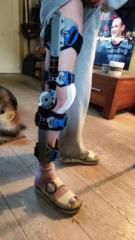
Wish AI could heal a broken.knee
Probably in the futurebAI wil even be able to heal a broken knee faster AI is amazing—it can read X‑rays, plan surgeries, and even guide robots in the operating room. But if you have a broken knee, there are some things AI can’t do for you: ❌ Heal your knee instantly – Your body still needs time to fix bones, ligaments, and cartilage. ❌ Feel your pain – AI can track data, but it can’t comfort you or understand exactly what your knee feels like. ❌ Replace real therapy – AI can suggest exercises, but you still need to move, stretch, and do physical therapy in real life. ❌ Stop complications automatically – AI can warn doctors, but only human care can respond to problems fast. ✅ What AI can do is help doctors make faster, smarter decisions, and help you get the best treatment possible. So for now, the real healing is still your body + your doctor + rehab—AI is just a helper, not a miracle. #AI #HealthTech #KneeRecovery #NotMagic
1
0
🔥
Dec '25 •
📰 AI News: Meta Signs Big AI Deals With Major News Publishers
📝 TL;DR Meta just cut multiple AI licensing deals with big-name news publishers so its AI assistant can answer news questions using their content in close to real time. This is a big shift in how news gets distributed and how AI gets its information. 🧠 Overview Meta has signed a wave of commercial agreements with news organizations including USA Today, People Inc, CNN, Fox News, The Daily Caller, Washington Examiner, and Le Monde. These deals let Meta AI pull in and link to fresh articles when users ask news-related questions. It is another sign that AI assistants are becoming a primary gateway to information, not just a fun add-on. 📜 The Announcement On December 5, 2025, Meta confirmed it has struck several AI data and content licensing agreements with multiple news publishers. The goal is to feed Meta AI with timely, trusted reporting so it can respond to user questions with current information and links to original stories. Financial terms were not disclosed, but Meta says more partnerships and features are coming as it races to boost engagement with its AI products. ⚙️ How It Works → Meta AI plugs into publisher content - When a user asks a news-related question, Meta AI can now pull from the partnered outlets, summarize key points, and surface links back to their articles. That makes the chatbot feel more like a live news briefing than a static encyclopedia. → Real-time style updates for users - Instead of relying only on older training data, Meta can now serve fresher information via these feeds. It is a move to keep its answers relevant as news changes hour by hour. → Publishers get paid and amplified - Rather than scraping content and hoping no one complains, Meta is paying for structured access. In return, publishers get licensing revenue and prominent placement inside one of the most widely used consumer AI systems. → More deals are likely coming - Meta has signaled this is only the start. Expect more verticals, more regions, and more niche outlets to be added as competition in AI assistants heats up.
3 likes • Dec '25
AI is fast, but not critical AI models are incredibly fast at scanning and summarizing vast amounts of information. Yet speed is a poor substitute for critical analysis. AI can: Use outdated or inaccurate information. Present incomplete context, losing important nuance. Unintentionally reproduce biases from selected news sources. Even with licensed content from major publishers, there remains a gap in nuance and interpretation. Facts that appear correct can still be misleading in a broader context. The human eye can connect the dots Human fact-checkers do more than verify whether a statement is technically correct. They: 1. Compare multiple sources to assess consistency and reliability. 2. Evaluate context and intent, for example, whether a quote is taken out of context. 3. Recognize patterns of deception, such as selective statistics, clickbait, or manipulative framing. AI cannot always see these connections. An algorithm cannot automatically distinguish a trustworthy source from a “clever imitation,” nor can it make ethical judgments. Relying solely on AI is risky The current trend of large AI platforms licensing content from dominant news publishers could lead to a concentration of information sources. Less diversity means certain perspectives and critical voices simply disappear. Users who rely blindly on AI summaries risk being presented with a filtered reality, regardless of whether the individual facts are correct. Conclusion: AI assists, but does not replace AI can support journalists and fact-checkers: retrieving information faster, searching documents, recognizing trends. But the final judgment on what is true and relevant remains human work. Anyone who thinks AI can fully take over fact-checking underestimates both the complexity of news and the subtlety of truth. In the age of AI-driven news, human oversight is not optional—it is essential.

🔥
Nov '25 •
Today I did something I never imagined was possible!
Something happened today that never would have been possible before attending the AI Advantage Summit. As a woman veteran, today I had the honor of attending and helping sponsor the Women Veterans Interactive Foundation’s Pink and White Affair, and something truly unexpected happened. For the very first time, I stood in a room full of powerhouse women veterans, leaders, and advocates, and I got to introduce myself as a tech startup founder. I pulled out a live working prototype of the app I have been quietly building behind the scenes since the summit wrapped up. It was amazing seeing people light up as they saw the potential use cases for their own lives. The moment when an idea that lived only in my mind suddenly became real enough to put in someone’s hands felt like stepping into the next chapter of my life in real time. But the part that stayed with me most was this: Sharing my app with people who immediately understood the mission behind it reminded me why I’m building it in the first place. Real lives Real needs Real impact Today made the work feel bigger. And it made me even more committed to finishing what I started. I left that room grateful, motivated, and more certain than ever that this is the right path. I hope everyone here who is following their dreams stays their path and starts this next week with fresh momentum and determination!
2 likes • Nov '25
Awesome I applaud you
🔥
Nov '25 •
*Updated with prompt* Today, ChatGPT helped me break through two years of procrastination
I wasn’t planning to share this, but today cracked something open using ChatGPT and I hope this helps someone out. Getting clarity on my path forward was effortless and effective. This prompt was so effective in guiding me through something I’d been avoiding, all the way to task completion, and lifted a huge burden off me. For two years, one corner of my bedroom sat untouched with boxes, and the weight of various physical reminders of grief, loss, and the version of myself I hadn’t figured out how to become again during two grueling years of hands on caregiving for my mom, while still working full time and caring for my multi generational family of 7. It became a place I hated looking at, I avoided, the place where overwhelm won. A place that quietly strained my marriage and my spirit. I kept telling myself I’d deal with it “when I felt ready,” but I never did. Today, for the first time, I didn’t try to do it alone. I got clarity and immediately was able to focus, start, AND FINISH a task I’ve been avoiding for two years. I teamed up with ChatGPT — not as a tool, but as a teammate. A calm voice. A steady mirror. A gentle push. Step by step. Breath by breath. And somehow… something shifted. That corner — the one tied to two years of emotional weight — is completely clean tonight. It took three hours to complete the task. And in clearing it, I felt a piece of myself come back online. The part that’s rebuilding. The part that’s reinventing. The part that’s ready to live forward again. This wasn’t about cleaning a room. It was about reclaiming myself after a season of loss. If you’re carrying something heavy — even if it looks “small” to everyone else — please hear this: You don’t have to push through the grief alone. You don’t have to white-knuckle your reinvention. Sometimes the breakthrough begins with a single corner… and a teammate who doesn’t get tired. Tonight, I’m proud of myself. And for the first time in a long time, I feel hope rising again. THE PROMPT: EDITED FOR CLARITY
0 likes • Nov '25
Thank you, Theresa, for creating and sharing this glossary generator prompt! 🌟 It’s an incredibly practical resource for beginners overwhelmed by AI and LLM terminology. I especially appreciate the formatting details and structured layout—it makes learning so much easier and more approachable. This will definitely save a lot of time and confusion for anyone starting their AI journey. 🙏
1-10 of 27

@nadia-pauwels-8898
Hello
I'm Nadia
Living in belgium
With partner Geert and Thai my fur child
My lifetime quote
No airplane could fly without air resistance
Active 36d ago
Joined Oct 28, 2025
Powered by