Activity
Mon
Wed
Fri
Sun
Jun
Jul
Aug
Sep
Oct
Nov
Dec
Jan
Feb
Mar
Apr
May
What is this?
Less
More
Memberships
Growth
323 members • Free
8 contributions to Growth
3d •
NETWORKING DONE DIFFERENTLY
Some people spend 20 years “networking”… Yet never get any further forward. Why? Because they’re in the wrong rooms.With the wrong people.At the wrong level.Having the wrong conversations. Real networking is not collecting business cards over warm white wine and stale sausage rolls. It’s proximity. Proximity to people ahead of you. People building bigger things. People solving bigger problems. People thinking differently. People who challenge your standards, your thinking, your excuses and your vision. A couple of weeks ago we took around 20 entrepreneurs over to Newmarket, to one of the incredible days that are hosted by the brilliant @Michael O'Hagan and @Holly Ohagan at MOH check out their video What an incredible day.... access to people and parts of Newmarket that you only get because of the massive respect that Michael and Holly command in the area/specialism Not long before that, we hosted an exclusive lunch and private tour at the House of Lords for 27 entrepreneurs, escorted by 2 Lords no less. And in the next couple of months we’ll be enjoying an exclusive tour and lunch at the infamous Coutts Bank, the King’s bank, (formerly the Queen’s bank), inside the boardrooms where history, influence and wealth have flowed for generations. Why do I do this? Because success leaves clues. Most people don’t need more motivation.They need better rooms.Better conversations.Better standards.Better thinking.Better connections. One meaningful conversation can change the trajectory of your business and your life. That’s what The Growth Syndicate is about. Not fake networking: Real access. Real people. Real growth. Real conversations. Because networking is only working…If you work it.


0 likes • 3d
Thank you Mike. It was an absolute pleasure for Holly & I to host yet another group of wonderful open minded people who are curious about the incredible Thoroughbred Industry in which we are blessed to work in. Thanks to everyone who came along.🏇
Sep '25 •
Sunny Saturday Syndicate
I had such a great day with mentees, skool members and friends at home on Saturday... ....and we raised £9,000 for Cambridge Children's hospital whilst having fun - what's not to love?

2 likes • Sep '25
That’ was a terrific afternoon Mike. Thank you 🙏
Sep '25 •
Friendship and Service
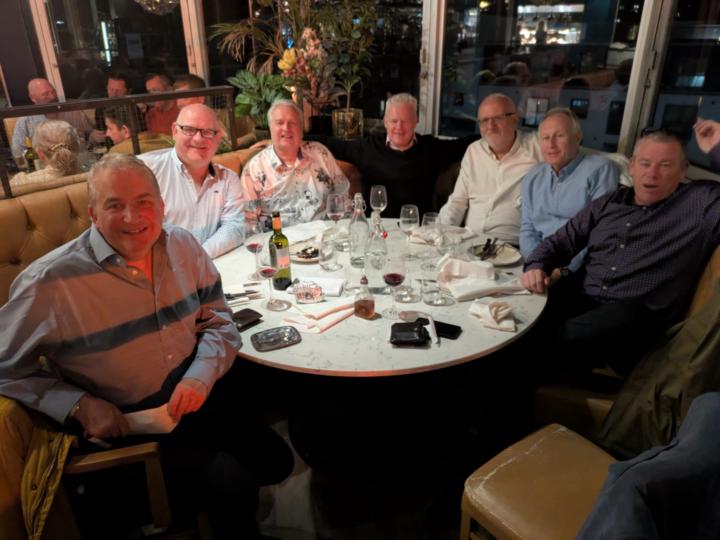
Sometimes I think the reason some entrepreneurs struggle is because they’re trying too hard to succeed. It becomes all about work, productivity, and profit. But we all know the old saying, “All work and no play makes Jack a dull boy.” This weekend reminded me of that truth. On Friday and Saturday, I caught up with some old friends I only see once or twice a year. Today, I had the privilege of opening a European cultural festival as a Deputy Lieutenant. Neither had any commercial or “productive” return, but both filled me with joy, laughter, and deep human connection. It struck me again that success isn’t just about money or milestones. It’s also about friendship, community, and service. These are the things that make us feel alive, valid, and grounded. Sometimes, the most productive thing we can do for our business is step away from it, connect with people, and give without expectation. As Albert Schweitzer said, “The purpose of human life is to serve, and to show compassion and the will to help others.” And as Helen Keller reminded us, “Alone we can do so little; together we can do so much.” So here’s my reminder to you (and myself): Don’t get so busy chasing success that you forget to live, laugh, and serve.
1 like • Sep '25
I think it’s called ‘Balance.’
Sep '25 •
🌊 Stuck in the Doldrums
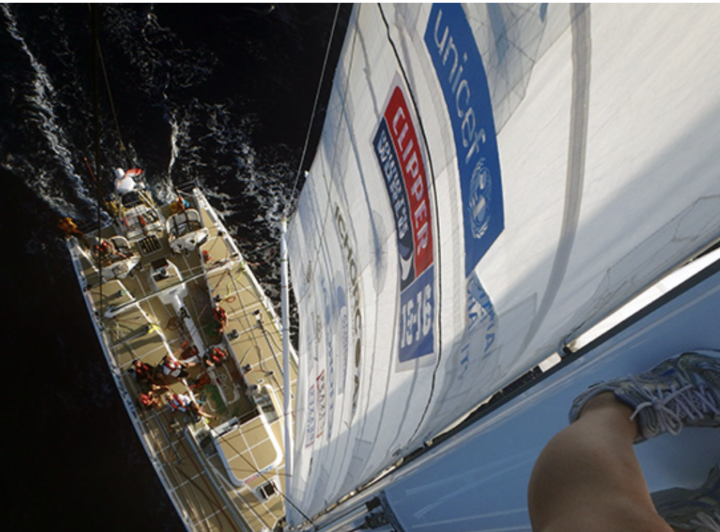
When I was sailing as part of the Clipper Round the World Yacht Race, we were on the London to Rio leg... 6,000 miles across the Atlantic. Somewhere near the equator, we hit a place every sailor dreads: the doldrums. It’s where the trade winds from the north and south cancel each other out. Warm air rises, and at the surface there’s nothing. No breeze. No push. The ocean turns into a mirror. The horizon blurs. The air presses on your chest like a weight. Silence. Heavy, suffocating silence. For centuries, sailors have prayed to Neptune when crossing the equator. Some would pour rum overboard, others staged elaborate ceremonies. It wasn’t just tradition. It was fear. When you’re stuck in a world of endless water with no way forward, superstition feels safer than logic. Even today, sailors still pay homage, part respect, part insurance against being trapped in eternity. On our race, the nightmare became real. We had the longest delay in Clipper history. 9 days of going nowhere. You couldn’t motor through - use the engine and you’d be penalised. In the old days, men sat in the same stillness with no hope of rescue. Just staring at the horizon, wondering if the wind would ever return, or if they’d rot under a burning sun. We worked shifts, two hours on, two hours off, waiting for a whisper of wind. Off-shift, you’d crawl into a coffin-sized bunk already slick with someone else’s sweat. The heat was close to 40 degrees, no shade, no escape. The boat reeked - sweat, damp, salt. Hygiene broke down. Cuts festered. I caught MRSA there, which later poisoned my blood and started to shut down my organs. What looked like paradise was quietly killing us from the inside. You imagine diving overboard for relief, but salt water only speeds dehydration. So you sit. You sweat. You wait. The ocean becomes a prison cell without walls. Beautiful, yes, but beautiful in the way a venomous snake is beautiful. You start asking yourself the most dangerous question: what if the wind never comes back?
2 likes • Sep '25
I’ve been there numerous times Mike. !
Sep '25 •
The lesson that saved my business (multiple times)
There should be an 11th Commandment: "Thou shalt not kid thyself" Too many entrepreneurs get so blinded by their dreams, they ignore harsh realities - even when the warning signs are flashing red. This week I share the brutal truths about: → Why cash flow kills more businesses than competition → The "good people" trap that's actually destroying your team → Why I learned to embrace the "negative" CFO feedback → How your customers hold the answers you're avoiding I've seen it countless times - entrepreneurs who had all the signs but didn't act on them. The reality? Every successful journey includes failure, but ignoring obvious problems isn't failure - it's irresponsible. Jack Welch said we know who the anchors are in our business, but we seldom have the courage to make tough decisions. Sometimes that weakness seals the fate of 100% of the business. The 11th Commandment isn't about pessimism - it's about survival. "Seek the truth or hide your head in the sand. Both require digging." Ready to stop kidding yourself? Check out this week's blog, released today at 8pm ⬇️ https://www.skool.com/thegrowthsyndicate/classroom/e8650cc4?md=7e39ad13d80d4f9b9bff37518c325050
1 like • Sep '25
@Mike Greene I like the 11th commandment Mike. Very true 🙏
1-8 of 8

@michael-ohagan-3604
Expert in global thoroughbred strategy, marketing and bloodstock development - renowned for insight, innovation and trusted consultancy.
Active 3d ago
Joined Jul 3, 2025
Powered by