Activity
Mon
Wed
Fri
Sun
Jan
Feb
Mar
Apr
May
Jun
Jul
Aug
Sep
Oct
Nov
What is this?
Less
More
Memberships
Jun Academy
369 members • Free
Skate IQ
4.8k members • Free
Fußball Bundesliga ⚽️
91 members • Free
The Golf Games
629 members • Free
Smile&Striking(Free)
1.8k members • Free
The HuRU Crew
247 members • Free
𝙂𝙊𝙊𝙎𝙄𝙁𝙔 🍓🐛🦋🌈⭐️🩷
7.9k members • Free
Theory of Man
138 members • Free
Car Part Profits (Free)
2.1k members • Free
1 contribution to Theory of Man

Aug 30 •
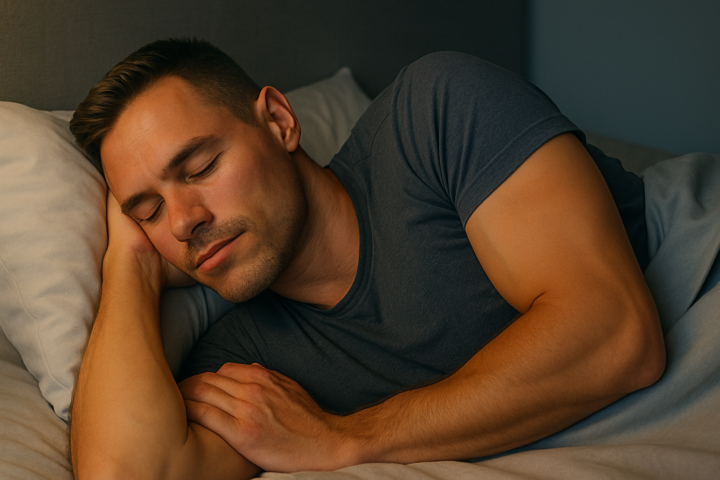
How to SLEEP BETTER.
Light & Darkness Melatonin is the hormone that signals your body to feel drowsy, but it also has other roles. Darkness allows melatonin to rise and tell your system it’s time for sleep. Exposure to bright light — especially at night — blocks melatonin, which makes it harder to feel tired and lowers sleep quality. In the evenings, dim household lights to cue your body it’s time to slow down. Use lamps lower to the ground rather than overhead, and if possible, swap bulbs for yellow or even deep orange/red — they’re much less stimulating. Limit screens at night, and if you use them, keep brightness as low as possible. Many devices now shift colors warmer at night, and apps like f.lux can help. For the bedroom, blackout curtains or an eye mask will maximize darkness. When you wake, aim to get outside for 10–15 minutes of daylight. Sunlight lowers melatonin and resets your circadian clock while also triggering cortisol release, helping you wake up and stay alert. Even cloudy days provide enough light, so you don’t need direct sun exposure. If real sunlight isn’t possible, bright SAD lamps can be a decent stand-in. Temperature Body temperature is central to sleep regulation. To drift off, your core needs to drop by about 1°C (2–3°F). Keep your room cool, ideally around 67°F (19.4°C), or use a cooling mattress topper. Exposing your hands or feet from under the blanket can also help your body cool faster. A warm bath or shower before bed is surprisingly effective: it raises core temperature briefly, but as you cool down afterwards, sleepiness sets in more easily. Food & Timing Meals impact sleep depending on appetite, rhythm, and preference. Experiment to see what works best. For most people, eating about two hours before bed doesn’t cause issues. Eating much closer can increase the risk of reflux and disrupt rest. If you do eat late, keep it smaller — but also don’t go to bed uncomfortably hungry. Minimize fluids near bedtime to reduce waking at night. Caffeine

0 likes • Sep 3
@Eric Hodgkin Hello I'm like your post is very good, but we are not friends on follow you I'm maxScott and would love to be your follow friend, but it's not polite to send you a friend request with your consent if don't mind you can follow me
1-1 of 1

@max-sophie-9207
My mom sell skateboard and watch is delivery for any country for you guys Dm for your package 📦
Active 14d ago
Joined Sep 1, 2025
Los Angeles EDT