Activity
Mon
Wed
Fri
Sun
Sep
Oct
Nov
Dec
Jan
Feb
Mar
Apr
May
Jun
Jul
What is this?
Less
More
Owned by Matthew
Anything and everything welding and metal fabrication ‘ Instruction Discussions Information Tips & tricks Networking More
Memberships
Welding/Fab SKOOL
546 members • Free
The Feeling Index
386 members • Free
Watch Lover | Community
2.7k members • Free
The Aspinall Way
32.4k members • Free
41 contributions to METAL LAB

Jan 14 •
Cast Iron - No Coolant Blues 😁
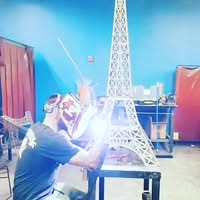
Hey, can anyone give me some advice please? I need to weld a cast iron piece on an engine block, it blew up in the frost the other day and I'm confused whether it's doable or not. Thickness is 4mm. I've read about it needing a lot of pre-heating, some are putting the block in furness... etc Thanks

1 like • Jan 15
Yeah man so here’s my suggestion from my experience with cast you’re gonna want to get a Ni-55 or Ni-77 electrode (try tractor supply co if you have one in your area they usually have special rods like that if you don’t have one get them off amazon but it’s necessary you get these specific nickel based rods I’m not sure of your level of skill but this is the easiest steps to take and it being a lasting structurally sound weld is not guaranteed but that’s just the nature of cast so your gonna want to grind the area pretty deep past the surface of both the block and the metal you’re wanting to affix to the block drilling holes at the ends of the joints to prevent crack propagation ( which is the process of a crack forming within a material for reasons relating to stress’s imposed on a material) then after you preheat the area to around 450-500 degrees Fahrenheit using the safest most effective method you have available you want to apply short staggered welds within the joint making sure they aren’t much more than an inch or so at a time and also making sure to thoroughly clean after each pass I recommend “peening”(hammering with low to medium force) the welds while they are still hot this will not only clean some of the slag off the welds but also relieve stress in the joint and compact the metal still brush the weld to make sure all the slag is removed very important to not weld over slag especially when dealing with cast another crucial component often forgotten about is post weld cooling regulation to prevent cracking from quench cooling or rapid cooling wrap the block in a blanket or if possible place it in a furnace to slowly cool down over the course of a few hours to even days to ensure rapid cooling doesn’t create problems in the welds integrity cast has high carbon content which causes it to cool more rapidly than most materials which is why this step is so important And also why it transferrs heat or cold so rapidly as well the more you know about the content of your pieces
Jan 10 •
THANKFUL
They say the third generation is where legacies are either cemented or lost. For a decade, I was lost. I went from starving and buried in debt to physically shattered—surviving a hit-and-run and a facial reconstruction that nearly took my will to live. I was inches away from giving up on everything. Then on my birthday when I was close to my lowest point came an email and somehow among over 5thousand others I saw it an offer to join the company I’ve tried and tried and tried to be a part of to no avail and here they are reaching out to me of all people. Joining this company isn't just a career move; it is a homecoming of sorts going all the way back to the early days of the company on the very same ground back to when it was known by a different name before the multi billion dollar facilities were built the way it is now the luxurious workplace it is now I am following the footsteps of two generations before me, two generations who had all but given up on me being anything two generations that died believing I was a lost cause… but because of that I am bringing a perspective they never had to endure. I know what it’s like to have nothing, which is why I will give this everything. My dreams didn't die on that gravel road. They were forged there. To anyone who thinks I’m just lucky to be here: I didn't just get an opportunity. I survived long enough to claim it. Watch me work.
Jan 7 •
Some extra wide open root
Some extra wide open root on 15 inch coupons x.5 thick hand cut bevels withOxyfuel torch it’s a long weld good weld bad video 🤦🏻♂️ mainly bc the extremely hot piece fell. As I went to brush it clean camera lost focus but take my word for it it was slick and the toes were just dirty not undercut like they appeared and yes this is at a school that I am blessed to have access to after all these years luckily they keep their awesome and supportive instructors around to let me run amok with all the new top of the line toys
6
0

Jan 7 •
Welder fabricator grinder 🤣cameraman video editor
So all those titles at once make for a pretty lousy video but best I got on the beginning of the bench restoration for a friends veterinary office will post pics of it finished when I finish it lol anyone know what the technique with the hammer is sometimes called and what it does really well especially with thinner metal
6
0

Dec '25 •
Little MiG Welding Monday
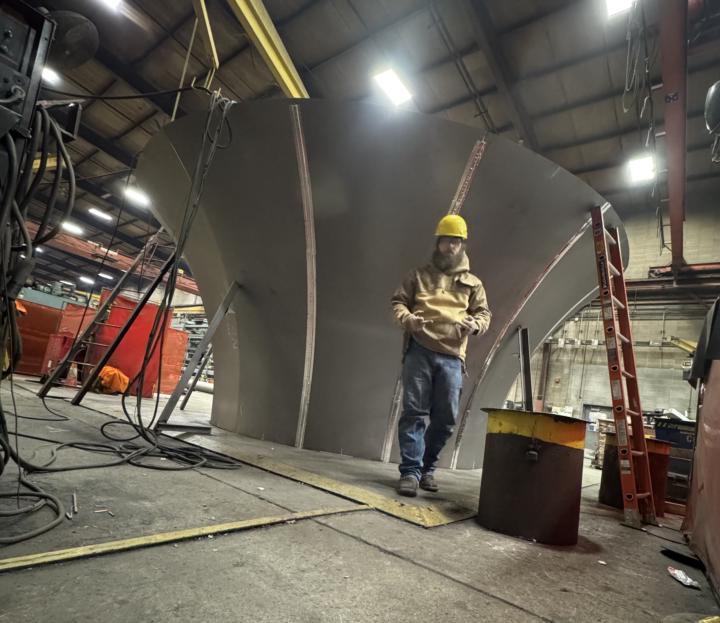
How may people out there have done much spray arc and gouging ?? I tell you what I worked at a place recently that the own supervisors didn’t know the difference in short circuit, and spray arc they just kept calling it mig hard wire lmao man oh man do you all know the difference ??? Honest question to those who don’t ask away
0 likes • Dec '25
These are the types of posts we like to see but yes it’s common to find people who aren’t aware that the machines voltage settings effect the way metal moves into the workpiece most actually only ever use short circuit which is I believe any voltage settings effect below 23v I may be wrong about that exact number but it’s around there do you know the other two methods of transfer
1-10 of 41
@matthew-albert-1984
Welding and fabrication Skool and some other fun stuff like motorcycles, art projects and whatever else you want let me do the research you just learn
Active 160d ago
Joined Sep 17, 2025
Central Florida