Activity
Mon
Wed
Fri
Sun
Jan
Feb
Mar
Apr
May
Jun
Jul
Aug
Sep
Oct
Nov
Dec
What is this?
Less
More
Memberships
The Spanish Enablers
3.3k members • Free
2 contributions to Elite Soccer Academy 24

Apr 17 •
Why Your Athlete’s Hamstrings Stay Tight (And What Most Parents Don’t Realize)
If your athlete constantly complains about tight hamstrings, it might not be just a flexibility issue. Here’s what most parents don’t realize: 1. The feet might be the problem. Tightness in the plantar fascia (bottom of the foot) often causes tension to shoot up through the calves and hamstrings. Tip: Rolling a lacrosse ball under each foot for 1–2 minutes a day can help release the entire chain. 2. Fascia is the missing link. Fascia is the tissue that surrounds and connects all muscles. When it’s stiff or dehydrated, it limits mobility—even if the muscle itself is strong. 3. Overtraining = locked-up muscles. If your athlete trains frequently but doesn’t recover properly, they build up tension faster than their body can clear it. Watch for signs like slow recovery, recurring soreness, or sudden muscle strains. Want more? We just uploaded a full PDF guide inside the Injury Prevention section of the Classroom tab. It breaks down: - The real reason hamstrings stay tight - Recovery tools your athlete should be using - Fascia 101 (what it is and how it affects injury risk) - Easy things parents can help implement at home Head to the Classroom tab → Injury Prevention → “Hamstrings, Fascia & Recovery” Let me know in the comments if your athlete’s been dealing with tightness or strains—I’ll reply with personalized tips

0 likes • Apr 23
Thank you for this post, really helpful. Would it be possible for you to share some tips on knee injury recovery and prevention as it’s been an acting up for me quite recently.
Apr 4 •
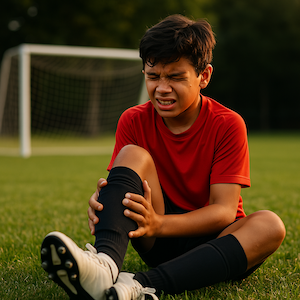
🧠 Shin Splints in Youth Soccer: Why They Happen, How to Recover, & What Parents Need to Know
If your athlete has ever come off the field saying:"My shin is killing me" or "It hurts when I run"—this post is for you. ⚠️ What Are Shin Splints? Shin splints are one of the most common overuse injuries in youth soccer.They usually show up as sharp or aching pain along the inside of the shinbone after running, sprinting, or playing on turf. If left untreated, they can linger for weeks… or turn into something worse like a stress fracture. 🔍 Signs to Look For - Pain on the inside of the shin - Soreness after games or training - Pain gets worse when running - Improves with rest, but returns easily - Tight calves, stiff ankles, or flat feet 🧊 How to Help Your Athlete Recover - Rest from intense running & cutting - Ice 2–3x per day for 15–20 minutes - Stretch & foam roll the calves and lower leg - Strengthen the ankles and feet - Swap soccer for biking/swimming temporarily - Slowly ease back into training ✅ How to Prevent Shin Splints - Wear proper cleats or turf shoes - Avoid training spikes—gradually increase workload - Focus on warm-ups: dynamic, not static - Strengthen the tibialis, calves, and core - Prioritize sleep, hydration, and recovery routines 📥 Download the Full PDF We’ve uploaded a complete Shin Splints Recovery + Prevention Guide in the Classroom tab with: ✅ Exercises ✅ Recovery steps ✅ Return-to-play tips ✅ Parent action checklist 📩 Click over to the Classroom and grab it today. Let’s protect our players from overuse injuries before they get worse. Drop any questions or shin pain experiences below 👇We’re here to help every step of the way. #InjuryPrevention #YouthSoccer #ParentEducation #ShinSplints #EliteSoccerAcademy24
1 like • Apr 4
Thank you for the post
1-2 of 2

Active 2d ago
Joined Mar 25, 2025
Powered by