Activity
Mon
Wed
Fri
Sun
Aug
Sep
Oct
Nov
Dec
Jan
Feb
Mar
Apr
May
Jun
Jul
What is this?
Less
More
Memberships
Cancer Warriors
544 members • Free
18 contributions to Cancer Warriors
May 15 •
Update on my Dad - input welcome!
Hey guys just wanted to give a little update on my Dad's lung cancer journey and see if anyone had any thoughts on his progress. Ideas and inputs greatly appreciated! - Diagnosed with stage 3c lung adenocarcinoma July 2025 - Started keto diet, ivermectin 1mg/kg daily and fenbendazole 400mg a few weeks later - Felt strong, good appetite able to walk 2-3km per day, weight 75kg - August 2025 - seen by oncology team in Melbourne and offered 'palliative' chemo and immunotherapy, not eligible for radiation or surgery due to mets to mediastinum and supraclavicular lymph nodes - Had one dose of carboplatin and keytruda September 2025 - 10 days later admitted to hospital with severe liver dysfunction (enzymes around 1000), presumed autoimmune hepatitis due to keytruda (liver pre treatment was fine) - Commenced high dose steroids and mycophenolate with gradual recovery of liver - Ceased fenbendazole as every time we reintroduced it the liver function worsened. No further immunotherapy of chemo - Continued keto diet (gki 2-5 mostly), ivermectin and gradually added in some other supplements - metformin, berberine, melatonin, quercetin, Artemissinin, ECGC, mebendazole (now 100mg daily), TUDCA, silymarin, vit d with k, Resveratrol - Gradual weight loss since September 2025, down to 60kg - January 2026 finally got off the steroids - January 2026 developed diarrhoea - diagnosed with microscopic colitis presumed due to keytruda from september, ?previously suppressed due to steroids. Required hospital admission for high dose steroids and fluids - No improvement in diarrhoea until infusion of infliximab, now settled and weaning steroids again - Feb 2026 also started IV vitamin C 2ish times per week, can only do 30mg due to problems with the salt load - Ongoing weight loss 56kg, very fatigued and weak, struggling with appetite, out of keeping with improvement in colitis The good news in all of this is that the cancer has been relatively stable on every scan since metabolic therapy and chemo/immuno. Much to the surprise of his oncologist considering he only had one dose of chemo and immuno.
1 like • May 20
Thanks guys for your input! We have decided against olanzapine. I will get his vit d and B12 rechecked, from memory his vit D levels were normal from lab perspective but not yet at target metabolic therapy ranges. They ended up testing his pancreatic enzymes in his stool and have discovered that he has exocrine pancreatic insufficiency, likely also from the immunotherapy (joy). Good news is this is likely a major contributor to poor appetite, diarrhoea and weight loss due to malabsorption. Easy fix with creon. Good reminder not to just treat the symptoms, eg loss of appetite with a bandaid option, rather than finding the cause.. which is what the oncology team wanted to do. Hopefully he can put on some weight!

Apr 23 •
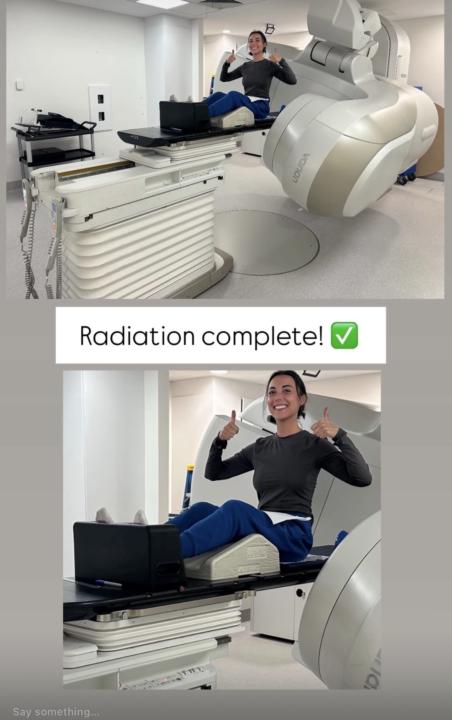
Update - completion of radiation
Hello warrior fam! 👋 Sorry I’ve been quiet for the last few months. The loss of fellow warriors in this group (and also in my community on Insta) has profoundly impacted me and lead to deep reflection about the unfairness and inequitable outcomes of cancer and mortality. I felt like any update I post would seem trivial and unhelpful during this difficult time for many of you. Although I REALLY didn’t want to, I ended up accepting some standard of care and integrating radiation into my latest intense protocol. The reason for this was financial stress, tumour growth for the first time in 2.5 years, and knowledge that my cancer cells have down-regulated Heat Shock Proteins (which in theory makes them more sensitive to radiation). I chose long-course, low dose radiation (25x1.8Gy) and integrated sensitisation strategies, such as daily HBOT, intermittent fasting and a few repurposed drugs prior. For recovery and minimising side effects I’ve been doing RLT, hydrogen therapy, CDS, while maintaining a high level of ketones as they have anti-inflammatory effects (especially β-OHB which reduces oxidative stress in healthy cells). Today was my final fraction. Initially I negotiated 15 due to fear of both the short and long term side effects, but as I’ve tolerated it so well I decided to have the full 25. I am very lucky to have been referred to a new radiation oncologist who has been open to personalising the treatment and genuinely curious about the potential of HBOT, fasting and the ketogenic diet. Radiation to the pelvis in women nearly always results in infertility and induces early menopause. General side effects also include proctitis, incontinence, rectal inflammation and pain, fibrosis, etc. I’m very shocked to report I am yet to experience any side effects, with the exception of the two days I decided not to fast, didn’t do HBOT, and drank coffee and ate a typical western breakfast. I had to know for sure that the adjunctive modalities I’ve implemented have been truly effective and not placebo, so this is why I experimented with what a “typical” patient (ignorant about the impact of GKI) would likely eat. On those two days (and two days after) I had extreme fatigue and a little irritation in the rectal mucosa. As a result of this, I did a 3 day consecutive fast to try to stop the progression of the side effects and lo and behold… they went away! Unfortunately, prolonged fasting wasn’t / isn’t possible as weight loss impacts the accuracy of the markings and measurements needed for precision radiation (and I certainly don’t want ionising gamma rays blasting non-tumorous rectal mucosa and causing a secondary cancer through oncogenesis of healthy epithelial cells).
3 likes • Apr 24
Thanks so much for your transparency! Praying that your hard work is evident in your next scan. Fuck the haters

Jan 19 •
New Classroom: Healing Journeys: Sharing Stories, Finding Hope
Dear all, this new classroom is just in the planning stage, let's make it happen! The idea is to create a crowdsourced classroom where members share real-life progress stories, connect with other members, and find renewed hope. What’s a story of progress and success? Any win, big or small. Remission, or just moving forward. Let's start small; we've got some recent success stories. @Jeff Boldrick , @Whitney Khan , can we post yours in the classroom to kick things off? Also recalling @Odette Rocha , @Michelle Love and @Hengameh Bolouri had great stories, if I remember correctly. Can we add yours too? Others with great stories, please share! No, it's not bragging, it's giving hope to others. Moving forward, all admins can add member success stories from the community to the classroom (with permission). How does that sound?
4 likes • Jan 19
Love it!
Dec '25 •
Great lecture by Dr Duraj
Hi all, this is a great lecture by the highly intelligent and humble Dr Tomas Duraj - a research partner of Prof. Seyfried who kindly wrote the foreword for my book. Obviously Prof. Seyfried is the GOAT, but I find Dr Duraj’s presentations about metabolic therapy and in particular his explanation of OXPHOS and AMPK much easier to digest.
3 likes • Dec '25
This is so good!
Dec '25 •
Carnitine
Merry christmas everyone! I'm just listening to the latest podcast with Dr Casey Peavler and Tomas Duraj and they mention adding in carnitine to aid with ketosis. Has anyone tried this or have any experience with carnitine? https://youtu.be/DnKKsXBIxOY?si=Ugdze4WngJFxMyPo
1 like • Dec '25
@Egg Scrambled it's for my dad and his ketones are usually 1-2 with glucose 4-6. So GKI usually 3-6. Although this morning his ketones were 3 and GKI 1.7! We're struggling with maintaining his weight mostly due to poor appetite so he doesnt want to do any fasting, apart from intermittent fasting.
1-10 of 18
@maggie-forbes-6700
Hi there, I'm from Melbourne trying to learn as much as possible about metabolic therapy after my dad was diagnosed with lung cancer.
Active 2d ago
Joined Sep 21, 2025
Powered by