Activity
Mon
Wed
Fri
Sun
Jul
Aug
Sep
Oct
Nov
Dec
Jan
Feb
Mar
Apr
May
What is this?
Less
More
Memberships
Pre-Vet Skool
38 members • Free
7 contributions to Pre-Vet Skool
4d •
Hello!
Hi, I'm Lily! I'm in Michigan and I just graduated with my bachelors in Microbiology this month. This will be my second cycle of applications and I feel much more prepared this time around. I've worked mostly as a veterinary technician at a feline only hospital, but I also have experience in equine medicine and general small animal. Animal experience wise I volunteered at a wildlife rehabilitation clinic, worked at a pet store, and I am an avid equestrian. Also, I have a job interview at a neurology hospital tomorrow! I would love to get more large animal experience, but unfortunately I don't live in a very rural area. Can't wait to meet everyone here.
1 like • 4d
@Nisana Miller Is that a boxer with a tail? So cute!
1 like • 4h
@Kathya's Art I forgot to update but it went well! Don't know if I got the position yet, but I'm hopeful

10h •
Week’s Winner: Erin Sillery 🎉
This week’s gift goes to @Erin Sillery! Her intro immediately caught my attention😊 she spent years at an animal science camp in Missouri with a private zoo of 100+ species, aged out, and kept right on going as staff. That’s amazing and shows character Add a poultry program at U of M and an upcoming internship at Hybrid Turkeys, and this girl is already living the vet med life before she even starts her application cycle. 🐓 Erin, DM me and let me know which you’d like: 🩺 A personal review of your vet school personal statement 🎁 An animal/vet med gift Also… something’s coming tomorrow. 👀 I’m announcing a fun community competition with prizes and I’m keeping the details under wraps until then. 🤫 Check back tomorrow to get in on it early. You’ll want to be first to see this one. 😊 Keep those intros coming, this week’s gift is still up for grabs!

0 likes • 4h
Congrats!
2d •
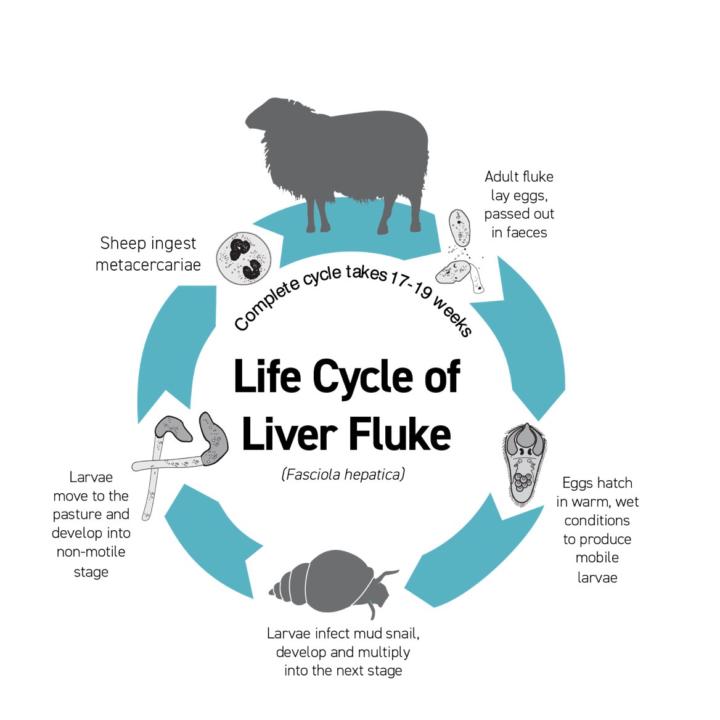
🐑 Case Study: Why Are the Healthy Sheep Dying Overnight?
Meet a flock of 85 Rambouillet ewes on a farm in east Texas. The pasture has low-lying boggy ground near a drainage pond and the producer has not vaccinated for clostridial diseases in three years. It is late September. Over the past three weeks twelve ewes have been found dead in the morning. Every single one appeared completely normal the evening before. You arrive to perform a postmortem on a ewe that died within the last two hours. When you open the abdominal cavity the liver stops you immediately. It is massively enlarged, dark red, and so friable it tears when you handle it. Hemorrhagic tracts run through the parenchyma in every direction. When you cut across those tracts and squeeze the tissue, dozens of tiny white organisms 3 to 5 millimeters long wriggle out onto the cut surface. Juvenile Fasciola hepatica. Hundreds of them. Physically tunneling through the liver. This is acute fasciolosis, and these flukes have been migrating through the liver parenchyma for the past several weeks, destroying hepatocytes as they go and filling the peritoneal cavity with blood-tinged fluid. The ewes on this property spent summer grazing wet boggy ground where lymnaeid snails thrived and shed metacercariae onto the grass. When the ewes ingested massive numbers of those metacercariae, the juvenile flukes excysted in the intestine, penetrated the liver capsule, and began their devastating migration. You collect a rectal fecal sample from a live depressed flockmate and submit it for sedimentation. The result comes back negative. The producer calls confused. No eggs means no flukes, right? Wrong. This is the most important diagnostic concept in liver fluke disease. The prepatent period for Fasciola hepatica is 8 to 12 weeks. These flukes are still in the liver parenchyma and have not yet reached the bile ducts where egg production occurs. A negative fecal sedimentation during acute fasciolosis is not reassuring. It is expected. The diagnosis here rests on the postmortem pathology, the seasonal risk, and the wet pasture history.
1 like • 2d
Oh man I really hate that visual 😂worms give me the heebie jeebies
2d •
Real-Talk
Have you ever seen something difficult, an animal suffering, a hard euthanasia decision, how did you handle that emotionally? I’ll share my answer in the comments.
1 like • 2d
I've been through so many difficult euthanasias. From long term clients losing their senior pets to cancer, to unexpected tragedies. It never gets easier, but it helps knowing its the best decision for the animal and they are no longer suffering. The ones that really get to me are the clients that don't know when to stop and are either in denial or hoping for a miracle. When you can see the pet suffering and continuing to decline and you don't feel like you are helping, but the owner still chooses to continue treatment. I find these situations so hard to navigate because I know what I would do, but not everyone has the same ideas or beliefs.
8d •
Hands-On Experience
Which species have you had the most hands-on time with? Which feel most unfamiliar to you? I’ll go first in the comments😊
2 likes • 3d
@Nisana Miller @Bella Teresi Absolutely! Working with cats, especially stressed cats, but be so daunting at first. My biggest advice is use slow and deliberate movements, and try to minimize the number of touches and re-positions. Also try to have a full game plan before handling the cat. The worst thing you can do with them is take them out, put them back, and take them out again. Let me know if you have any specific questions :) Also, I love bearded dragons! They are such cool animals and have so much personality.
1-7 of 7