Activity
Mon
Wed
Fri
Sun
Aug
Sep
Oct
Nov
Dec
Jan
Feb
Mar
Apr
May
Jun
Jul
What is this?
Less
More
Owned by Kevin
Welcome to the Flight Training Collective — where pilots elevate their skills beyond the checklist.
Memberships
Skoolers
164.6k members • Free
Aviate. Navigate. Communicate.
648 members • Free
Aviation Mentorship Network
28 members • Free
Pilot Mastery Lab
155 members • $47
5 contributions to Pilot Mastery Lab

Nov '25 •
Change one thing
If you could change one thing about your pilot training or career what would it be? For me, I would have wanted to receive more insight on performance psychology!


2 likes • Nov '25
I'm not sure how long you have been flying, but performance psychology is relatively new to our profession. I have mixed feelings about the role and influence the psychologists have had within our industry. In many cases, they have helped us understand our roles and improve our performance. However, I have encountered some who are clearly seeking work and recognition. If you start reading texts from the 80s and compare them to what is happening now, while there are a few important submissions, there are just as many papers that have taken original texts, changed the names, and added more colourful diagrams and animations. In other words, the same story, different package. At times, I feel that we have gained through increasing our emphasis on psychology, we have lost a similar amount in airmanship and common sense.
1 like • Nov '25
@Jean Denis Marcellin Strip it all away, and it's still an airplane. I work with AI daily. The marketing guys will have you believe many things about AI, and the psychologists will try to sell you a course to improve this and that, with no objective way to prove what they say and do makes much difference. We need to emphasize the basics and get back to flying. I know that sounds like moving backwards, but some pilots I have taught can't do simple math without their phone, do not understand basic aerodynamics, and have underdeveloped leadership and communication skills. The pilot shortage has placed younger pilots in seats before they are emotionally and psychologically ready. They haven't had any opportunity to build their soft and hard skills to the point where they can only manage what's in the book or what they have seen before. The question should be, are we making it too easy to fly, allowing pilots to lose the skills necessary to stay safe when the machines make mistakes? Are we building complacency into the system? There is such a thing as moving too fast.
Oct '25 •
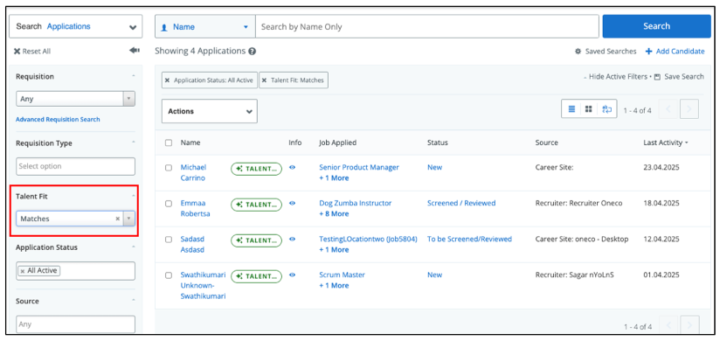
Is AI now picking the best talent?
AI is now the new hiring gatekeeper. 💂🤖 It's role? Read your resume, and tell the talent acquisition team how closely you match the job posting. Does your resume include the right keywords? If you get past the gatekeeper, will you survive the "7 seconds" human review? 🤓 If you haven't tried it yet, remember we host a free course on this, which includes a 🛠️ custom built Chat GPT helper to help you craft the perfect resume 🔥 Comment below with your best tips and tricks when it comes to job applications 👇
1 like • Oct '25
No. I work with AI daily, and its ability to function is constrained only by its programming/ learning. If the programmer/teacher suffers from the Dunning-Kruger Effect (which is rampant these days), then the programmer/ teacher will likely create an AI in their own image. The challenge will be for companies to include these AI entities in their QMS to ensure that what they want is what the AI is delivering.
0 likes • Oct '25
sure we could make a call work...not sure your time zone but I'm in Miami instructing till Nov 3rd ...so have a time to talk. I'm off today and working noon to 2000 each day starting tomorrow.
Oct '25 •
Show your love 📸
No cheating! Share with us the last aviation photo on your phone gallery! Bonus: share your Instagram or social media handle! You'll find me on Youtube at "The Global Life" and Instagram @journey.ofmercy Caption: One of our crews getting ready for a beautiful day of flying early morning! 🌅

1 like • Oct '25
B787 mid Atlantic...
Sep '25 •
Pilot Competency
How does an instructor determine the readiness of a student to take control of an aircraft filled with hundreds of people? How does he determine that a student has enough knowledge, common sense, cognitive, motor, communication skills, and emotional intelligence to function in this highly demanding and often dangerous and unforgiving environment? I suggest that the "Four C's" is a good process to use for this assessment. The Four C's represent Competency, Consistency, Confidence, and Curiosity. While all the points discussed in the paper above are essential, for the instructor, they can be condensed into these four key items. Competency - the Oxford Dictionary defines competency as "the ability to do something successfully or efficiently." The "or" in this statement raises some questions for instructors right from the start. While we definitely want our students to be successful, we also know the airline wants them to be efficient at the same time. Success can be observed for the most part, as everything we do in operating an aircraft has an end goal, and success can be measured by landing safely. But what about efficiency? How does an instructor correctly determine efficiency without some external scale? An instructor spends most of his time working alone; he has no connection to those who have any data that defines efficient operations. How does an airline determine the most efficient way to operate? It uses data collected from operations. It uses the data to modify training in hopes that the modification will result in better efficiencies in line operations. As we know, hope is a poor strategy, and this process is inherently time-consuming and inefficient. The company expects a transfer of training, but we all know that there has never been a verifiable way to determine whether training truly transfers to line operations. We want that, we expect that, but we don't know that it happens. Why? Because we have not agreed on a way to validate the transfer. The technology exists to validate the transfer, but many in the industry are blocking the way to a safer, more efficient way of training pilots and operating aircraft.
1 like • Sep '25
The assessment of competencies through the use of observable behaviours is sound; however, the challenge is to train both the instructors and the students to a level where these can be readily recognized and logically discussed. The application of the 4C's is more related to the development of gateways through which student development needs to pass to confirm successful completion. The student-centred debrief or self-debrief is really nothing new. Many airlines and aviation entities have used it for years. The challenge is to have an instructor core that understands the process and is educated enough to use developmental questioning effectively, thereby facilitating the process. The factors that affect success for the airlines are, of course, time and money to properly design, develop and integrate the program into the training department.
1 like • Sep '25
If Line Indoc is all you have control over, then you must work with what you have. The best application of the 4C's is throughout the training process. Suppose you have limited control over the outcomes from the simulator. In that case, I suggest creating an audit gate at the end of the training phase, especially if you're concerned about the quality of the trainees being produced.
Aug '25 •
💎Welcome! Please Introduce Yourself :)💎
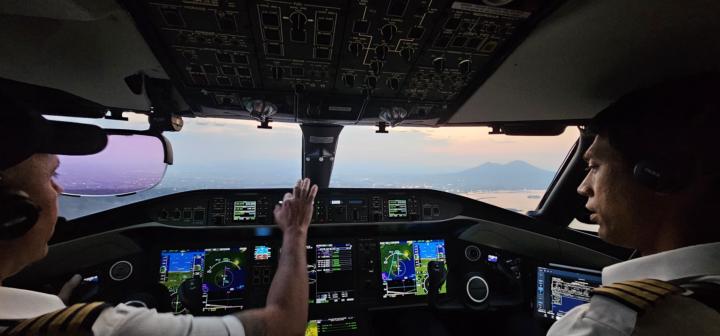
To kick things off, please comment below introducing yourself. Let us know... #1 - Who are you, where are you from and who do you work with? #2 - What do you want to get out of being in this community? #3 - For fun what do you like to do? #4 - Drop a photo of your office space or where you like to do work from. I'll go first... #1 - I'm Jean 👋 A professional pilot who has spent my life mastering the craft. I now work as a chief pilot for a large company in Canada, that operates business jets globally. I am a husband and father of 3, and my passion has been to pursue the Golden Rule, and serve those around me (including my beloved family) with all my skill and passion. #2 - In line with #1, my heart and passion is to give back and pursue the Golden Rule in every way possible. Here on Skool, it means giving back to this awesome community through what I've learned in my 20+ years of professional experience #3 - I'm a creative at heart. When not working you'll find me drafting a kid's story, pictures to go with it, a video for YouTube or perhaps hanging out with my famjam and our community! #4 - see below!
1 like • Sep '25
Hello, I'm Kevin Parker. I was born in London, Ontario, and now reside in a small town north of there. I have been flying professionally for over 40 years and run an Aviation services business focused on the development of hardware, software, and liveware related to airline flight operations and training. I recently wrote a book on the subject. I'm really looking forward to learning from all of you. For fun, I like to golf and play guitar, but not at the same time.
1-5 of 5

@kevin-parker-4822
Business owner, educator, lecturer, and Airbus instructor for a major airline. Former Director of Training, Chief Pilot, Assistant Chief Designer.
Active 1d ago
Joined Sep 23, 2025
Canada/ Thailand