Activity
Mon
Wed
Fri
Sun
Aug
Sep
Oct
Nov
Dec
Jan
Feb
Mar
Apr
May
Jun
Jul
What is this?
Less
More
Memberships
Etsy Digital Product Sellers
327 members • $9/month
AI Artist Lab
702 members • Free
🎬 Ai Storytellers📖
522 members • Free
REVENUE REVOLUTION
10.4k members • Free
Bio Builders
261 members • Free
Pinterest Skool
5.5k members • $7/month
Empowered AI Collective™
3k members • Free
AI-Driven Business Community
8.5k members • Free
Cooking Comfort Zone
51 members • Free
9 contributions to Bio Builders

🔥
May 8 •
🔥 My Simple Trick for Staying Green Every Day
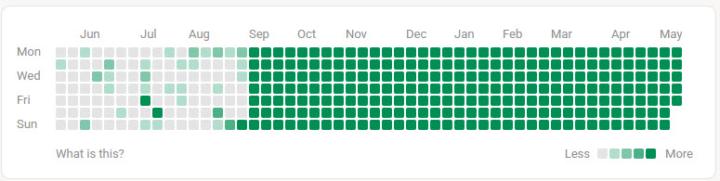
A lot of people ask how I keep my green activity green and keep the 🔥 flame icon next to my name. Here’s my simple trick… I know exactly when my “Skool day” resets. For me, it changes at 7 PM Chicago time. So most days, I intentionally stop responding between about 3 PM – 7 PM. That’s my time to go for a walk, make dinner, and unplug a little. Then after 7 PM, I jump back into Skool, check notifications, reply to people, engage in the community, and hitting 10+ activities becomes easy. The best part? No matter what happens tomorrow… I’m already green BEFORE the day even starts. 🔥 It takes the pressure off completely and makes consistency way easier.

1 like • May 9
@Nasty Soutt I'm sorry I don't understand
0 likes • May 9
@Jeff Baer nice work!
🔥
Apr 27 •
IRL Takeover Recap: Local SEO Skool with Vince Joyn 🚀
Last week, I jumped on a live call with Vince Joyn from Local SEO Skool—and we kept it real. Instead of just talking strategy… we BUILT something real. 👉 We created an IRL flyer designed to drive offline attention → QR scan → straight into his community. This is exactly what I’ve been preaching: Attention → Scan → Community Why this matters (especially for local businesses): Ranking in Google Business isn’t just “SEO”… It’s one of the most powerful lead sources you can have: 🔥 Inbound leads without paying for ads 📞 More calls, clicks, and direction requests ⭐ Instant trust from reviews + visibility 📍 Dominate your local area (you don’t need national reach) 💰 Higher conversion traffic (people are ready to buy) 🧲 Compounding visibility over time 📱 Mobile-first exposure right inside Google Maps 🚫 Less reliance on social media algorithms And here’s the opportunity right now: Vince’s Local SEO Skool is currently FREE to join… …but once he hits 100 members, it jumps to $9/month. If you want to rank in Google Maps, this is where you should be. Real strategies. Real conversations. People are actively working on the same goal. My move: 👉 Get in while it’s free 👉 Use simple IRL tactics (like flyers) to drive traffic 👉 Turn real-world attention into local visibility Online growth doesn’t start online. It starts IRL. — Jeff A replay of the call is in the comments.

2 likes • Apr 28
That flyer looks awesome!
2 likes • Apr 28
@Jeff Baer yes I’ve put some up at work and at the hospital where I go for dialysis. But I think I want to redesign my flyer and incorporate what I’ve learnt in your group more.
🔥
Apr 14 •
Why Dynamic QR Codes Scan Better Than Static
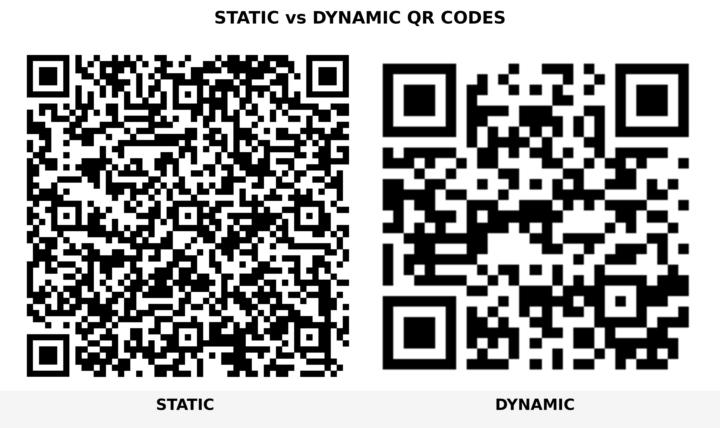
Rasheed Hooda reached out to me with a simple goal: 👉 “I want a QR code that helps me get reviews for my new Amazon book.” So we built two versions for him 👇 1. Static QR Code This is the classic. It points directly to one link — in this case, his Amazon review page. ✅ Simple ✅ Works forever ❌ No tracking ❌ Can’t be changed later 2. Dynamic QR Code This is where things get interesting. Instead of hardcoding the destination, the QR points to a flexible link. ✅ Track scans (see what’s working 👀) ✅ Update the destination anytime ✅ Optimize over time (swap links, test pages, etc.) Look closely at the codes The dynamic QR actually has a cleaner, simpler dot pattern. That’s not random. 👉 It’s because the URL inside is shorter. Dynamic QR codes use a redirect link first → then send users to the final destination. Shorter URL = less data = simpler code Simpler code = faster, more reliable scans Meanwhile, the static QR is encoding the full Amazon URL (which is long and messy), so it creates a denser, more complex pattern. One more important note 👇 We didn’t use a logo QR code here. Why? When your goal is getting reviews, reliability matters more than branding. ✔️ Plain QR codes scan faster ✔️ Work better across all devices ✔️ Reduce friction (especially on Amazon links) Logo QR codes look great — but they can introduce scan issues if not done perfectly. What I recommend 👇 If you want dynamic QR codes with tracking, I recommend using Skooly. It gives you: ✔️ Clean, short links (better scanning) ✔️ Scan tracking ✔️ Flexibility to update your destination anytime Same goal. Two completely different levels of control. If Rasheed wants something plug-and-play → static works. If he wants to learn, track, and improve results → dynamic wins all day
3 likes • Apr 14
@Jeff Baer I’m not sure what you mean by shortener. The URL for an Etsy store isn’t that long I feel (although that’s just my perception), it’s usually the name.Etsy.com I do like this idea for when I eventually move to my own website. My long term goal is to have my own website with an overarching umbrella name where I can host my various stores. I’ve named them all to fall under a collective nicely. I feel like a fluid QR would work well for this type of set up.
2 likes • Apr 15
@Jeff Baer ah now I understand. Yes each product URL is longer, and a shortener would be a good idea I imagine.
🔥
Apr 2 •
🔥 Our Flyers Are Turning Heads… Let’s Build Your Niche 🔥
The IRL flyers coming out of this community have been getting CRAZY attention 👀 Now we want to build more… based on YOU 👇 Drop a comment with: • Your niche • What you promote (offer, service, or link) We’re creating Canva-editable flyer templates themed around specific niches —but with fully customizable text and images, so you can make it your own and plug in your QR code. 🧠 Behind the scenes: My top designer of 15+ years is the one creating these… and yeah — he’s an absolute branding god. He’ll be personally going through the comments, looking for niches and ideas to turn into 🔥 flyer templates. 🗳️ Vote in the poll for your niche category: If your niche hits, we may turn it into a featured flyer template for the community 🚀 Let’s get more people scanned IRL. 👇 Drop your niche + vote in the poll
Poll
26 members have voted

4 likes • Apr 2
I’m in the event stationery niche on Etsy and I’ve previously put flyers up at my work and the dialysis units I go to promoting my designs. I think it’s a great way to get your business or community out there! And now I have some awesome QR codes to put on them!
4 likes • Apr 2
@Jeff Baer my work has lots of bulletin boards around it that I put them on, and at dialysis I asked to put them in the nurses break room where there’s a bulletin board.
🔥
Mar 8 •
Why We Renamed the Community to Bio Builders + Welcomes 🙌
You may have noticed the name change. What started as a community focused mainly on Skool bio pages has evolved into something much bigger — so it was time for a name that reflects where we’re headed. Bio Builders is the new name because we’re no longer just talking about one type of bio page. We’re building an ecosystem around three powerful domains: • skool.bio – showcase and promote Skool communities • author.bio – share your published works, podcasts, media appearances, and communities • ez.to – create flexible link-in-bio pages you can use anywhere online Together, these tools make it easy to build a professional online identity that lives under your own URL. Whether you want to: • promote your community • showcase books, podcasts, or content• build an affiliate hub • create a personal brand page • or launch a clean link-in-bio Bio Builders is where we design and experiment with all of it. 🙌 Welcome Our Newest Members Let’s also give a big welcome to the newest members who joined us recently: • @Daphne Flores (referred by @Mindy Molein ) - Helping you feel safe in your body and release shame patterns so you can stop abandoning yourself • Somatic Coach • Author of Reparenting for Adults • @David Fritsch - I'm an IT nerd and constantly striving to improve myself. I can't stand still. Trading is my chance to escape the rat race. • @Caroline Tilly Rose — Work from home mum. Chronic illness warrior. SEN mum. Digital Marketer • @Angela Day (referred by @Mindy Molein) I help you prevent pain and injury in your dog. Have peace of mind knowing that you'll catch tiny problems before they become massive vet bills • @Dennis Mbogori (referred by @Paulo Costa, The Roaster ) - Helping believers discover identity and lead with purpose. Pastor | Maxwell Leadership Coach | Author, Affirm Your Greatness.

2 likes • Mar 8
I love your inclusion of our bios! Keen to keep learning
1-9 of 9
@kate-cheong-wing-6778
Owner of two Etsy stores selling digital products, specialising in event stationery and clipart. Loving the creative journey.
Active 10h ago
Joined Mar 4, 2026
Powered by