Activity
Mon
Wed
Fri
Sun
Aug
Sep
Oct
Nov
Dec
Jan
Feb
Mar
Apr
May
Jun
What is this?
Less
More
Memberships
Empire Mambo Foundations
618 members • Free
Bachazouk by Masa & Polina
969 members • Free
Salsa Classes Online
155 members • $35/m
Legaski Club - FREE
1.1k members • Free
Social Dance Mastery
365 members • $29/month
D&Y Salsa Academy (Free)
2k members • Free
7 contributions to Social Dance Mastery
Mar 4 •
🚨 Day 2 of the On2 Timing Accelerator is LIVE! 🚨
The Day 2 lessons are now uploaded in the classroom inside the On2 Timing Accelerator. Remember—this is a daily course, so make sure you’re keeping up with the videos as they release. The transformation really happens when you watch the lessons, practice the exercises, and respond in the comments so we can work through the material together. I put a lot of work into these lessons to make them powerful and practical. Each day includes: • Training videos • Listening resources • Curated playlists • Rhythmic practice exercises If you follow the process, this program will seriously transform your relationship with On2 timing and musicality.🎶 🔥 Premium members get the entire accelerator included with their membership (huge discount compared to buying it separately). If you haven’t joined yet, now is the perfect time to jump in and start training with us. 😁 See you in Day 2! 💃🏽🕺🏽


0 likes • Apr 11
Currently on Day 2 - Video 2. Daaaamn... I thought the beginning of the Call & Response Practice too easy. The you started combining 2 rythmic cells during the call - my brain did not expect that! It's like tongue twisters but for the brain haha. I gotta practice everyday! Do I need to be perfect on Tresillo, Habanera and Cinquillo in order for me to be in that full integrated musical embodiment? Is mastery of these ryhtmic cells essential for me in order to understand/embody the instruments that are integrated in the modern salsa music?
Mar 2 •
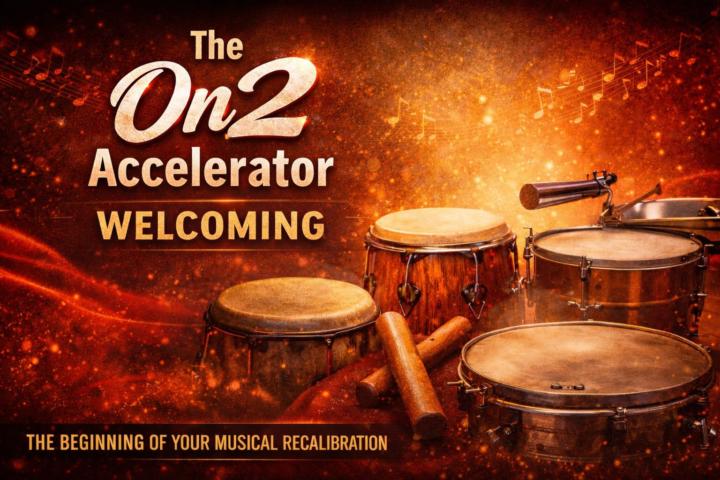
🔥 We Just Launched the On2 Timing Accelerator
😉 We just began our 14-Day On2 Timing Accelerator inside the classroom — and this is one of the most powerful musical recalibrations we’ve ever built inside this community. If you’ve ever: • Struggled with On2 timing • Felt stuck counting instead of feeling • Wanted to connect deeper to Afro-Cuban percussion • Wanted more confidence socially • Wanted to truly understand syncopation This is your moment. Over the next 14 days, we’re moving through three immersive studios: 🎼 The Heritage Studio (cultural and musical roots) 🥁 The Musician’s Studio (training your ear and rhythmic awareness) 👣 The Mechanic’s Studio (embodied timing and body integration) 🚀 How to Join The On2 Timing Accelerator is available exclusively to Premium Members. If you upgrade today, you get instant access to everything we’re building over the next 14 days. To join: 1️⃣ Become a Premium Member 2️⃣ Go to the Classroom 3️⃣ Click “On2 Timing Accelerator" 4️⃣ Start with the Welcome Lesson We just started — so you’re not behind. This is the perfect time to jump in. If you’re serious about upgrading your salsa timing in a deep, embodied way… Now is the time. Drop a 🔥 in the comments if you’re in — or if you have questions about upgrading. Let’s build this together.
2 likes • Mar 3
For some reason, lesson 1 is not loading… only the intro video is loading.
Jan 23 •
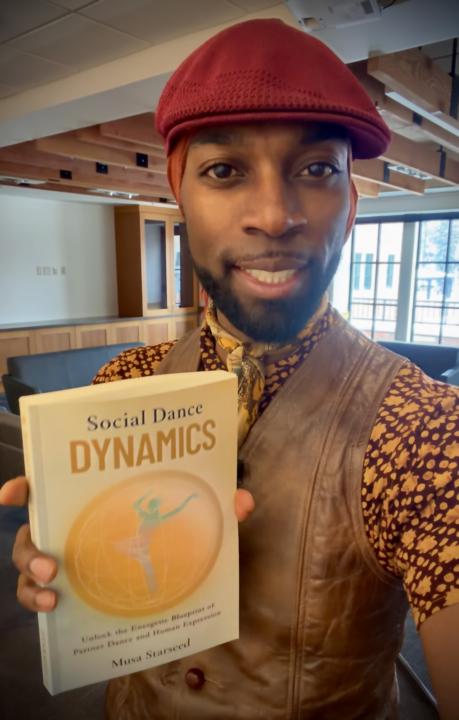
📘 Premium Members Get a FREE Copy of Social Dance Dynamics
I’m excited to share this with the community 👇🏽 If you become a Premium Member, you’ll receive a FREE copy of my book Social Dance Dynamics. This book goes deep into: - The hidden energy dynamics of partner dancing - Polarity, presence, and connection beyond steps - Why some dances feel magnetic and others fall flat - How to embody timing, flow, and attraction on the floor This isn’t just theory—it’s the foundation of the work we’re doing here in this community. 👉 Premium Members - Get the book included - Get access to exclusive trainings + discussions - Get deeper guidance on embodied movement and partner dynamics If you’re already a Premium Member, I’ll be sharing details soon on how to receive your copy. If you’re not yet—this is a great time to upgrade. Drop a 📖 or “DYNAMICS” in the comments if you have questions. — Musa
0 likes • Jan 26
This is so sweet and generous of you! I’m very excited about this! I live in Canada and I know how expensive it could be to ship across the border. I’d be willing to cover the shipping expenses if anything. Can’t wait! 🤩
0 likes • Feb 13
@Musa Starseed sent you an email! Thank you!
Jan 21 •
This Beat Tells You When to Dance On2 (3rd Beat of the Clave)
Most dancers learn what timing to dance…Very few are taught what to listen for. This video breaks down the 3rd beat of the clave—the musical cue dancers use to initiate the son contra-tiempo time step and lead into the second beat of the measure. Instead of counting numbers, this lesson helps you hear anticipation in the music. 🎶 In this video, you’ll learn to: - Identify the 3rd beat of the clave by sound - Understand why this beat signals movement initiation - Feel how contra-tiempo timing stays grounded and smooth - Visually track timing so your body responds naturally 👂 After you watch, reflect and comment below: 👇 Choose one prompt: 1. When you focus on the 3rd beat of the clave, does on2 feel earlier or more relaxed? 2. Does this change how you think about leading vs reacting in timing? 3. Where else have you heard this sense of anticipation in salsa or son? 💬 Short answers are perfect—this is about training awareness, not writing essays. The more clearly you hear this beat, the less you’ll ever need to count.This is how timing becomes embodied instead of intellectual.
0 likes • Jan 22
On the 3rd beat I can slow down and breathe. I understand clearly how 3/2 vs 2/3 clave differ now but I’m not sure how to apply this when social dancing. I would guess that the piano and conga have the same anticipation?
Jan 21 •
Hear the Moment Everything Changes: Finding the Montuno in Danzón
There’s a precise moment in danzón where the music stops being linear and starts becoming cyclical, conversational, and dance-driven. That moment is the montuno. In this video, I break down how to hear the montuno section inside danzón, using a visual + listening approach so you can clearly recognize: - When the montuno enters - How the energy, repetition, and dialogue shift - Why this moment is a major bridge toward son, mambo, and salsa This isn’t theory for musicians—it’s ear training for dancers. 🎧 The example comes from one of the earliest danzones to feature a montuno section, composed by José Urfé, marking a turning point in Afro-Cuban musical structure. 👇 After watching, jump into the discussion: Choose one prompt and comment below: 1. What do you feel change in the music when the montuno begins? 2. Does this section make you want to move more repetitively, more playfully, or more grounded? 3. Where do you recognize this same feeling later in salsa or mambo? 💬 Even one sentence is enough—shared listening sharpens everyone’s musical awareness. When you can hear the montuno clearly, your dancing naturally shifts from reactive to responsive.This is how musicality becomes embodied.
0 likes • Jan 22
Me I get more inclined to do shines and be more expressive in a playful way when montuno hits. Hmmm I feel similar during the mambo part too… except for mambo I like to put more energy on my steps and I tend to look sharper. Whereas with montuno I feel more flowy.
1-7 of 7