Activity
Mon
Wed
Fri
Sun
Mar
Apr
May
Jun
Jul
Aug
Sep
Oct
Nov
Dec
Jan
What is this?
Less
More
Memberships
Peptide Price
8.7k members • Free
19 contributions to Peptide Price

🔥
2h •
My 5-Peptide Longevity Stack (Full Breakdown)
Been diving deep into the longevity side of peptides lately. These aren't the "sexy" fat loss or muscle building compounds—this is the boring maintenance stuff for long-term health. When you look at what actually matters for aging at the cellular level, it comes down to a few key pillars: - Telomere maintenance - Mitochondrial function - Metabolic efficiency - Tissue regeneration - Immune competence Each of these peptides targets one of those areas. Epithalon — Telomere Support & Pineal Function The granddaddy of anti-aging peptides. Developed by Professor Vladimir Khavinson at the St. Petersburg Institute of Bioregulation and Gerontology—the research goes back 35+ years. Studies show it activates telomerase (the enzyme that maintains telomere length), supports melatonin production, and increases antioxidant enzyme activity. Protocol: The Russian protocol calls for twice-yearly administration (January & October). Either 5mg daily for 20 days or 10mg daily for 10 days—same 100mg total dose, different timing. Evening subq to align with natural melatonin release. SS-31 (Elamipretide) — Mitochondrial Optimization Targets the inner mitochondrial membrane specifically by binding to cardiolipin, a phospholipid essential for electron transport chain function. Research indicates that as we age, cardiolipin gets damaged and mitochondrial efficiency tanks. SS-31 stabilizes it, improves ATP production, and reduces reactive oxygen species. Protocol: Literature suggests 1.25-5mg daily for 4-6 week cycles, twice a year (spring and fall). Morning subq to support daytime energy demands. MOTS-C — Metabolic Regulation One of the few mitochondrial-derived peptides identified—encoded in the mitochondrial genome, not nuclear DNA. Discovered in 2015 at USC. Functions as an exercise mimetic: activates AMPK, enhances insulin sensitivity, promotes fatty acid oxidation, and induces metabolic adaptations similar to training. Protocol: Research protocols use 0.5-1mg, 5 days/week for 6-8 week cycles, 2-3x per year. Morning or pre-workout subq.


0 likes • 2h
Love the color picture! How do you create these they’re awesome & thanks for sharing this with us Derek :)
🔥
3d •
Happy Friday! Reminder To Get Your Steps/ Workout In
There's supposed to be a huge winter storm hitting the US over the next couple of days, so don't take today for granted. Make sure to get your steps and your workout in for today. Mine is attached below. Finally getting back into squatting! Remember, the research doesn't work unless you do! 💪

2 likes • 3d
Got mine in this morning! Day two. LFG
0 likes • 3d
@Derek Pruski that we are! -20 yesterday and I still made it in. LFG!! Where you from Derek?
🔥
14d •
🎁 Flawless & Glow Just Dropped a Loyalty Program + Sale Running
Flawless Compounds and Glow Aminos just launched their loyalty rewards program—and it's actually straightforward. 💎 How the Loyalty Program Works Earning Points: - 5 points per $1 spent - $100 order = 500 points - $200 order = 1,000 points Redeeming Points: - 100 points = $1 off - 500 points = $5 off - 1,000 points = $10 off The Bottom Line: You're getting 5% back on every purchase in the form of points you can use on future orders. Example: - Spend $100 → Earn 500 points - 500 points = $5 off next order - That's 5% back Simple. No tricks. Just consistent value for repeat customers. 🔥 January Sale Still Active (Through 1/31) If you're setting up your account or restocking, their thank-you sale is running all month long: ✅ 10% OFF sitewide (automatic) ✅ Extra 15% OFF with code DEREK15 ✅ Buy 2 Get 1 FREE (all January) That's 25% off + a free vial when you stack everything. 📌 Details: - B2G1 applies when 3 items are in cart (lowest-priced vial is free) - Mix & match allowed - Free shipping over $150 - Sale runs through January 31st 🔗 Shop: - Glow Aminos: https://glowaminos.com/?coupon=Derek15 - Flawless Compounds: https://flawlesscompounds.com/?coupon=Derek15 - Compare prices: https://peptideprice.store 👀 Sneak Peek: New Products in Testing Flawless/Glow are working on some interesting blends. Here's what's coming: - AM Shred - MitoCore (NAD / MOTS-C / 5-Amino) - NeuroMatrix (Pinealon / NA Semax / NA Selank / P21) - Selank/Semax (5mg / 5mg) - Reta/Cag (20mg / 2.5mg) No release dates yet, but these are on the radar. Questions? Drop them below 👇 RESEARCH USE ONLY. NOT FOR HUMAN CONSUMPTION.

1 like • 14d
Love when companies offer these!! Or how Valor did the lifetime code. Thank you Derek.
0 likes • 14d
@Michael Smith Unfortunately no!
🔥
14d •
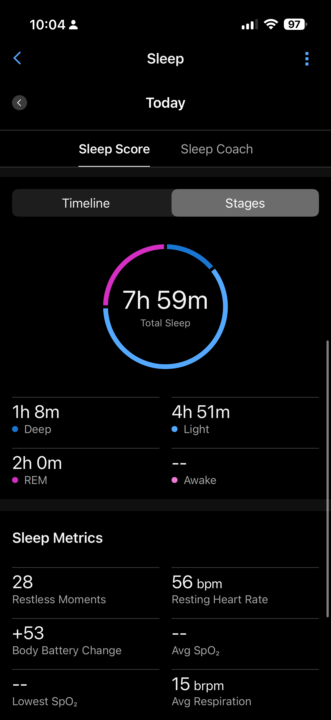
I Think I Found the Sleep Stack 96 Sleep Score
I just wanted to share with the group. I’ve been experimenting with different sleep stacks for research purposes. I won’t give out the full stack yet however, I just achieved my best sleep score ever at a 96. Typically before this I was anywhere from 50s to 70 sleep score wise and barely getting 20 to 30 minutes of deep sleep. I’ve been making a lot of changes outside of peptides too, and I will share all of those with the group once I nailed down, what’s actually helping. I’m actually very proud because my New Year’s resolution was to focus on better overall recovery and sleep! To give a little hint the Stack does involve the melatonin sleep blend from modern.
1 like • 14d
Do you mind sharing the app you are using?
🔥
19d •
Renova Has One Week To Prove Themselves
I've seen two sides of feedback from Renova 1. Everything shipped fine and satisfied 2. No customer support and messed up orders I've always wanted to provide the best priced options that are legit and give you good experiences. A lot of times that's a gamble to see if they will scale properly to build a real company out of the opportunity. With that said anyone with unanswered customer service requests from them fill out this form on https://peptideprice.store/customer-service and I'll get it taken care of personally. I lit a fire under the owners ass to get things cleaned up and this is their final chance. We'll see what happens and if things actually change. I'll keep everyone updated 🤝
2 likes • 19d
what does this mean for reta one? I believe I remember seeing a post of yours or someone saying that Renova and Reta one are affiliated or under the same ownership. I never ordered from Renova, but I have ordered from Reta one a few times and have never had any problems.
2 likes • 19d
@Derek Pruski gotcha thanks for the clarification. Thanks again for all you do Derek we truly appreciate the work you do!
1-10 of 19