Activity
Mon
Wed
Fri
Sun
Apr
May
Jun
Jul
Aug
Sep
Oct
Nov
Dec
Jan
Feb
Mar
What is this?
Less
More
Memberships
CEO Lab (Marketer Skool)
1.8k members • $97/month
WavyWorld
46.9k members • Free
Growth Elite by Perspective
4.8k members • Free
The AI Advantage
76.3k members • Free
Accelerator
9k members • Free
Remote Closing Academy
1.8k members • Free
Sales Training & Placement
8k members • Free
HighLevel Quest
13.5k members • Free
AI Automation Agency Hub
301.6k members • Free
31 contributions to CEO Lab (Marketer Skool)

17d •
Not a good day
Hello everyone! It's been a tough day. I thrive on positivity and being connected, but I am getting discouraging feedback from my son, who thinks this market is oversaturated. I assured him it's still a prime time to pursue this. I'm determined to pursue this. I will NOT stop.

3 likes • 15d
Let's look at the big picture son! Are we in this for the Short win or the long game? Do you want to make a quick buck and keep having to make a quick buck with every new shinny object offer that some scammer sets up ? or do you want to build a business that Solves a problem that never goes away? It's not about the Technology, it's about the Human need we fulfill. Humans are stuck in holes and they need a guide to help pull them out, give them a plan, get them on the right track so they avoid failure and get the success they want. That market is NEVER Saturated!
15d •
Funnels vs Websites ?
A website is your home base. A funnel is your guided path to one specific outcome. A website is built to serve many types of visitors with many possible goals and is discovered via Organic Search, Email marketing, referrals... - Build trust and credibility - Explain who you are, what you do, and why it matters - Let people explore (services, about, blog, gallery, contact, reviews) - Support multiple actions (call, book, learn, browse, read, buy) - Lots of navigation options - Multiple pages and choices - Great for people who are still researching -Someone lands on your homepage and can choose: “About,” “Services,” “Pricing,” “Book,” “Blog,” “FAQs,” etc. A funnel is designed to get a visitor to take one main action with as little distraction as possible. - Generate leads from paid traffic (book a call, request a quote, download a freebie) - Sell one offer (a service package, a workshop, a product) - Move someone step-by-step from curiosity to decision. - Minimal navigation (often none) - A single message to a single audience - Measures conversion clearly (how many visited vs how many acted) Simple example: Create an Ad or post → landing page(Funnel) → opt-in or book call → confirmation page → follow-up emails/texts. - Website = “Come in and look around.” - Funnel = “Follow me, this way.” - Building long-term credibility, SEO, and serving multiple audiences: website - Consistent leads or sales for one offer you are pushing traffic to : funnel Most businesses need both: a website that builds trust + funnels that convert specific paid and targeted traffic. I Hate to say it but no body cares about our logos. Put the logo in the far left corner , make it small. Dominate your Core message with the bulk of the Hero section. 5 things every hero section should include, in this exact order: 1. Clear Outcome Headline - Say what the customer gets, in plain language.Example: “Get more local customers without wasting money on marketing.”
22d •
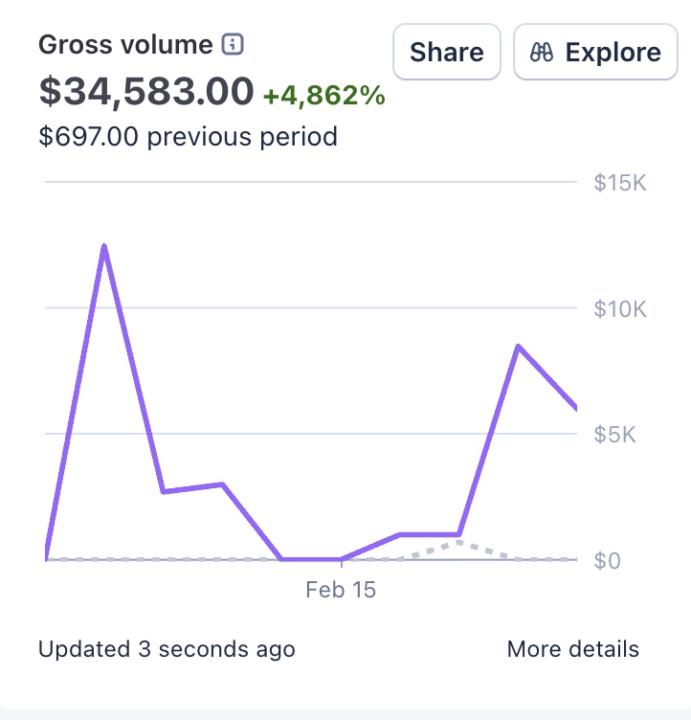
Closed 35k in 7 Days!
Hey yall. I’ve been a bit absent recently but I wanted to share my most recent win. Over the past 7 days I’ve done 1 in person speaking event and 1 webinar and between the two we’ve closed about 35k MRR (which beats Jeff’s previous record of 31k in a week👀) The one-to-many slides Jeff posted a couple weeks ago were A GAME CHANGERRRRR. If you’re running any sort of one to many speaking event please use them, they saved me so much time and clearly work well. I’m super excited to see the fruits of my labor that I’ve been putting in for almost 2 years. Everything gets more fun when you actually start seeing results, so for those of you out there who are grinding every day, I promise you it gets easier if you stick with it. Do not quit. Special thanks to @Jeff Lopez and @Charles Guerra for pouring so much knowledge into me and this group for so long, I would not be here without them. Keep crushing everyone, it’s only up from here!
7 likes • 21d
You Rock!!!!🎸
21d •
New Client!
I was at a morning coffee networking meeting, told the group what I do - “I build Smart websites for small businesses and integrate AI to answer questions and answer Calls. “ A new bike service /rental shop owner texted me asking for help with her site. I booked an appointment with her the next day and spent 2 hrs learning about her business and customers and what she wants. - website upgrade and basic maintenance . No AI yet. - $1000 for the site improvement - $250 a month for basic updated - If she converts to GHL I’ll charge her $97 a month to host her site. - Proposal is being submitted today
29d •
Does GHL have Compliance Certification?
Compliance = proof that the software is secure and won't leak data. Think of it like a report card, but for cybersecurity. getting that report card. SOC 2, ISO 27001, ISO 42001 (for AI specifically) are just different types of report cards that prove "we take security seriously and follow best practices." Who needs it: Any software company trying to sell to bigger customers. The bigger the customer, the more they care about seeing that report card before they'll sign a contract. For AI companies specifically (like the ones building AI chatbots, AI tools, etc.), there's extra scrutiny now because of all the data they handle. That's where frameworks like ISO 42001 come in - it's basically the compliance standard designed specifically for AI systems. The reality: Without these certifications, most enterprise deals just die in legal/security review. With them, deals close 3-5x faster. That's the gist!
1-10 of 31
@jody-royee-4749
Stop losing customers to missed calls and poor follow-up.
We install AI Systems that answer calls, Text back, capture leads, and follow up like a pro.
Active 4h ago
Joined Dec 15, 2025
ENFP
Carmel California
Powered by