Activity
Mon
Wed
Fri
Sun
Jun
Jul
Aug
Sep
Oct
Nov
Dec
Jan
Feb
Mar
Apr
What is this?
Less
More
Memberships
The Healthy Coop Collective
48 members • Free
Ecom Toolbox
52 members • $89/month
Amazon Influencer Hub
232 members • $34/month
AIP Insiders + EAM
344 members • Free
Walmart Sellers Network
175 members • Free
FBA Today (Amazon Sellers)
2.8k members • Free
HB Sourcing Camp MARCH 2025
128 members • Free
3 contributions to The Healthy Coop Collective

Jan 26 •
💦 Water Requirements: The Most Critical Nutrient for Your Flock
🧐Pop quiz: What's THE most important nutrient for chickens? If you said water, you're absolutely right! Let's dive into why water matters so much. 🔬The Science: 🐥Chickens can survive weeks without food but only DAYS without water. Water makes up about 55-75% of a chicken's body weight and is essential for virtually every bodily function! How Much Do They Need? 🐔A laying hen drinks approximately 1-2 cups per day (more in hot weather!) 💦Chickens drink 1.5-2 times as much water as they eat feed ☀️Hot weather can DOUBLE or TRIPLE water consumption 🥚Broody hens often dehydrate because they rarely leave the nest Why Water Matters So Much: 🌡️ Regulates body temperature (chickens can't sweat!) 🚞 Digests and transports nutrients 🥚Produces eggs (eggs are 74% water!) 🐓Eliminates waste products 🩸 Maintains blood volume Signs of Dehydration: 🥚 Decreased egg production (first sign!) 🐔 Pale, shrunken comb 🤒 Lethargy, weakness 🐥Thick, sticky saliva 👀 Sunken eyes Water Quality Matters: 🐤Change water DAILY minimum 🐤Clean waterers regularly (biofilm harbors bacteria) 🐤Never let waterers run dry 🐤Check multiple times daily in extreme heat 🐤Winter: Prevent freezing Research Fact: A 10% loss of body water is fatal to chickens! Your turn: 1. How many waterers do you have for your flock size? Enough backup? 🚰 2. Ever had a water disaster? (Frozen solid? Knocked over? Played in? Tell us!) 😅

2 likes • Feb 5
We made sure we brought in the water bucket each night during our deep freezes last week. Set it out fresh and unfrozen each morning.
Jan 28 •
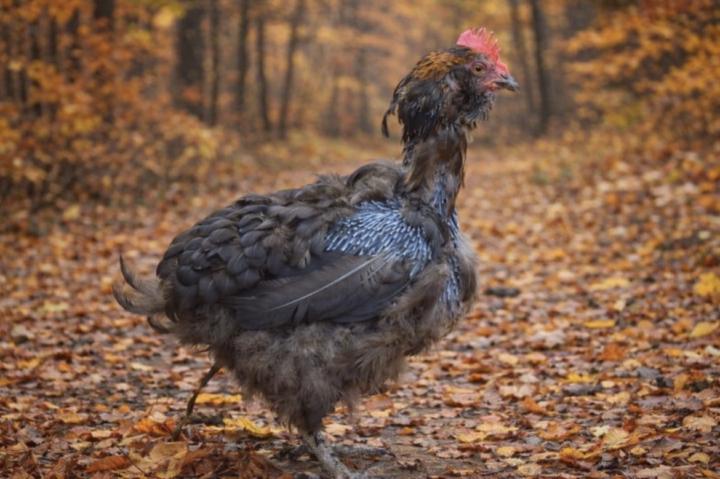
🪶 Molting Science: Why Chickens Lose Feathers & What They Need
Is your chicken looking like she lost a fight with a pillow? She's probably molting - a completely normal (but dramatic!) process! What IS Molting? The natural shedding and replacement of feathers, typically once a year. It's essential for maintaining healthy, functional plumage. When Does It Happen? 🪶Usually late summer/fall as daylight decreases 🪶Triggered by decreasing photoperiod (day length) 🪶First molt around 16-18 months old 🪶Takes 8-16 weeks to complete (varies by bird!) The Molting Process: Head → neck → body → wings → tail follows a predictable pattern! 🐓Some birds are "hard molters" (fast, dramatic) 🐔Others are "soft molters" (gradual, barely noticeable) Why Egg Production STOPS: Feather production requires MASSIVE protein and energy! Research shows growing new feathers takes priority over egg production - hens literally can't do both simultaneously. Critical Nutritional Needs: 💪 PROTEIN is key! Feathers are 80-85% protein 🐤Increase protein to 18-20% during molt (vs. 16% layer feed) 🪱Offer high-protein treats: mealworms, black oil sunflower seeds, scrambled eggs 🐤Ensure adequate methionine and cysteine (sulfur-containing amino acids) Normal vs. Concerning: 😊 Symmetrical feather loss following head-to-tail pattern 😊 New pin feathers emerging 🤒 Bald patches with no regrowth 🤒 Feather pecking by flock mates 🤒 Year-round feather loss Your turn: ❓Ever had a chicken molt so dramatically you thought she was sick? Share the your story! ❓What's your go-to high-protein molt treat?
0 likes • Feb 5
My chickens are just at a year old. Two of them started molting a few weeks ago. (We only have 3.) I really need to go get them some mealworms. We got all three as chicks at the same time, but one has always been behind the others in development. The third stopped laying for a while as well as she was recovering from a bad leg wound. Now that it’s healed up she is back to laying.
Jan 27 •
🐓 Understanding Chicken Breeds: Production vs. Dual-Purpose vs. Ornamental
Ever wonder why some chickens lay 300 eggs yearly while others barely hit 150? It's heavily in the genetics! Let's break down breed categories. PRODUCTION BREEDS (High Output) 🥚Egg layers: Leghorns, ISA Browns, Golden Comets 🥚Bred for maximum egg production (280-320 eggs/year!) 🥚Smaller body size, efficient feed conversion 🥚Shorter productive lifespan (1-3 years peak) 🥚Often flighty, less broody DUAL-PURPOSE BREEDS (Balanced) 🐤Examples: Plymouth Rocks, Orpingtons, Wyandottes, Rhode Island Reds 🐤Good egg production (200-280 eggs/year) + decent meat weight 🐤Calm temperaments, go broody more readily 🐤Longer productive lifespan 🐤Better foragers, hardier ORNAMENTAL/HERITAGE BREEDS (Beauty & Genetics) 🐔Examples: Silkies, Polish, Sebrights, Cochins 🐔Bred for appearance, show quality, or genetic preservation 🐔Lower egg production (100-180 eggs/year) 🐔Unique characteristics (feathered feet, crests, bantam size) 🐔Often excellent mothers, friendly pets ⚖️The Trade-Off: Research shows intensive selection for production traits often reduces: disease resistance, longevity, broodiness, and foraging ability. High producers need more management! Matching Breeds to Goals: 🐥Want maximum eggs? → Production breeds 🐥Backyard pets + decent eggs? → Dual-purpose 🐥Conservation + unique birds? → Heritage/ornamental Your turn: ❓What breed is your favorite and why? Personality, eggs, or looks? 🏆 ❓Ever been surprised by a breed not living up to (or exceeding!) its reputation? 😲
Poll
7 members have voted
1 like • Feb 5
For now eggs. It’s almost been a year since we got our chickens. A lot to learn still! But they made it through the winter. Two of the three are molting. I’m looking forward to when they all start producing again.
1-3 of 3
Active 11h ago
Joined Feb 5, 2026
Powered by