Activity
Mon
Wed
Fri
Sun
Jun
Jul
Aug
Sep
Oct
Nov
Dec
Jan
Feb
Mar
Apr
May
What is this?
Less
More
Owned by Jennifer
ADHD, mood disorders, behavioral issues (oh, my!). If you're parenting in the deep end, this is your community. Real tools, real talk, DBT-backed.
Memberships
AI Visibility Lab
38 members • Free
The Rooted Reset Rising Room
40 members • Free
Healthy People Have Gardens
19 members • Free
The Cold Coffee Club
317 members • Free
The Daily Sales Incubator™
156 members • Free
Wild + Free
8 members • Free
Skool Scale Camp
4.9k members • Free
Skoolers
189.2k members • Free
The Blind Pig [for SkoolOS]
15 members • Free
11 contributions to Healthy People Have Gardens

4d •
Triage
My last "regular" job was night shift on a very rural ambulance as a tech. We were the only ambulance covering 1500 square miles, and the nearest hospital is 20 miles west of our western border (95 miles from our eastern border). For 50% of our calls, it was just me and my driver who only had basic CPR training. Although I rarely needed it at work, triage is a skill I use at least weekly for the ranch. Every Sunday morning I plan out my week, identify bottlenecks for time or resources and plan how to navigate it. This is fully knowing that there WILL be things that derail the schedule. Early in the morning I walk through the animals at home, doing a quick visual scan for abnormal behavior or obvious injury. Also, making sure everyone is in the spot they are supposed to be (goat life). Then, if needed, I could triage what to do when and what resources I would need. Fast noticing is a skill is developed over time, and it's usefulness isn't limited to medical stuff. If you grew up in a rough home, sadly, you are likely already good at this. It is also sometimes an autistic superpower. The professional name for this skill is situational awareness. It is the ability to quickly notice and evaluate your surroundings including the behavior of other people, identity things that are not "normal" and decide what you need to do to either stay safe or alter the undesirable possible outcome. An example would be if you were at a farmers market with your small kids. You notice that several stalls away, there is a man acting very aggressively with a vendor. You choose to casually go the other way and skip that row until later. Another situation is that you notice a small child wandered off from its parents and is heading towards a road. You step in front of the child to redirect the movement. The faster you are able to notice, the more time you have to evaluate, and therefore, make a better choice. You can also develop awareness over long time periods. I know that right now I am dependent on the feed store for rabbit food and I know my demand will go up once the next round of moms have babies. I also know that the price of feed is tied closely to the price of fuel, so I need to respond now to avoid issues in June.


1 like • 4d
I do this all the time; didn't realize it had an official professional name!
1 like • 3d
@Kate DuBois this made me smile. 😊
10d •
Friday flubs.. (new series).
The best gardeners (and farmers) are the ones who have put in the reps, made the mistakes and learned from them. On Fridays I will (and I invite you to) share the things I learned the hard way so we can learn from and support each other. There is no such thing as a perfect garden.

1 like • 10d
@Olivia Radcliffe oh my gosh this is me with my dogs, all the time. They eat absolutely every green thing they can! They're really more like goats.
1 like • 10d
@Kate DuBois I feel this. I have done this kind of thing about 1 million times. And...at least you aren't giving up!
20d •
Gardening and homesteading with no time available
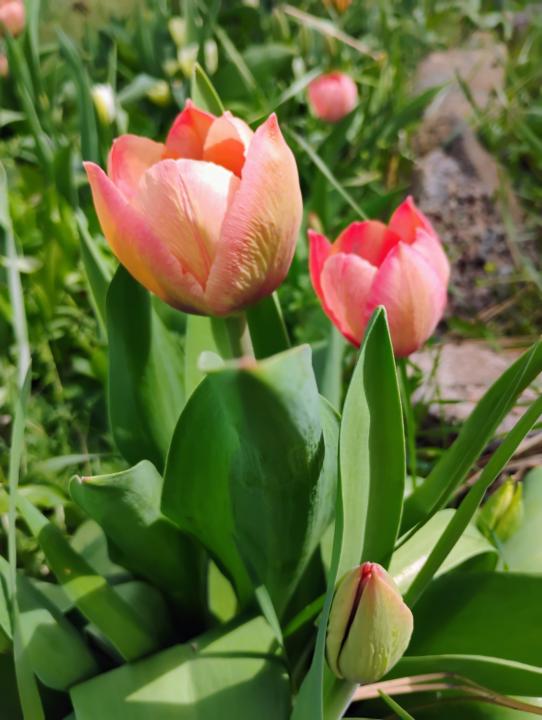
Psst , don't tell anyone....although it sounds super fancy, with all the stuff I do, it really doesn't take a ton of time. I have developed systems and rhythms that reduce both the time and mental load, so a lot of it runs on mental autopilot while I am half awake and thinking about other things. My planting list for this week took less than 10 minutes to do. (Except the houseplants). Which is why in February I break it down week by week what I need to plant for the season. Then each week I just look at the list and do the small steps. It is easy enough to be able to do even if my life/ADHD is super challenging that week. My 100+ houseplants take about 10 minutes per week to care for. The 20 rabbits now only take 10 minutes a day (total) to care for (except for breeding stuff). Systems and rhythms are my biggest strength. They mean I can keep going when I am sick, or busy caring for family members, or just really distracted. The concept of permaculture is an established set of 12 steps to build systems that are efficient, reduce inputs or waste, and sometimes run themselves. It was originally for ecologically based food systems, but the sequence applies to medicine, families and business as well. What is one task in your week that you wish you had a better or more streamlined system for? What is one system or rhythm that you have developed that you are really proud of? Image of tulips blooming in my yard from a few days ago.
1 like • 20d
More and more I'm understanding the need for more of these in my life - for everything. I do have a good system for medicating my dogs (I have 5; 3 on meds) and it's a mini-system to manage that; so I'm proud of that! But I definitely need more - everywhere!
Mar 26 •
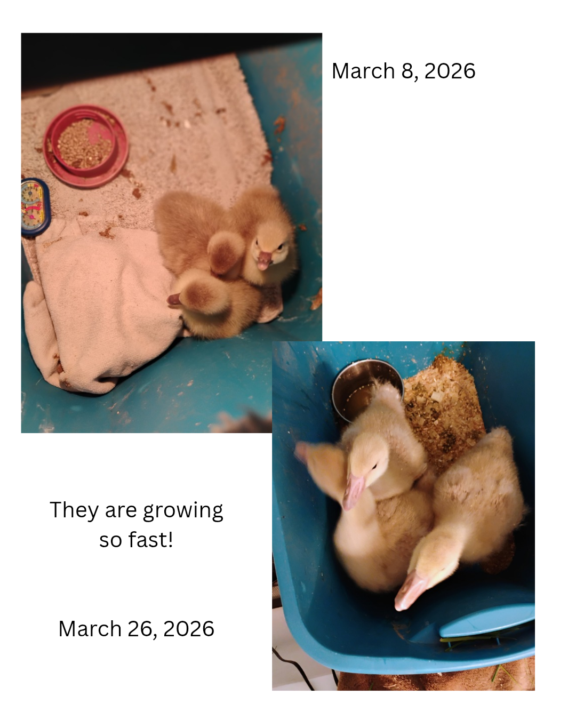
Gosling update..
The goslings got to swim for the first time today. Afterwards I put them back in their old tote to let them dry off. Absolutely amazing how fast they are growing.
1 like • Mar 26
Oh my gosh they are adorable!!! 💜
Mar 7 •
Guess the due date...
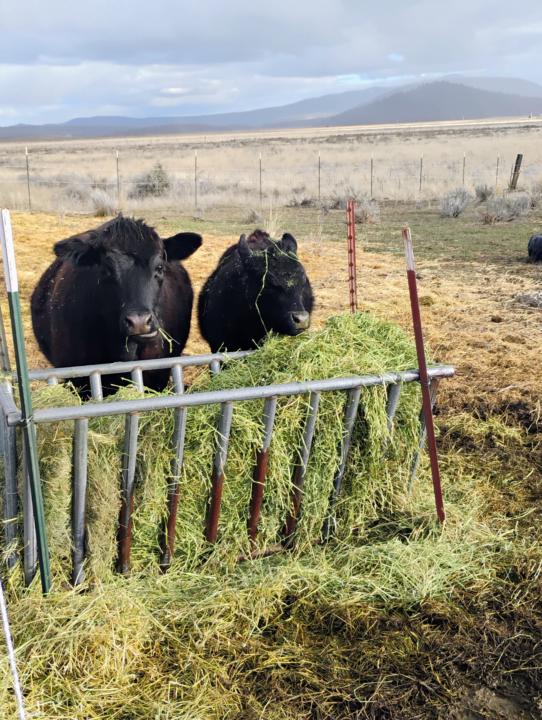
Agnes is due to deliver her first calf sometime in the next few weeks. Between March 7th and March 28th. Put your guess in the poll below. Person who gets closest will get a few packets of my favorite seeds. I'm guessing March 13th because I will be gone the whole day... 😂
Poll
5 members have voted
1 like • Mar 8
I went with the 15th. Hoping she does well no matter the date!
1-10 of 11

@jennifer-criego-4336
Mom & wife who coaches parents of high-needs kiddos. Love dogs & wine. Hardest worker around, balancing unrelenting drive with authentic positivity.
Active 34m ago
Joined Dec 31, 2025
INFJ
MN