Activity
Mon
Wed
Fri
Sun
Aug
Sep
Oct
Nov
Dec
Jan
Feb
Mar
Apr
May
Jun
Jul
What is this?
Less
More
Owned by Jenine
“Enter Oritoke Ifa Temple ⁓ Mental Café: where healing, wisdom, and truth are served. A sanctuary for clarity, growth, and connection.”
Memberships
REVENUE REVOLUTION
10.5k members • Free
Recess
627 members • Free
Aligned & Magnetic Scaling
2k members • Free
Unschool Vibes
121 members • Free
Temple of the Tides
27 members • Free
Social Media Skool
431 members • $7/month
AI Automation Society
425.2k members • Free
Self Inquiry Support Group
7.2k members • Free
Digital HomeSkool
209 members • Free
13 contributions to Temple of the Tides
Mar 1 •
Welcome to Temple of the Tides
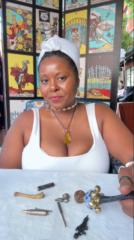
Alaafia Everyone! Great Rising on this Sunday Morning! I wanted to drop a new post and invite our new members to introduce themselves. Temple of the Tides is a place to learn yourself deeper. It is a place to connect with your Ori or Higher self, and it is a place of community and care. I created Temple of the Tides, as I have been practicing and studying various versions of Ifa for the last 6 years, with a lifetime to go. I am currently focusing on Isese and will be Initiating as an Iyanifa. Part of my mission is share the information that I obtain. To help folks who are journeying back to themselves, and to assist people who are searching for a deeper meaning to their life. No I am not going to tell you your purpose. I am going to help you figure it our for yourself. I will help you in whatever way I can and in the ways that spirit allows. I am the messenger. In our Classroom you will find a PDF Library. This library contains pdf books that can be helpful on your journey. Also, in our classroom is a Free Self-Love Course. I will be launching the Ancestral Veneration Course as well for $22. And the Calendar. Our Calendar has the Ose days on it daily. I am not going Live, although it says live. Ose Days are the days when we honor the Orisa. The days rotate every 4 days. If you have your Hand of Ifa or higher, or a devotee, you give offerings on the Ose Days for the Orisa you are honoring. There you also find the weekly Ifa Call. You can attend we ask that if you come to the call, that you engage as an exchange of energy. The Call is hosted by Ifa Ejiogbe Egbe Community with Awo Baba Aye Wunle and Iyanifa IfeTayo and Myself, Priestess Ifasebee. UPCOMING Before the noise, before the doubt, before the fear and overthinking, your Ori was present. Ori is your divine consciousness, your inner compass, and the spiritual intelligence that governs your destiny, clarity, and decision-making. When you are aligned with your Ori, life begins to move with greater ease. Your thoughts become clearer. Your choices become more confident. Your path becomes more direct.
2 likes • Mar 1
oooh wow blessings Iya
1 like • Mar 3
@Elaine Dl I am to.
Jan 11 •
Weekly Ifa Call
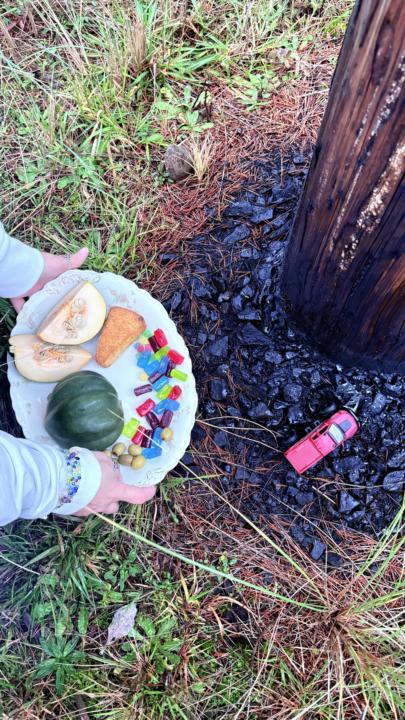
During today’s weekly Ifa call, we learn about Esu! Ogunda La Da will be teaching today. The zoom registration link is on the calendar! If you’re able to, join us, it is an open space! Call starts at 11am. Bring a tiny bit of cool water, a notebook to take notes and an balanced Ori Ipaka (head and heart)
1 like • Jan 31
Ase Orisha 🐐

1 like • Jan 31
oooo noo i missed it . Life is lifing our here.
Jan 17 •
Ori: Higher Self Alignment
We are getting reading to start the live now! https://www.skool.com/live/t5tPkFdcJLg
1 like • Jan 18
@Ola Iya Ifasebee Benton Ase Orisha 🐐
1 like • Jan 18
[attachments]
Jan 18 •
Have You visited the Classroom?
Just coming to give you all on here a friendly reminder that we have a classroom that has some free and paid offerings. My favorite part of the class so far is the temple shelves. Free PDF books! Different categories of books and various authors. Legit books! I have been collecting PDF's over the years of my personal Study. Please go and take a look at the Temple Shelves, in the classroom, and grab a few books!
1 like • Jan 18
Aboruboye Iya . I will be soon enough😏
1-10 of 13
@jenine-fernandez-8180
Spiritual builder 🧱 Breathwork guide 🌬️ Truth seeker 👁️ Unlearning the system & building conscious community outside the box 📦
Active 67d ago
Joined Dec 24, 2025