Activity
Mon
Wed
Fri
Sun
Aug
Sep
Oct
Nov
Dec
Jan
Feb
Mar
Apr
May
Jun
Jul
What is this?
Less
More
Owned by Ola Iya Ifasebee
Temple of the Tides is a sacred space for Spiritual Enhancement. A space for folks who practice ATR's and want to empower themselves.
Memberships
The Operator's Room
13 members • Free
IFA EJIOGBE EGBE COMMUNITY
12 members • Free
Yemoja’s Daughters
2 members • $7/month
Be the Bag Community
25 members • $11/month
60 contributions to Temple of the Tides
May 17 •
Weekly Ifa Call
Alafia! Today we are restarting our Weekly Ifa Call from 11:00 AM – 1:00 PM ✨ We’ll be gathering in sacred conversation to recap all that we have covered over the last 5 months and what we want to this space to be. We will discuss various topics and Orisa and working with the Divinities, starting with Ori. https://us02web.zoom.us/j/81365245193?pwd=yuSWPzvlcxbQecxY0b83w7ZNqfWlyg.1 Meeting ID: 813 6524 5193 Passcode: IfaTemple1
0 likes • May 17
@DeNicea Hilton Harper @Destinaha Clark @Dks Dks @Elaine Dl @Liarels Essence @Tory Jones @Tiswona Kindred @Precious Clark @Cashmere Allen @Jenine Fernandez @Japelle Binns @Neosha Osborne @Adè Ogun-El @Marisa Pacheco @Shaina Pomerantz @Paige Johnson @Lisa Haynes @Kalimah Abioto @Kenyahta Sikes
Apr 26 •
Ori: Higher Self Workshop
It was truly a beautiful day for the workshop yesterday! The virtual workshop is coming up next! More details to come! This workshop must be completed, to do the Ori Ceremony in August.
1
0

Oct '25 •
Welcome! Introduce yourself + share a pic of yourself 🎉
🌊 All is One Reflection 🌊 Alaafia! I am blessed to welcome you into our Temple. As new Mentees, and as I step fully into my role as Mentor, we embark on this sacred journey together. Before we move forward, there are a few things I want to share: ✨ Entering mentorship is not a small step. This is more than a financial commitment, it is an agreement you have made with your ancestors and spirit guides. Your dedication and engagement are vital, not only for your personal growth, but for the collective strength of our Temple. As your Mentor, I am here to witness your work, to guide with insight, and to hold space as you deepen your walk. ✨ In this sacred community, you are not walking alone. Alongside my guidance, you will also be supported by my Godparents. Together, we share wisdom, love, experience and accountability: creating a circle that uplifts, empowers, and strengthens you throughout this journey. ✨ Weekly Learning CallEvery Sunday at 11am PST / 2pm EST, we gather for a live learning-focused class facilitated with my God parents. These sessions are dedicated to lectures, teachings, and foundational information. This is where we build knowledge, understanding, and spiritual literacy together.Please come prepared with your camera on (unless you are driving), your spirit open, and your Book of Shadows ready to take notes and capture insights. ✨ Bi-Weekly Lab & Ritual CallEvery other week, we will hold a bi-weekly working call led by me. These gatherings are experiential in nature and may include labs, discussion, guided ritual, or applied spiritual work. This is a more intimate container for embodiment, practice, and integration of what we are learning. Both calls work together: one to teach, one to activate. ✨ In-person Ceremonies are woven into the fabric of this mentorship. They are opportunities to root yourself deeper in practice and connection. These include the Eleke Ceremony, Sacred River Ritual, and Initiations, and cleansings which open the way for stronger bonds with your Ori, ancestors, and guides.
0 likes • Apr 24
@Tory Jones Welcome to Temple of the Tides! Please feel free to introduce yourself and explore the free offerings!
0 likes • Apr 26
@Cashmere Allen thank you for joining us! us!
Apr 7 •
3/22 - Weekly IFA Call (Intro to Candle Magic, Protocols, and Spiritual Protection)
VIEW RECORDING - 135 mins Key Takeaways - Candles are spiritual antennas. Their behavior (e.g., flame size, wax patterns) provides direct messages from spirit, making them powerful tools for divination and manifestation. - Emotion is the primary source of spiritual backlash. All spiritual work must be performed from a neutral, high-vibration state to ensure effective, positive outcomes and prevent negative repercussions. - A strict protocol is mandatory for all candle work. This includes cleansing the space and candle, dressing it with intention, and invoking Eshu to open paths.. - Protection is paramount. Use specific techniques like reverse candles or spirit dolls to deflect negativity. When returning energy, send it back to its highest vibration to close the door on further attacks. Topics Candle Magic: A Spiritual Tool - Candles act as "antennas" for spiritual communication. - Their behavior provides direct messages from spirit: - Flickering Flame: Active spiritual contact. - Dying Flame: Indicates a blocked environment, misaligned intent, or negativity. - Black Soot: A sign of negativity being absorbed and reversed. - Exploding Glass: A major spiritual alarm requiring immediate practitioner support. - Wax Patterns: Can form images, providing clear messages (e.g., Oya's name in wax, Yemaya's image). The Protocol for Effective Candle Work - 1. Raise Vibration: Enter a neutral, high-vibration state before starting. - 2. Cleanse Space & Candle: Space: Perform a floor wash with oils/herbs (e.g., cinnamon, bay leaf) to set the energy. Candle: Wipe with alcohol or clearing spray to remove others' energy. - 3. Dress the Candle:Oil: Apply a base oil (e.g., olive, grapeseed). Herbs/Crystals: Roll the candle in materials aligned with your intent.Direction: Roll towards you to attract, away to banish. - 4. Set the Wick: Pull the wick towards you to attract, away to banish. - 5. Visualize: Hold a clear vision of the desired outcome. - 6. Invoke Eshu: Open the work by invoking Eshu to clear paths. - 7. Light & Observe: Light the candle and monitor its behavior for messages. - 8. Give Gratitude: Thank all spirits involved upon completion.
0
0
Mar 27 •
Survey
Peace Everyone, I hope you are enjoying this beautiful Spring we are having. Please take the vote below. I am preparing some free classes and want to know what topics I should cover.
Poll
1 member has voted
1 like • Apr 5
@Elaine Dl perfect thank you!
1 like • Apr 5
Please vote. This helps to know what type offer classes I should make.
1-10 of 60
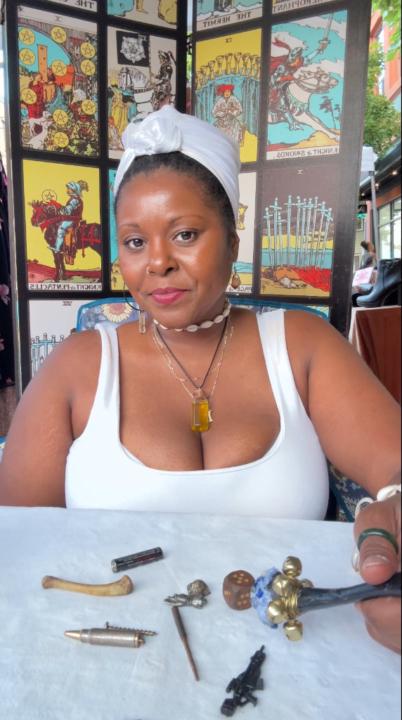
@michelle-benton-6223
Initiated Priestess honoring Ancestors, Orisa and my souls purpose.
Active 18d ago
Joined Oct 16, 2025
Portland, Oregon