Activity
Mon
Wed
Fri
Sun
Apr
May
Jun
Jul
Aug
Sep
Oct
Nov
Dec
Jan
Feb
Mar
What is this?
Less
More
Memberships
The APEX Tribe
122 members • Free
The AI Advantage
75.3k members • Free
3 contributions to The AI Advantage

8h •
Question regarding ChatGPT
Has anyone else experienced ChatGPT projecting and getting defensive?

2d •
You failed. Now what?
You failed. Okay. Take a breath. First, let’s just acknowledge something. You were in the arena. You put something out there. You risked looking stupid. You risked it not working. That already puts you ahead of the majority of people who are still “thinking about it” or “getting ready.” Failure has a way of messing with your head. It makes you question yourself. It makes you wonder if maybe you’re not cut out for this. But almost every time, it’s not about who you are. It’s about what you did. There’s a big difference. When something doesn’t work, it’s usually a strategy issue, a clarity issue, a focus issue, or just not enough reps. It’s rarely an identity issue. But if you make it about your identity, you’ll shrink. If you make it about the approach, you’ll grow. So instead of asking, “What’s wrong with me?” ask, “What can I learn from this?” What broke? What did I assume that wasn’t true? Where did I hesitate? Where did I rush? If you paid the emotional price of the failure, at least get the lesson out of it. That’s where the value is. The only real danger isn’t failing. It’s quitting. It’s deciding that this one outcome defines you. It doesn’t. It defines a moment. And moments can be adjusted. Sometimes you don’t need more effort. You need a different angle. Sometimes you don’t need a new dream. You need more reps. Sometimes you just need to stay in the game longer than the discomfort. Failure isn’t the opposite of success. It’s the path to it. And once you stop being afraid of it, once you realize it can’t actually hurt you unless you let it stop you, you start playing differently. You start playing to win instead of playing not to lose. That’s the shift. So let me ask you this...What did your last setback teach you and what are you going to adjust because of it?
1 like • 8h
In my experience, it was about identity in an alignment sense. I know I have been molded and shaped to assist others on a spiritual level. Started and ran a Reiki practice for 2 years. Then was convicted by the Holy Spirit to align with truth. Closed Reiki business that day. I have invested the past 6 months refining and redefining business structure to align with kingdom principles, aligning service offerings to foundational principles of scripture and focusing on my own alignment. Currently setting up preliminary meetings to get the ball rolling again in the grand arena of life. I don't see the closing of my Reiki business as a failure I view it as outgrowing a season that served a purpose, I gained insight I may not have been privy to otherwise, and the importance of aligning all aspects of one's life with true purpose. Integrity is a treasure. A set back doesn't always mean failure, sometimes it's simply an opportunity for refinement.

Jan 15 •
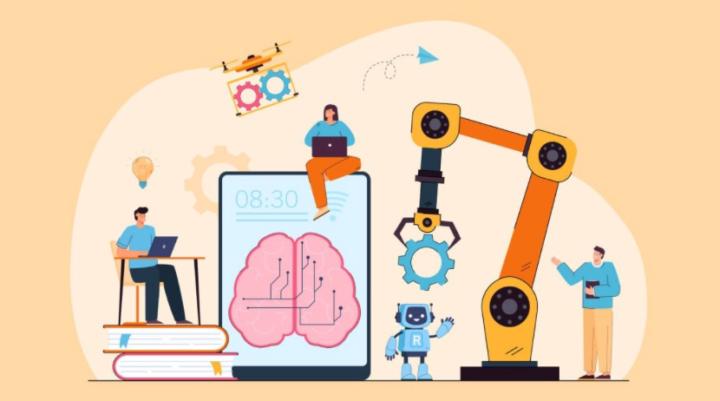
🤝 From Control to Collaboration: What Letting AI In Really Requires of Us
One of the quiet myths around AI adoption is that success comes from staying firmly in control. That if we just give the right instructions, apply enough structure, and reduce uncertainty, AI will behave exactly as we want. In reality, the opposite is often true. The biggest breakthroughs with AI tend to happen not when we tighten control, but when we learn how to collaborate. ------------- Context: Why Control Feels So Important ------------- Most of us were trained in environments where competence was measured by precision. Clear plans, predictable outputs, and repeatable processes were signs of professionalism. Control was not just a preference, it was part of our identity. If we could define every step and anticipate every outcome, we were doing our job well. AI disrupts this deeply ingrained model. It does not behave like traditional software. It responds probabilistically, offers interpretations rather than guarantees, and sometimes produces outputs that are surprising, imperfect, or simply different than expected. For many people, this creates discomfort before it creates value. That discomfort often shows up as over-structuring. We try to lock AI into rigid instructions. We aim for the perfect prompt. We narrow the interaction so tightly that there is no room for exploration. On the surface, this looks like responsible use. Underneath, it is often an attempt to preserve a sense of control in unfamiliar territory. The challenge is that excessive control quietly limits what AI can contribute. It turns a potentially collaborative system into a transactional one. We ask, it answers, and the interaction ends. What we lose in that exchange is insight, perspective, and the chance to think differently than we would on our own. ------------- Insight 1: Control Is Often a Comfort Strategy ------------- When we encounter uncertainty, control feels stabilizing. It gives us the sense that we are managing risk and protecting quality. With AI, this instinct is understandable. We worry about errors, misalignment, or appearing unskilled if the output is not perfect.
1 like • 27d
@Dr. Roger Smith thank you for such a detailed explanation. I have done so in regards to high level system inquiries and the system recognizes it simply by telling it we are entering Lighthouse Mode. I verify by asking it to define Lighthouse Mode prior to interaction. Tweak as necessary per conversation. For truth seekers, it's wise to require verifiable sources are a cornerstone of interaction.
1 like • 27d
@Dr. Roger Smith even when the results may not feel good in the moment receiving them doesn't invalidate truth. As long as truth is your cornerstone, you'll benefit from all truth received.
1-3 of 3

@jeannie-johnson-8449
Curious mind engaging AI with discernment, integrity, and respect for human complexity.
Active 4h ago
Joined Jan 15, 2026
INFJ
Powered by