Activity
Mon
Wed
Fri
Sun
Jul
Aug
Sep
Oct
Nov
Dec
Jan
Feb
Mar
Apr
May
What is this?
Less
More
Owned by James
Welcome to Promotion Hub. Promote Your Thing, That's Why Were Here. All Proceeds Go to Our Local Animal Shelter, Thank You. And The Animals Thank You
Memberships
Creators
17.2k members • Free
Coaches Life Lab 2.0
465 members • Free
Tools For Motivation Community
2.6k members • Free
OLD MARRIED CARPENTER 35 YEARS
11 members • Free
Promote Your Hustle
694 members • Free
Digital Nomad Changemakers
3 members • Free
Online Wealth Vault
122 members • Free
AI Story Crafters
119 members • Free
Start a Business with No Money
425 members • Free
5 contributions to Pre-Vet Skool

Apr 13 •
Welcome to Pre-Vet Skool! 🐾
I’m so glad you’re here. Whether you just discovered your love for veterinary medicine or you’re putting the finishing touches on your application this cycle, you belong in this community. I’m Dr. Nisana, a Doctor of Veterinary Medicine. I built this space because I love working with students, but not the politics of universities. This is a place where you can: 🔬 Explore real clinical cases that make you think like a vet 📋 Get support on every part of the application process 💬 Ask me anything — no question is too small 🤝 Connect with other students who share your dream As a founding member, you can help me to create and shape the community and resources inside! A few things I want you to know: You don’t have to have it all figured out. You just have to show up. The students who get noticed by vet schools aren’t always the ones with the perfect GPA — they’re the ones who are intentional, prepared, and passionate. That’s exactly what we’re building here. Step 1: Introduce yourself below! Tell us where you are in your journey — are you just starting out, or are you deep in the application process? I’d love to get to know every one of you. So you are aware: I will be filling the classroom over time. Some resources I'm going to level-lock. So, this means you will need to "gain points" to unlock some resources. Step 2: GAIN POINTS- You gain points when another member likes one of your comments or posts! (1 like = 1 point) Level 1 - 0 points Level 2 - 5 points Level 3 - 20 points Level 4 - 65 points Level 5 - 155 points Level 6 - 515 points Level 7 - 2,015 points Level 8 - 8,015 points Level 9 - 33,015 points Please, please provide any feedback about what's working for you or not working for you in this community!

🔥
0 likes • 11d
@Rosalie Kirkpatrick Hello There, Pleased To Meet You.
🔥
0 likes • 11d
@Rosalie Kirkpatrick Thank You so much,
17d •
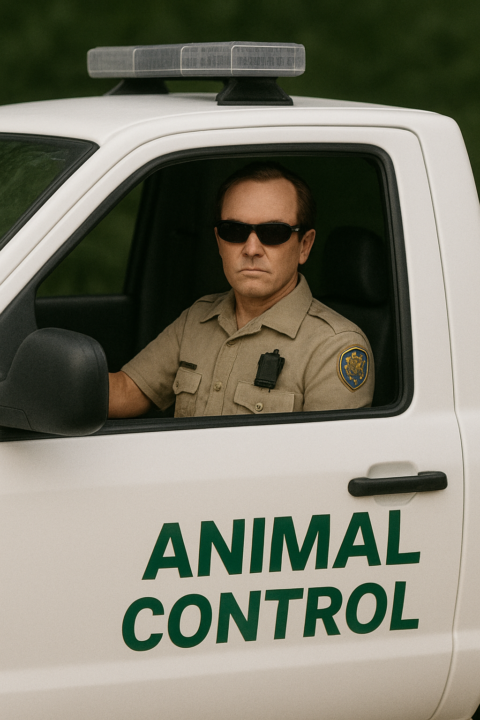
Origin Story Question of the Week
Happy Friday everyone! Help me and other members get to know you! Was there a veterinarian or other adult who inspired you? What did they do or say that stuck with you? I’ll start in the comments😊
🔥
0 likes • 17d
Wow, Is That Even Legal?
🔥
0 likes • 17d
@Nisana Miller Wow, Don't Think I Would Want To Be Their Neighbor,
18d •
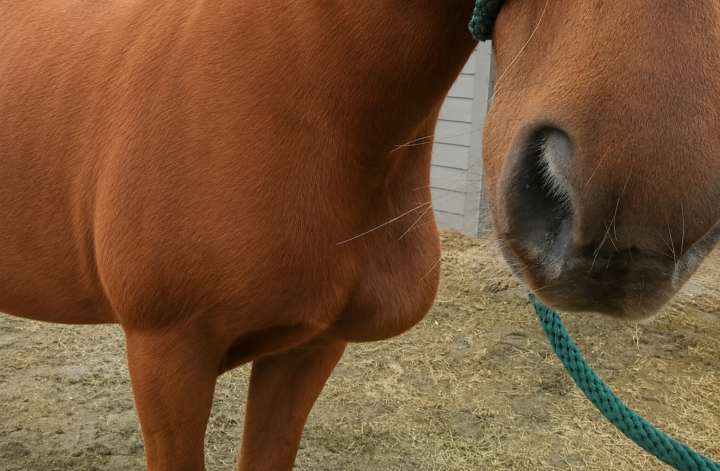
🐴 Case Study: Why Does Maverick Look Like a Pigeon?
Meet Maverick, a 6-year-old Quarter Horse gelding on a ranch in central California. His owner calls in September because Maverick has developed a growing swelling between his front legs that is now the size of a grapefruit. His chest looks oddly puffed out, almost barrel-shaped. You arrive and press gently on the swelling. It is warm, firm, and painful. Maverick flinches and his temperature is 102.5°F. He is mildly stiff in both front legs from the swelling pressing against his shoulder muscles. The owner asks: should we start antibiotics right away? Your answer surprises her. No. This is pigeon fever, caused by Corynebacterium pseudotuberculosis, and the most important thing you can do for Maverick right now is nothing pharmacological. The bacteria survive inside macrophages within the abscess wall where antibiotics cannot reach them effectively. Treating now would slow the maturation process, prevent the abscess from draining naturally, and paradoxically make this take longer to resolve with a higher chance of recurrence. Your job is to wait for the abscess to become fluctuant over the next two to three weeks, then lance it at the lowest point, lavage the cavity daily, and leave it open to heal. You also put on gloves. This organism can infect humans too. 💡 The takeaway: Sometimes the best treatment is knowing when not to treat. For a full course on this condition, see the classroom or follow the link below: https://www.skool.com/pre-vet-skool-9535/classroom/eada0165?md=e9698e0ea46841929e4e62d7945915b3
🔥
0 likes • 17d
Wow, I like That, Sometimes the best treatment is knowing when not to treat. Very Good Advice.
17d •
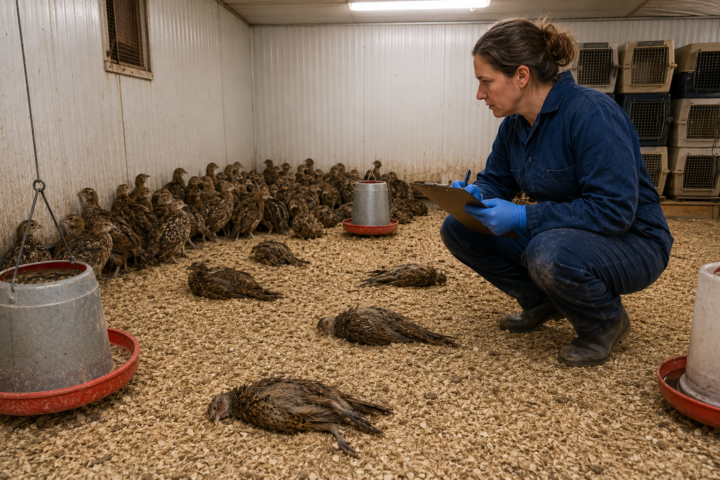
🪶 Case Study: Why Are the Pheasants Dying After the Move?
Meet a flock of 200 six-week-old ring-necked pheasants on a game bird operation in Pennsylvania. They arrived three days ago after a four-hour transport from a breeding facility in another state. The stress of the move was unavoidable. By day two the owner noticed birds huddling in corners with ruffled feathers. By day three twelve were dead. You perform a necropsy on three birds. The moment you open the abdominal cavity and examine the spleen you stop. Each spleen is enlarged to nearly three times its normal size, and the surface is covered in scattered white to gray circular foci against a dark red background. It looks exactly like marble. This is marble spleen disease, caused by fowl adenovirus. The virus had likely been circulating silently in the breeding flock. The pheasant chicks carried it, their maternal antibodies waned right around six weeks of age, and the transport stress delivered the final blow by suppressing what little immune function they had left. You look over at the pen of chickens on the same property. They are completely unaffected. There is no antiviral treatment. You start antibiotics for secondary bacterial infections, optimize the environment, and send spleen samples for PCR confirmation. 💡 The takeaway: Transport stress plus waning maternal immunity in young pheasants is a recipe for marble spleen disease. For a full course on this condition see the classroom or follow the link below: https://www.skool.com/pre-vet-skool-9535/classroom/cf98ed10?md=b7495a95c56f41b1816a2105613bd605
🔥
1 like • 17d
Thank you for doing what you do. Good Job.
1-5 of 5

🔥
@james-mcdonald-1714
Hello, I’m James, Retired Animal Control Officer, living in Ohio, but California Raised. Married with One Awesome Son. Hope to meet you in Skool.
Active 5h ago
Joined May 15, 2026
Ohio