Activity
Mon
Wed
Fri
Sun
Jan
Feb
Mar
Apr
May
Jun
Jul
Aug
Sep
Oct
Nov
Dec
What is this?
Less
More
Memberships
Your Villain Academia
48 members • $37/m
6 contributions to Your Villain Academia

Apr 19 •
What charactertrait is holding you back?
Time for some self awareness friends. What would you guys say is the charactertrait that is holding you back rn with woman? Are you too needy? undiciplined around woman? Too afraid? or maybe too much of the other extreme?

2 likes • Apr 28
I feel like I hold myself back too much, need to let myself fall on the extremes a lot more to find my balance rather than trying to force it from jump

Nov '24 •
Effective Communication Skills for Connection
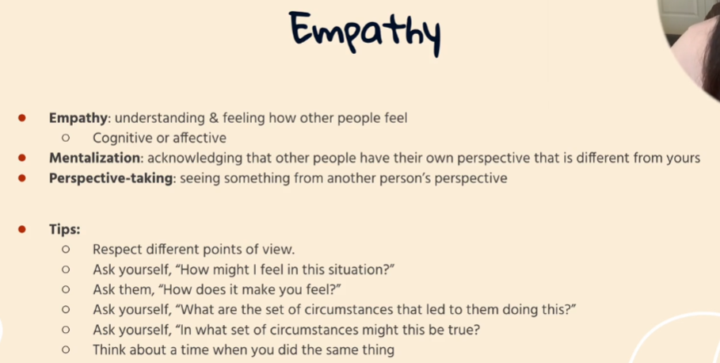
We all communicate, but how often do we connect? Communication is more than speaking—it’s listening, empathizing, and responding effectively. Today, we’ll unlock essential skills to help you build stronger relationships, reduce conflict, and feel truly heard. 1. Empathy is the cornerstone of healthy communication. It has two sides: cognitive empathy—understanding someone’s perspective—and affective empathy—sharing their feelings. Cognitive empathy is a skill anyone can learn, even if it doesn’t come naturally. - Remember everyone has a subjective perspective. - Ask yourself: How would I feel in their shoes? - Avoid assuming—ask directly, ‘How are you feeling?’ - Assume good intentions: ‘What might have led them to act this way?’ Someone gets cut off in traffic and reacts angrily. Pause and show different interpretations: rushing to the hospital, late for work, distracted. 2. Active reflective listening means fully engaging with what the other person is saying—not just hearing but understanding. This involves: - Open attentive body language and natural mirroring. - Asking clarifying questions like, ‘What happened next?’ - Paraphrasing: ‘So you’re saying…?’ - Use same words: ‘That must have been so frustrating/shocking.’" - Don't interrupt, actual listening not just hearing. 3. Validation is about acknowledging someone’s feelings and perspective without necessarily agreeing. It says, ‘I see where you’re coming from.’ Invalidation, on the other hand, shuts people down and leads to long-term harm, even personality disorders like BPD. 4. Expressive skills Expressing yourself effectively requires: - Assertiveness: Balancing your needs with others’. - Use "Yes and" which connects rather than "Yes But" which divides. - Turning towards bids for connection, as John Gottman discovered in his research. Couples who do this regularly are 2.6 times more likely to stay together." physically turning and paying full attention to them, putting your phone down.
1 like • Nov '24
This is a post I'll keep revisiting until I get it. Thanks for the sauce my G.
Nov '24 •
Share What Gave You The Biggest Game Gains
Title. Just wanted to post something interactive so we could all learn from each other's breakthroughs. For me personally it has always been finding the courage to just say what I genuinely think. And not only for fear of being judged but to share with people how truly creative I am. Of course what followed next was my mouth piece because no matter how creative you are if the words come out jumbled or shy then you might aswell have said nothing at all. So what were the biggest points of breakthrough for you all?


Oct '24 •
Question
How do you guys got used to not letting the effects of your breakups affect your other relationships. How do you handle it?
1 like • Oct '24
I feel like you have to give yourself time to process the breakup itself. The main cause of the effect leaking into the other relationships is that you haven't really come to terms with and let your psyche truly grieve what you have lost so you're in recovery mode when you're dealing with the other girls.
Oct '24 •
Let Her Entitlement Do The Work.
WARNING: Before we get into this post reminder that this ONLY works on girls with self-esteem. If you date below a 7/8 or a girl who has self image issues this will implode your relationship with her. Now that’s out of the way, when dealing with women after you’ve shown her a glimpse of what it is being with you, whether it’s the approach or the first date, or even a phone call. Anything that gives her a glimpse into who you are, your playfulness and your nonchalance. Take a step back and let it marinate if you’ve taken steps correctly up until this point then she will be chasing your validation because that IS the path of least resistance to get what she wants. Women naturally want what they do not deserve, so if you she gets to see your authenticity (this is rare) and then you pull away she has absolutely no choice but to chase and I implore you to test this for yourself. Once you understand marination game and also the girl you’re dealing with, ie; is she your type? Is she confident? Etc. climbing the compliance ladder becomes easy. At this point you’ll have to be thinking about what you want from her at the upper echelons of it way sooner because she’s so eager to please you. The warning at the beginning was slightly disingenuous because if you’ve built enough comfort you can get any girl to chase, as the comfort you’ve given makes it feel realistic for her BUT the work increases exponentially the lower her self-esteem gets and working that hard for every girl is not realistic, save it for your favourites. Just a lil notepad post 🤙🏾
6
0
1-6 of 6

Active 38d ago
Joined Oct 1, 2024
United Kingdom
Powered by