Activity
Mon
Wed
Fri
Sun
Mar
Apr
May
Jun
Jul
Aug
Sep
Oct
Nov
Dec
Jan
Feb
What is this?
Less
More

Memberships

LinguaBLOX Language Learning

1.9k members • Free

142 contributions to LinguaBLOX Language Learning
OPI Question: Do you have any hidden talents?
🇲🇽 ¿Tienes algún talento oculto? 🇧🇷 Você tem algum talento oculto? 🇸🇦 هل لديك أي مواهب خفية؟ Answers in any and all languages are welcome.
OPI Question: Do you have any hidden talents?
0 likes • 12h
@Marian Truly muchas gracias!
1 like • 12h
@David Gavar muchas gracias
W/B día 18 thoughts
I couldn’t find the thread for day 18 so thought I’d put this here. @Tony Marsh labeled the white belt and black belt being in the same location in his circle diagram. I can say this fits with martial arts, at least mine (hapkido). We have a saying that when you get your black belt to remember that you haven’t arrived, you are actually just beginning. You’ve gone around the circle back to the start point (white belt). Hapkido is big on circular movement. Now you know the fundamentals, but you are always refining them. Refining the fundamentals drives mastery. I just got my third degree and am about 4-5 years from my 4th. 4th degree is achieving the rank of hapkido master. Most of the techniques at the master level are actually white and yellow belt techniques but with added applications, but they are the same techniques. Makes sense, you’ve mastered the basics. Kind of what was explained in day 17 where you’re doing boxing practice back and forth defending a right jab over and over til you can’t miss. “I fear the man who’s practiced one kick 10,000 times”-Bruce Lee. It’s like answering “¿estás bien? Sí, estoy bien or no, no estoy bien” over and over until it becomes muscle memory. I guess that’s what resonates with me in this method is there is a martial arts type thinking to it. Hope this was helpful and if you’ve read this far and haven’t gotten the white to black belt course yet or are thinking about it, I’m pretty sure you can tell, I recommend it. Have a great day.
Spanish OPI White Belt to Black Belt - Día 16
Expanding and contracting ideas at will, and developing your Routine.
Spanish OPI White Belt to Black Belt - Día 16
1 like • 2d
I am slowly finishing the course. I did a mini one sentence ensayo and an expanded one. I wanted to practice contracting and expanding. I took one question from each section. I wrote it with a lot going on around me so if you can read it, you did good, lol.
20 Day Brazilian Portuguese Notebook-Only Video Course 🇧🇷
Bloxer the Ghost -- the Spirit of Language Learning (who @Fabio D'Oliveira invented) gives his stamp of approval, I'm sure, on Fabio's now fully complete 20 Day Brazilian Portuguese Notebook-Only Video Course. Parabens, Fabio on launching this course, I know it's a lot of work. You've got the expertise needed to deliver it, and I highly recommend this course to anyone looking to become conversational in Brazilian Portuguese. Course in Classroom: https://www.skool.com/linguablox/classroom
20 Day Brazilian Portuguese Notebook-Only Video Course 🇧🇷
4 likes • 2d
Congrats @Fabio D'Oliveira on finishing making the course. That’s a lot of work.
Spanish sentence starters week 4
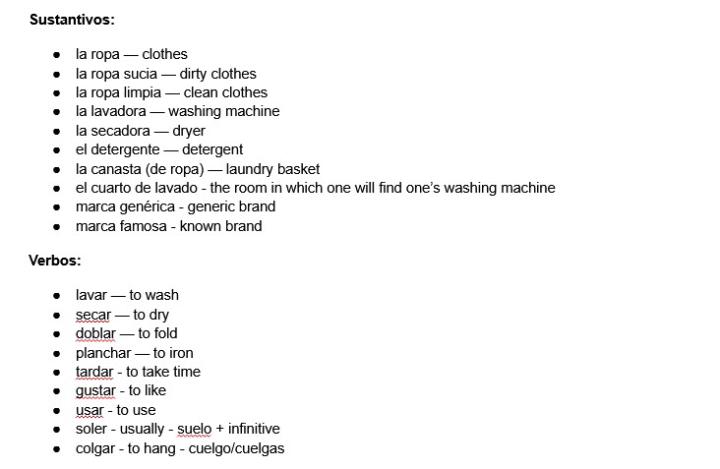
Hello everyone. Happy Groundhog Day. 6 more weeks of winter. Thank you Punxsutawney Phil, ugh. Most of us like to tell stories from our past and this is an easy one to use. Cuando era…. When I/he/she was…. I added cuando eras (when you were), cuando éramos (when we were) and cuando eran (when they were). I put a couple examples from each. When using cuando era for he and she, I added cuando él era and cuando ella era, but you usually don’t add él or ella. I put it in for context and the next one I took it out. In a conversation, it’s understood whether it’s I, he, or she. I’ve attached mi cuaderno. Please feel free to share or comment.
Spanish sentence starters week 4
2 likes • 2d
For those new to Spanish, here is the interpretation: When I was: •When I was a child, I played with my friends every day. •When I was in the army, I lived in Germany-notice it is estaba and not era. It’s cause I was in something and not a life stage, if I said I was a soldier, it’d be cuando era soldado. •When I was young, my grandparents took me to church on Sundays. When you were: •When you were young, you swam in the pool all summer. •When you were a teenager, you were very immature. •When you were in the army, I was worried about you.- same as above, notice it’s estabas and not eras. It’d be cuando eras soldado if I wanted to use eras. When we were: •When we were young, we used to play in the street. •When we were students, we lived near the school. •When we were children, our dad worked in a factory. When he/she was: •When he was young, he worked with his father. •When he was a boy, he was afraid of the dark. •When she was little, she liked animals. •When she was a teenager, she listened to a lot of music. When they were: •When they were little, they watched cartoons every day. •When they were young, they went out a lot on weekends. •When they were students, they got good grades.
1 like • 2d
@Toni Feeney con gusto
1-10 of 142
Jack Mason
6
1,438points to level up
@jack-mason-7148
Hi! I’m Jack. I’m a Paramedic on a Spanish learning adventure.

Active 2h ago
Joined Nov 6, 2025
Powered by