Activity
Mon
Wed
Fri
Sun
Dec
Jan
Feb
Mar
Apr
May
Jun
Jul
Aug
Sep
Oct
Nov
What is this?
Less
More
Peptide of The Week Community
18.6k
5.0
Free
Orion Peptides
453
Free
PP
PS Private Group
89
Free
Peptides4Power 🫑
2.2k
Free
Research Radar
11.7k
5.0
$10/m
Heather Dawn Research Wellness
4.1k
Free
The Peptide Collective
308
$45
Pep Talk - For Better Health
3.3k
Free
10 contributions to Orion Peptides

Mar 16 •
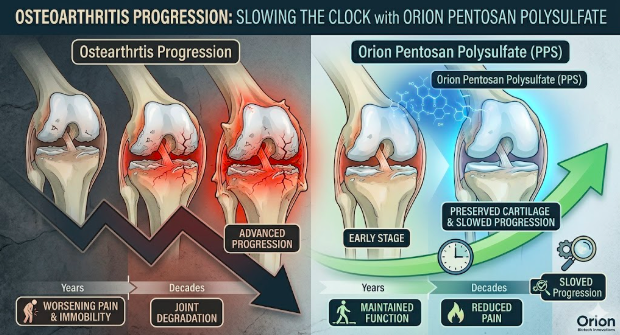
Osteoarthritis: I Stopped Waiting for My Joints to Fail and Started Researching Orion Pentosan Polysulfate
Hey everyone, I need to have a real talk about something that has been haunting me for the last few years: Osteoarthritis. It is the elephant in the room for anyone over 40, especially those of us who have spent decades in the gym, playing sports, or just living life hard. We treat our bodies like machines, but eventually, the mileage shows. For me, it started in my knees. A little stiffness in the morning that would loosen up after moving around. Then it progressed to a dull ache after leg day. Then came the crunching. That lovely sound of bone on bone, or cartilage so rough it sounds like sandpaper, when I squat down to pick something up. The doctor confirmed it. Moderate osteoarthritis in both medial compartments. His advice? "Take some glucosamine, lose weight, and come back when you need a knee replacement." Wait, what? I'm supposed to just let my joints crumble until the only option is titanium? That felt like a cop-out. There had to be a way to actually address the biology of the problem, not just manage the pain until the hardware fails. That search led me to Pentosan Polysulfate, specifically the Orion brand. And for the first time in years, I feel like I am actually slowing the clock down instead of just watching the hourglass empty. Understanding Osteoarthritis: It's Not Just "Wear and Tear" First, let's bust a myth. Osteoarthritis is often called "wear and tear" arthritis, implying it's just like a tire wearing out from use. But if that were true, every marathon runner would be crippled, and every sedentary person would have perfect knees. That's not the case. Osteoarthritis is an active, dynamic disease process. It involves: Inflammation: Low-grade, chronic inflammation in the joint lining (synovium) that releases enzymes that eat away at cartilage. Catabolic Breakdown: Your body produces enzymes (like MMPs) that break down the cartilage matrix faster than your body can rebuild it. Chondrocyte Senescence: The actual cartilage cells (chondrocytes) stop functioning properly. They become old, lazy, and stop producing the collagen and proteoglycans needed to keep the joint cushiony.

0 likes • Mar 16
What is tis like compared to things like Cartalax etc?
Mar 10 •
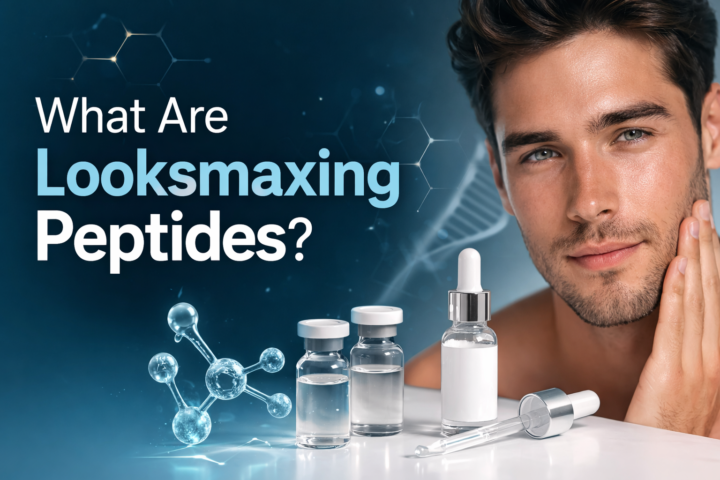
What Are Looksmaxing Peptides?
A Friendly Guide to the Peptides People Are Using for Skin, Hair, Fat Loss, and Overall Aesthetic Boosts If you’ve been hanging around Reddit, biohacker forums, or even some fitness communities, you’ve probably come across the term “looksmaxing.” It sounds a bit flashy, but at its heart, it’s really simple: looking and feeling your best by optimizing your appearance with science, lifestyle tweaks, and yes… sometimes peptides. So, what are looksmaxing peptides? Why are people talking about them, and should you care? Let’s dive in. What Does “Looksmaxing” Actually Mean? Looksmaxing is just a fancy word for maximizing your physical appearance in a smart, intentional way. This can include things like: - Smoothing out your skin - Increasing lean muscle mass - Losing stubborn body fat - Boosting hair growth - Improving facial symmetry or skin elasticity - Recovering faster after workouts While old-school methods involve good grooming, fitness, and skincare routines, modern looksmaxers are exploring biohacks and peptides to take things to the next level. So, What Are Peptides? If you’re hanging out in this community or reading this channel, you probably already know what peptides are. But just to make sure we’re all on the same page, here’s a quick refresher: At a basic level, peptides are short chains of amino acids that act as messengers in your body. They help regulate all sorts of important processes, like: - Tissue repair and healing - Collagen production - Hormone release - Fat metabolism - Reducing inflammation Think of them as tiny “bio-boosters” telling your body how to fix, build, or optimize itself. And that’s exactly why they’re becoming such a hot topic in looksmaxing discussions. Why Peptides Are Catching On in Looksmaxing As we age, our bodies slow down in ways that affect our appearance: - Collagen production drops → skin loses elasticity - Growth hormone declines → muscle tone and fat metabolism change - Healing and recovery slow down → injuries linger
0 likes • Mar 10
Great article thanks for sharing.
Mar 5 •
Do You Think Regulation Helps or Hurts Peptide Research?
Regulation is a tricky topic. Some argue it protects scientists and consumers by setting standards.Others feel it slows innovation and makes research harder to access. I personally lean toward seeing the value in clarity and safety, but I’ve also felt frustrated when over‑regulation limits legitimate exploration. 💬 What about you? Do you think regulation: - ✅ Helps maintain safety and quality - ❌ Slows progress in research - 🤔 Somewhere in between Drop your thoughts! Visit Orion Peptides for high-quality Category 2 research compounds and educational resources for peptide research.

0 likes • Mar 5
It hurts it for sure. The trouble with the FDA and anything similar to it is over‑regulation which makes it difficult for research and otherwise, especially when we all know how peptides are so beneficial and actually help people.
Mar 5 •
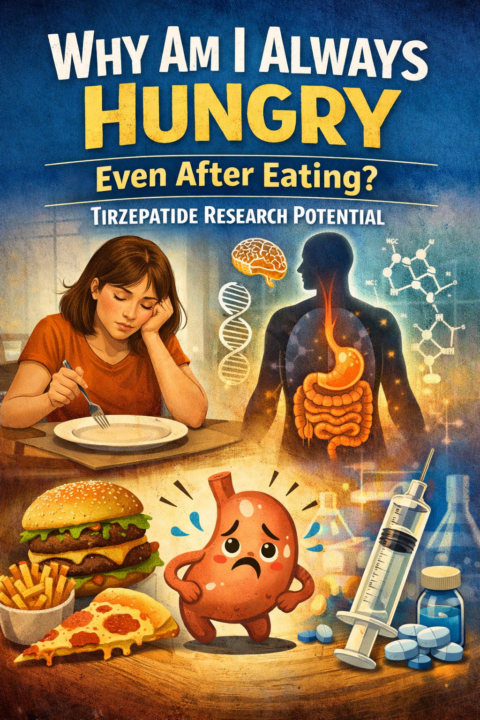
Why Am I Always Hungry Even After Eating — Tirzepatide Research Potential
Many people feel hungry even after finishing a full meal. This can be confusing and frustrating, especially when calorie intake seems adequate. However, modern research shows that persistent hunger is often driven by hormonal signaling and metabolic regulation, not just how much food you eat. Compounds like Tirzepatide have become a major focus in metabolic research because they interact with key appetite-regulating pathways in the body. Hunger Is Controlled by Hormones, Not Just Food Intake The body regulates hunger through a complex communication system between the gut, pancreas, and brain. Several hormones play important roles in this system: - Ghrelin – often called the “hunger hormone,” it signals the brain when the body wants food. - Leptin – produced by fat cells and responsible for signaling fullness and long-term energy balance. - Glucagon-like peptide-1 – helps regulate appetite, insulin release, and satiety after meals. When these signals become dysregulated, the brain may continue sending hunger signals even when the body has consumed enough energy. Why Hunger Can Persist After Eating Several biological factors can cause someone to feel hungry shortly after meals. Insulin Resistance When the body becomes less sensitive to insulin, glucose regulation becomes less efficient. This can lead to fluctuating blood sugar levels that trigger hunger signals more frequently. Rapid Gastric Emptying If food moves quickly through the stomach and digestive tract, the feeling of fullness may disappear sooner than expected. Disrupted Satiety Signaling In some individuals, the brain may not respond properly to fullness signals due to altered hormone signaling or metabolic stress. These factors can make hunger feel constant, even with regular meals. The Brain’s Role in Appetite Regulation The brain integrates hunger and fullness signals through regions such as the Hypothalamus, which acts as a central control center for appetite. This region receives information from hormones circulating in the bloodstream and determines whether the body should continue eating or stop.
1 like • Mar 5
Great share thank you.

Mar 3 •
Why Your Knee Never Hits 100% After Injury, BPC-157 Fixed My Tendon
I need to vent for a minute. About four years ago, I tore my medial collateral ligament playing pickup basketball. I did the whole protocol: rest, ice, physical therapy, the slow return to activity. My doctor cleared me. I thought I was good. But here is the thing nobody tells you: even after you’re “cleared,” you’re never really 100 percent again. That knee always felt a little off. A little stiff in the morning. A little achy before a storm. I could still lift and run, but in the back of my mind, I always knew it was there the weak link. The limb I subconsciously favored. I assumed this was just life. You get hurt, you heal, but you carry a permanent dent in your chassis. Then I started researching why tendons and ligaments are such jerks about healing properly. That rabbit hole led me to a peptide called BPC-157, and honestly, it has been the closest thing to a “redo” button I’ve ever experienced. https://faisal798.substack.com/p/why-your-knee-never-hits-100-after?utm_campaign=post-expanded-share&utm_medium=web&triedRedirect=true
1 like • Mar 3
@Alex Bennett yup. Can't wait to get back on it again!
0 likes • Mar 3
@Rowan Hooper I appreciate that thank you.
1-10 of 10

@indiana-hibberd-1674
Just a girl obsessed with peptides, curious?...contact me.
Active 4h ago
Joined Feb 24, 2026
Rancho Santa Margarita