Activity
Mon
Wed
Fri
Sun
Dec
Jan
Feb
Mar
Apr
May
Jun
Jul
Aug
Sep
Oct
Nov
What is this?
Less
More
Ranked Revenue Bootcamp
279
5.0
$59/m
Trillet AI
493
Free
AI Automation First Client
2.1k
Free
HighLevel Quest
15k
Free
GoHighLevel w/ Robb Bailey
13.8k
Free
AEO - Get Recommended by AI
1.9k
Free
29 contributions to AI Automation Society

Jun 9 •
The New AI Contract Trap Most Builders Don’t See Yet
AI engineers, automation builders, and technical operators — please read this carefully. I saw something happen recently that made this very real for me. A smart AI engineer helped build valuable systems inside a company. Not just code. Workflows. Prompts. Automation logic. Client handling. Internal systems. Deployment knowledge. The actual operating brain of the business. But because the agreement was vague, the ownership became messy. And this is the part most AI builders still don’t fully understand: You are not just “labor” anymore. You are creating labor. When you build AI systems, you are often creating the digital workers, workflows, and operating infrastructure that may run the company after you leave. That is a completely different level of value. So before you sign an employment contract, partnership agreement, or “come build this with us” deal, please check: Who owns the code? Who owns the prompts? Who owns the workflows? Who owns the AI agents? Who owns the reusable methods? Can you reuse your own frameworks later? Does the company own only company-specific work, or everything you create? Are your side projects protected? Are you being paid like labor while bringing architecture? This is one of the reasons I’m passionate about DWOS and production AI systems. The future is not just “build AI agents.” The future is understanding who owns the digital workforce once it is built. Do not bring architecture under labor terms. If you are an AI engineer, AI automation builder, agent builder, or technical operator, this could save you a ton of trouble later. Comment below if you want help reviewing the structure of your contract, partnership, or AI build agreement. Not legal advice — but I can help you spot the obvious red flags before they become expensive problems. Don’t wait until after you’ve built someone else’s machine.
1
0


Apr 29 •
🚀 I just built an Agent OS (and I want to show you)
Released TODAY on GIT! AgeniusDesk-CE Hey everyone, After 3+ years building AI automation systems, I realized something: the bottleneck isn't the model. It's context and resources. Better context = better agents. But here's the real problem: everything is segmented. Your agents are in Pydantic AI. Your workflows are in n8n. Your knowledge is scattered. Your execution is fragmented. So I built AgeniusDesk, a unified platform that manages ALL of it: agents, workflows, knowledge, resources. One command center. No silos. What is it? A unified management layer for AI platforms, agents, and workflow frameworks (n8n, Pydantic AI, Flowise, etc.): - Multi-instance n8n visibility + control from one dashboard - AI agents (Pydantic, Claude, OpenAI, local models) as first-class citizens - Real-time error detection + AI diagnostics (catches issues before they blow up) - Agent Lab: write and debug code with AI, deploy instantly - Encrypted secrets vault (never plaintext, never exposed) - Shared resource layer: context, guardrails, execution contracts - Full local/self-hosted control (no vendor lock-in) Built on Python + FastAPI + Vanilla JS. Docker compose ready. Why I'm posting this here: This community gets it. You're not asking for another no-code builder or magic button. You're building real systems, running agents in production, managing multiple deployments. AgeniusDesk is built for that. What I want from you: Drop a comment and tell me: - → Are you managing multiple n8n instances or agents right now? - → What's your biggest pain point? (visibility? errors? scale?) - → Would you test-drive this if it solved that problem? I'm open-sourcing the whole thing. No strings. Just want to build something the community actually needs.
2 likes • Apr 30
@Zain Baig exactly. The pain usually isn’t that one agent fails. It’s that the pipeline keeps moving after context, state, or assumptions broke upstream. That’s where visibility and a proper shared context layer become more important than just adding more agents.
2 likes • Apr 30
@Michael Frostbutter This is exactly the direction the market is moving. The bottleneck is no longer just building agents. It’s visibility, debugging, shared context, and keeping the stack stable once workflows, agents, models, secrets, and knowledge are spread across tools.

Apr 28 •
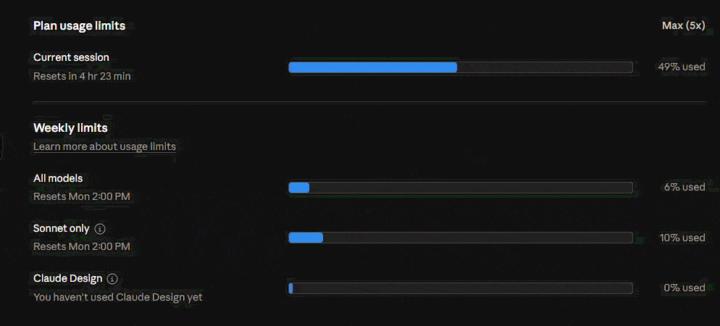
🚨 URGENT: Claude Code is silently burning my session usage. Has anyone found a fix?
I’ve got a client call today and I’m effectively blocked because Claude Code is unusable right now. I’m on Max 5x. As you can see in the attached GIF, my current session usage was at 49% and a slow silent consumption keeps going on. So the issue doesn’t look like normal weekly exhaustion. It looks like something inside the current Claude Code session is burning context extremely fast. I’ve disconnected MCP servers, tried reducing background activity and waited for my weekly limits to reset, but the same issue keeps coming back. Even when I’m barely doing anything, the session usage climbs very quickly. I’m trying to work out whether this is caused by bloated claude.md files, duplicated project context, hidden MCP activity, background indexing, prompt injection or something else repeatedly loading into context. Has anyone built a practical way to audit what Claude Code is actually consuming? I’m not looking for generic advice like “wait for your limits to reset” or “upgrade the plan”. I need to understand what is consuming the tokens so I can fix the setup and get back to client work. Any transparent breakdown, diagnostic approach or tool/plugin idea would be really appreciated.
1 like • Apr 28
@David Barroso nicely done.
1 like • Apr 28
@David Barroso how many claude code deployments are you managing atm? i think things like this can be scary as it scales. I would think about an operating checklist. Thanks again. Good learnings for everyone

Apr 28 •
Hiring 2 People
Both remote. Both long-term. 2-week paid trial. Indefinite contract after if it's a fit. Equity conversation at month 6 for strong performers. Role 1: Implementation Lead (DWY + DFY Delivery) You own delivery end to end. We close, you ship. What you'd actually do: 3–5 Zoom calls a week with new and active clients (CEOs, ops leads, media buyers)Build custom Claude Code workspaces in their Drive: CLAUDE.md, slash commands, MCP servers, ClickUp/Slack/Gmail integrationsTrain each user on 3 real workflows for their roleWrite a recap doc and Loom for every installFirst responder for 30-day post-install Slack support You'll thrive here if: Native or fluent English — you'll be on Zoom with non-technical CEOs dailyUS / Canada / UK / AU / South Africa with overlap into US EasternYou've used Claude Code in anger: you can write a CLAUDE.md, build a custom command, and connect an MCP from scratchMac terminal comfort: brew, npm, .env, basic gitYou can walk a 55-year-old CEO through cd ~/workspace && claude without making them feel dumbBonus: prior CS / Implementation / Solutions Engineer role, or hands-on delivery work on Make, n8n, Zapier, GHL Apply → https://docs.google.com/forms/d/e/1FAIpQLSdSPGwN7zPo-WGbtGlOaWBmOysDqeXHkMk9zPh_kHHs4OY7bQ/viewform Role 2: Senior Full-Stack + AI Engineer Pure engineering. No client-facing. Replacing a senior contractor who's rolling off. Stack: Python, FastAPI, Postgres, React, Next.js, TypeScript, Tailwind, Claude API (SDK + tool use + MCP), OpenAI, Nvidia Nemotron, VAPI, Twilio, Azure Speech, ElevenLabs, ffmpeg, Vercel, Docker, Hetzner, Azure. You'll thrive here if: You've shipped production FastAPI services AND React frontends — bothYou've integrated VAPI, Twilio, Vocode, or Retell in a real productYou can read a slow query plan, rewrite the schema, and ship the migration the same dayYou've used ffmpeg from the CLI in a real product (not a tutorial)You don't need a PM — you read the ticket, ask one clarifying question, and ship
2 likes • Apr 28
@Nick Puruczky This says a lot about where the market is heading. Claude Code makes the build faster, but the install layer is becoming the bottleneck: setup, training, docs, support, version changes, and keeping deployments consistent across clients

Apr 14 •
AIOS - building
Hey everyone, I've been looking into the idea of an AI operating system (as you see in the video below with Liam). I'm just wondering if any of you guys have put any thought to the process of actually building all your files around AI, on top of i.e. Claude Code inside of Visual Studio Code. If any of you guys are already doing it or are experimenting with it, how do you add a safety feature so Claude can't accidentally delete all of your files or your clients' files? Hope to hear from you 🙏 https://www.youtube.com/watch?v=yd9tr0xqg-Y
1 like • Apr 28
@Peter Kaad I'd avoid giving claude code full access to client files. I'd isolate client containers, limited permissions, git snapshots before changes etc
1-10 of 29

@imtizzy
Shipping an AIOS install to a client? Don’t let it become support chaos. Get the Go-Live Checklist 👇
digitalworkforcesystem.com
Active 16d ago
Joined Jan 13, 2026
INTJ
Dallas, Texas
Powered by