Activity
Mon
Wed
Fri
Sun
Jun
Jul
Aug
Sep
Oct
Nov
Dec
Jan
Feb
Mar
Apr
May
What is this?
Less
More
Memberships
Spiritual Rebels
3.5k members • $1/month
Salt Money - Passive Income
145 members • Free
The Mystic Misfits Society
8k members • Free
35 contributions to Spiritual Rebels
7d •
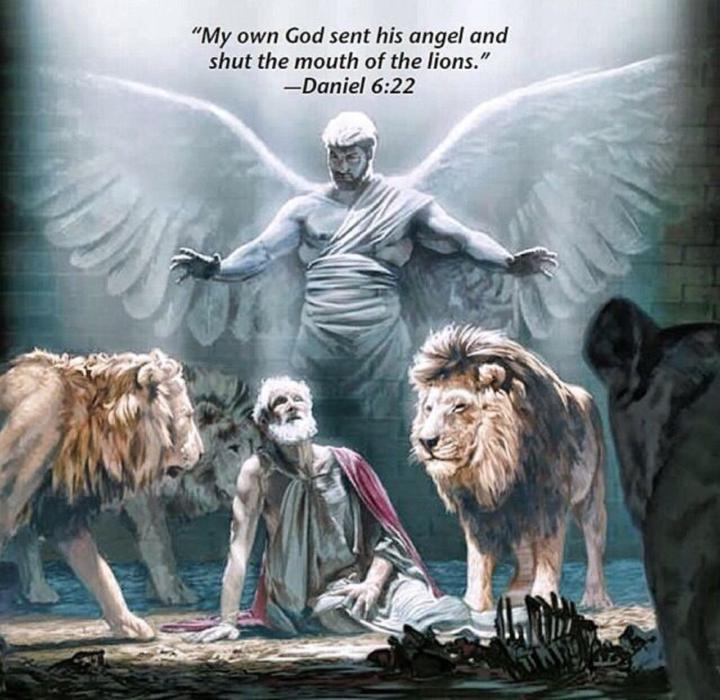
Daniel Fast
https://www.facebook.com/reel/971852741969547 Did the lions smell him as a vegetarian, and did they not sense God's light and feel the love, with the light of God, eating from plants and without murdering animals? Daniel refused to eat the king's food because he believed it would defile him, possibly due to it being unclean according to Jewish dietary laws or having been offered to idols. Additionally, eating the king's food symbolized accepting the king's patronage, which Daniel wanted to avoid to remain loyal only to God. Daniel ate vegetables and drank water as part of his commitment to obey God's dietary laws and maintain his identity as an Israelite. This is described in the book of Daniel, where he and his friends chose to abstain from the rich foods and wine offered by the Babylonian king, opting instead for a simple, plant-based diet.
0
0
28d •
Egyptian Mystery schools prepare or enlighten Moses
Significance of Moses' Egyptian education? ► Why is Moses' Egyptian education significant in Acts 7:22? Scriptural Citation “Moses was educated in all the wisdom of the Egyptians and was powerful in speech and action.” (Acts 7:22) Historical Background: Education in Pharaoh’s Court The phrase “all the wisdom of the Egyptians” evokes the rigorous curriculum reserved for princes in the Eighteenth Dynasty—the very era most consistent with a fifteenth-century Exodus chronology (1 Kings 6:1; cf. the 1446 BC date derived by Ussher). Royal pupils were trained in reading and writing hieroglyphic and hieratic scripts, mathematics, astronomy, law, medicine, military tactics, and diplomatic protocol. Moses, adopted by Pharaoh’s daughter (Exodus 2:10), became an insider to this elite system, gaining access to the intellectual and administrative heart of the ancient superpower. Curriculum Details and Competencies 1. Literacy and Multilingualism—Egyptian scribal schools mastered cuneiform Akkadian for international correspondence (Amarna Letters) and developed advanced papyrological techniques. Moses’ later use of structured chiasm, legal casuistry, and treaty form in Deuteronomy reflects this training. 2. Mathematical and Engineering Insight—The Rhind Mathematical Papyrus (c. 1550 BC) demonstrates sophisticated geometry used in pyramid construction. Mosaic instructions for the Tabernacle (Exodus 25–40) presuppose familiarity with precise cubit-based engineering. 3. Medical Knowledge—While the Ebers Papyrus records remedies laced with magic, Mosaic hygiene laws surpass contemporary science in curbing contagion (Leviticus 13–15), reflecting both exposure to and transcendence of Egyptian medicine. 4. Military Strategy—Acts 7:22 notes Moses’ “powerful action.” Ancient historians such as Josephus (Ant. 2.232-233) preserve a tradition of Moses leading Egyptian forces against Cush, foreshadowing his later leadership of Israel’s militia.
1
0
29d •
The Greatest prayer: Neville Goddard
Imagination is the beginning of creation. You imagine what you desire, and then you believe it to be true. Every dream could be realized by those self-disciplined enough to believe it. People are what you choose to make them; a man is according to the manner in which you look at him. You must look at him with different eyes before he will objectively change. “Two men looked from prison bars, one saw the mud and the other saw the stars.” Centuries ago, Isaiah asked the question; “Who is blind, but my servant, or deaf, as my messenger that I sent?” “Who is blind as he that is perfect, as blind as the Lord’s servant?” The perfect man judges not after appearances, but judges righteously. He sees others as he desires them to be; he hears only what he wants to hear. He sees only good in others. In him is no condemnation, for he transforms the world with his seeing and hearing. “The king that sitteth on the throne scattereth the evil with his eye.” Sympathy for living things, agreement with human limitations, is not in the consciousness of the king because he has learned to separate their false concepts from their true being. To him poverty is but the sleep of wealth. He does not see caterpillars, but painted butterflies to be; not winter, but summer sleeping; not man in want, but Jesus sleeping. Jesus of Nazareth, who scattered the evil with his eye, is asleep in the imagination of every man, and out of his own imagination must man awaken him by subjectively affirming “I AM Jesus” Then and only then will he see Jesus, for man can only see what is awake in himself. The holy womb is mans imagination. The holy child is that conception of himself which fits Isaiah’s definition of perfection. Heed the words of St. Augustine, “Too late have I loved thee, for behold thou wert within and it was without that I did seek thee.” It is your own consciousness that you must turn as to the only reality. There, and there alone, you awaken that which is asleep. “Though Christ a thousand times in Bethlehem be born, if He is not born of in thee thy soul is still forlorn.”
1 like • 28d
@Avasin Agony like the sower and the seed; that divine spark lies dormant like a seed until it's loved with God's nature of light water and earth. Then it sprouts with life like a miracle, that divine spark of sprouting. To grow and produce good fruit. Just as those whose dimmer is on that divine spark, love needs to be enlightened and grow. Some seeds land on poor growth. Just as we throw a life preserver to someone drowning, they have to choose to grab on. Speaking of that divine spark. I looked at the many Gods of the Hindus, looking for a God to focus on, an object that makes them see and feel God. If God is omnipresent and permeates all sound, light, and vibration. The intelligence that forms and holds matter together in the quantum realm. That divine spark is in everything thats matter, so it's higher frequency or lower frequencies, and the definition of those frequencies is how the river of light is absorbed?
29d •
The Greatest prayer: Neville Goddard
Imagination is the beginning of creation. You imagine what you desire, and then you believe it to be true. Every dream could be realized by those self-disciplined enough to believe it. People are what you choose to make them; a man is according to the manner in which you look at him. You must look at him with different eyes before he will objectively change. “Two men looked from prison bars, one saw the mud and the other saw the stars.” Centuries ago, Isaiah asked the question; “Who is blind, but my servant, or deaf, as my messenger that I sent?” “Who is blind as he that is perfect, as blind as the Lord’s servant?” The perfect man judges not after appearances, but judges righteously. He sees others as he desires them to be; he hears only what he wants to hear. He sees only good in others. In him is no condemnation, for he transforms the world with his seeing and hearing. “The king that sitteth on the throne scattereth the evil with his eye.” Sympathy for living things, agreement with human limitations, is not in the consciousness of the king because he has learned to separate their false concepts from their true being. To him poverty is but the sleep of wealth. He does not see caterpillars, but painted butterflies to be; not winter, but summer sleeping; not man in want, but Jesus sleeping. Jesus of Nazareth, who scattered the evil with his eye, is asleep in the imagination of every man, and out of his own imagination must man awaken him by subjectively affirming “I AM Jesus” Then and only then will he see Jesus, for man can only see what is awake in himself. The holy womb is mans imagination. The holy child is that conception of himself which fits Isaiah’s definition of perfection. Heed the words of St. Augustine, “Too late have I loved thee, for behold thou wert within and it was without that I did seek thee.” It is your own consciousness that you must turn as to the only reality. There, and there alone, you awaken that which is asleep. “Though Christ a thousand times in Bethlehem be born, if He is not born of in thee thy soul is still forlorn.”
1
0
29d •
Defiance of the Overcomer
I raised German shepherds in the past, and I noticed they were always alert to sounds and vibrations, and smells. Later i learned they can hear your heartbeat and smell fear on you. Just as a fly can sense sickness and death, they are attracted to that negativity. Beelzebub Ba'al Zabub, Ba'al Zvuv or Beelzebub, also spelled Beelzebul or Belzebuth, and occasionally known as the Lord of the Flies, is a name derived from a Philistine god, formerly worshipped in Ekron, and later adopted by some Abrahamic religions as a major demon. The name Beelzebub is associated with the Canaanite god Baal. Beelzebub is known in demonology as one of the seven deadly demons or seven princes of Hell, Beelzebub representing gluttony and envy. The Dictionnaire Infernal describes Beelzebub as a being capable of flying, known as the "Lord of the Flies", "Lord of the Flyers", or the "Lord of the Flying Demons. In the realm of the frequency of light and sight we can't see, who are you calling? "https://www.youtube.com/shorts/Qwz45VslXKE
0
0
1-10 of 35
Active 5d ago
Joined Mar 7, 2026
Texas
Powered by