Activity
Mon
Wed
Fri
Sun
Jul
Aug
Sep
Oct
Nov
Dec
Jan
Feb
Mar
Apr
May
What is this?
Less
More
Memberships
Owen Army
103 members • Free
6 contributions to Owen Army
Dec '25 •
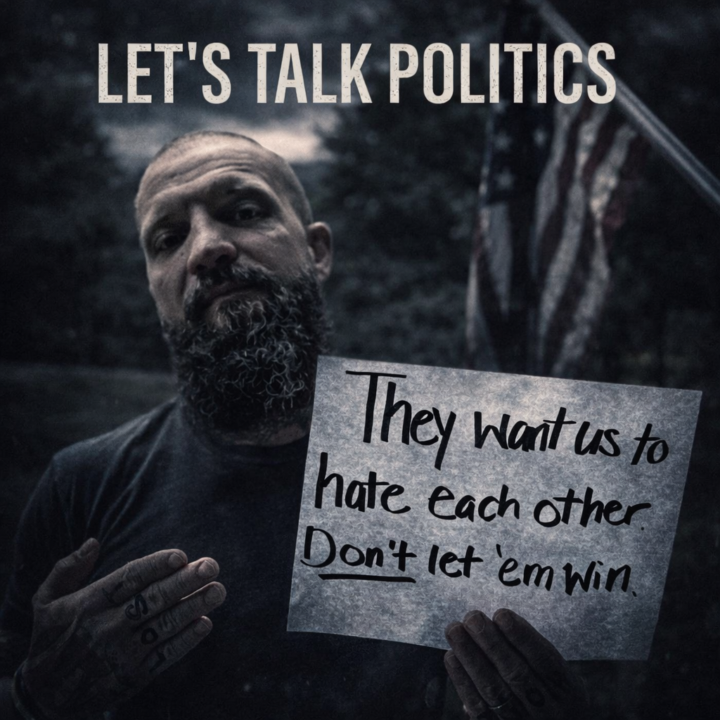
They Want Us to Hate Each Other - Don't Let 'Em Win!
They want us to hate each other. Left. Right. Red. Blue. I’ve buried kids at Uvalde. Pulled people out of trap houses in South Memphis. Evacuated families from Afghanistan. Worked shootings, riots, disasters, and war zones. And not once — not ever — has someone asked me who I voted for before asking for help. That division you see online? It’s not real on the streets. It’s manufactured. And it’s tearing this country apart. I made a video about it. Not as a pundit. Not as a politician. But as someone who’s been in the worst places on earth and still believes we can do better. Watch it. Sit with it. Then jump in the comments — respectfully. If you agree, share it. If you disagree, watch it anyway. And if you’re tired of being forced into boxes that don’t fit… This one’s for you. 👉 Watch the full video. 👉 Like, comment, share. 👉 Subscribe if you’re done with the noise and ready for solutions.

3 likes • Dec '25
Five years ago, I went for a bike ride and something happened. I have no idea what. The brain surgeon said my injuries were consistent with being hit by a car. Assuming this is true, I know nothing about the driver, but I do know about the person who was out for a morning run and found me. Clearly, they were unconcerned about my political affiliation. It was at the height of COVID, and they weren’t so worried about my vaccination status that they hesitated to take my pulse. I am very grateful for the lack of concern for these details. Being found quickly was a critical part of my recovery, which I personally consider to be a miracle. Now is a time of massive change, and we need to work with everyone to get through it. I mean everyone. This includes the person who found me, but also the driver who hit me. Caring about political parties will not help. Caring about people and working together to solve problems is the only rational way forward. This sentiment is not remotely new but thousands of years old. Sometimes, though, it does look like many are discovering this idea for the first time.

Dec '25 •
Anyone know of remote jobs for International workers?
I mentor young adults in various states and countries, including The Gambia Africa. Most people who contact me from other countries want to come to the US. Right or wrong, I do not mentor those individuals but wait for those who want to make a difference where they live. A young man approached me almost 2 years ago about a mentorship. When we spoke, he said "I love my family, I love my people and I love my country. I just want to make it better". Thats what I wait for. Over the past two years, we have made great progress and he is very close now to getting local non-profit off the ground where he lives. He works as a taxi driver and his brother works construction, so working is not an issue but they barely scrape by each month. This young man is 25 and he & his brother live with and support their mother. There are very few decent paying jobs in Africa, so I told them I would start asking around if anyone else has experience with companies that need remote workers (i.e. call center?). They are now on Remote4Africa.com but know we have a very diverse group here at Owen Army and wanted to put it out there. Welcome any ideas or suggestions. Thanks, Robert
1 like • Dec '25
Remote jobs in tech right now are focused on India and South America. The companies that are very into remote workers outside the country tend to be those who are trying to minimize costs. India tends to be the lowest cost but it is 10-hour time difference which is challenging. One space that is poorly serviced is people who are in between India and US time zones. This gives off cycle overlap. How does one recognize the companies focused on cost? Look for startups who are growing and PE backed firms.

Dec '25 •
Emotional Regulation as Crime Prevention
I want to dive deeper into something that sits at the core of policing, training, and the human experience—but rarely gets the airtime it deserves: Emotional regulation is one of the most powerful forms of crime prevention we have. Not technology. Not policies. Not equipment. Human regulation. Human capacity. Human control. Because when you strip away all the noise, most of what law enforcement deals with is emotion without direction: People who never learned to pause. People who never learned to sit with discomfort. People who never learned to name a feeling before acting on it. People who were raised in environments where chaos was the norm and regulation didn’t exist. Every cop knows this pattern: Somebody can’t handle anger → becomes an assault Somebody can’t handle shame → becomes a lie, a cover-up, or avoidance Somebody can’t handle fear → becomes violence or self-destruction Somebody can’t handle stress → becomes addiction Somebody can’t handle grief → becomes isolation or suicide And this isn’t just individuals. This is generational. This is cultural. This is systemic. If we taught people how to regulate emotions early on: We would see fewer: • Domestic incidents • Fights • Road rage • Juvenile crimes • Relapses • Overdoses • Suicides • Mental health crises • Officer-involved uses of force • Broken relationships and broken families This isn’t hypothetical — it’s observable reality on every shift. Emotional regulation isn’t soft. It’s tactical. It’s the ability to: – Stay stable under pressure – Recognize the difference between a feeling and a fact – Think while the nervous system is screaming – Decelerate when everything inside wants to accelerate – Not weaponize emotion in conflict – Recognize when you’re escalating someone else without realizing it – Use calm as a strategy, not a luxury This is the same skill that makes elite operators effective in combat. It’s the same skill that makes high-level negotiators successful. It’s the same skill that keeps officers alive during critical incidents.
2 likes • Dec '25
Loved it. Here is what I’d add: This resonates deeply, and I think there’s an adjacent truth worth adding: What if some of what looks like poor emotional regulation is actually rational adaptation to environment? Consider the Stanford Marshmallow test. It’s often cited as evidence that self-regulation predicts success. But there’s another interpretation: kids who ate the marshmallow immediately may have learned, correctly, in their context, that delayed rewards rarely materialize. They weren’t failing at self-control. They were succeeding at reading their environment. This matters for the conversation. Teaching emotional regulation is critical, but it only sticks when the environment rewards the new behavior. If someone learns to pause, to de-escalate, to sit with discomfort, but their world still punishes vulnerability and rewards aggression, they’ll rationally revert. So I’d add to the list: We also need to build or rebuild environments where regulated behavior is the winning strategy. The skill of reading context and adapting is itself teachable. But we have to meet people halfway by making sure the context actually rewards what we’re asking them to do. This isn’t either/or. It’s both: teach the skill and reshape the conditions.
0 likes • Nov '25
🦃 Fantastic sentiment!
4 likes • Nov '25
It amazes me that doing hard things is a competitive advantage. So many people prefer soft comfort. Growth does not occur in comfort.
1-6 of 6

Active 122d ago
Joined Nov 3, 2025
Powered by