Activity
Mon
Wed
Fri
Sun
Aug
Sep
Oct
Nov
Dec
Jan
Feb
Mar
Apr
May
Jun
Jul
What is this?
Less
More
Memberships
Sharpshooter Life Community
87 members • Free
5 contributions to Sharpshooter Life Community

May 21 •
Winning at your life is up to you
It takes planning and hard work. It takes awareness and practice. It gets better with time. Practice daily. #R³

1 like • May 21
Ooh David, I like this one. Without the components, we lose focus on our target.
May 19 •
Where are you making the most progress?
Let's see where you are improving. Pick one. Be honest with yourself and the community. Comment to share how things are coming along. What has worked for you and what hasn't?
Poll
9 members have voted
3 likes • May 21
I signed up for a half marathon this fall, which has really helped me stay focused, motivated, and consistent with my training while continuing to improve my running. An added benefit is that I’m starting to feel better overall and have created dedicated time for myself. Before setting this goal, it was difficult to stay on track without something to work toward.
May 11 •
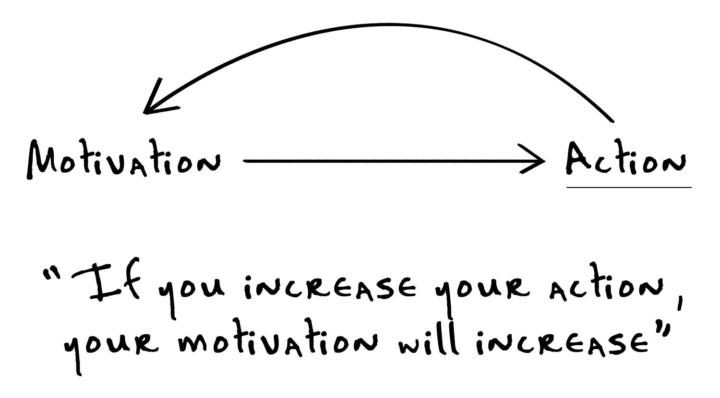
Execution: The Gap Between Knowing and Doing
We wake up hungry to improve and build a greater life. We collect insights like currency—devouring self-improvement podcasts, books, and articles, and saving way too many online posts. We are incredibly good at learning about change, but consuming ideas about your life is not the same as actually living differently. It can feel like progress, but this endless preparation is simply procrastination disguised as productive work. We suffer from "shelf help" rather than true self-help, getting stuck in consumption mode and battling the "constipation of execution". Most people are great at knowing, but we fundamentally fail at doing. The part that actually moves the needle. Why do we hoard knowledge but fail to execute? From a psychological perspective, this is known as the "intention-behavior gap". We strongly intend to act, but become "inclined abstainers" who fail to translate those goals into action. Your brain is an efficiency machine wired to follow the path of least resistance—the "inertia default". Gathering information and planning feel incredibly safe; they provide a dopamine hit that tricks your brain into thinking you are making progress without ever exposing you to the actual risk of failure. Transitioning from consumption to execution requires a deliberate, initial burst of cognitive effort to break the autopilot cycle and force your prefrontal cortex to take command. Without this, your brain avoids the discomfort of change and keeps you safely stuck in the weeds of theory. Knowledge is not power; it is only potential power until you consistently apply it. If you want to get better at the doing part, you must deploy the 50/50 rule: for every hour you spend reading, listening, or learning, spend an hour applying that knowledge. As a Sharpshooter, here is what that actually looks like: 1. Pick One Idea, Not Ten: If you chase two rabbits, you will catch none. After finishing a podcast or a chapter, write down the single takeaway that hit hardest and ignore the other nine. You cannot apply ten things at once; you can only apply one.
2 likes • May 11
Wow, this absolutely hits home. In my own experience, I’ve realized that constantly consuming knowledge without actually applying it can become mentally exhausting. You keep learning, reflecting, planning, and understanding more, but without execution it starts to feel overwhelming rather than productive. At some point, all that unused knowledge turns into mental clutter instead of growth. I’m learning that action even tiny steps is what creates clarity, confidence, and real momentum.
Apr 16 •
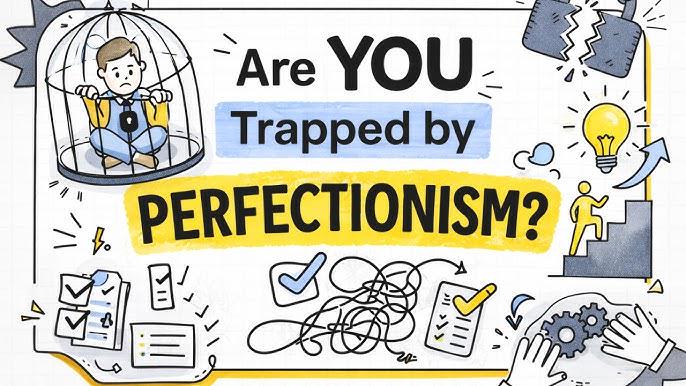
The Perfectionism Trap: Why Playing it Safe is Your Biggest Risk
As high performers and strategic thinkers, we are used to making smart decisions and being right more often than wrong. When we face a new project or business venture, we naturally want to apply that same level of elite competence. We tweak, we plan, and we refine one more detail, convincing ourselves that we are simply upholding our high standards. But the hidden truth is that we are trapped in an endless cycle of delay. We let the illusion of control keep us on the sidelines because planning feels safe, while actually starting something messy feels incredibly risky. Why do we sabotage our own progress this way? In high-stakes arenas—like construction, contracting, or entrepreneurship—mistakes cost real money, time, and reputation. Over time, your nervous system learned a rigid, survival-based rule: precision equals safety. When you attempt to step into a new, uncertain territory, you trigger your brain's "ego default"—an instinctual, biological drive to protect your sense of self-worth and established identity. Perfectionism isn't actually about achieving excellence; it is a psychological defense mechanism. Your brain is desperately trying to protect you from the emotional discomfort of being judged or facing the uncertainty of failure. It creates a false belief that if you just prepare enough, you can eliminate all risk and control the outcome. Ultimately, this primal desire to protect you - paralyzes you, turning your desire for success into crippling overthinking and inaction. To break free from this trap, you must rewire your approach and accept a fundamental truth of being a Sharpshooter: execution requires entering uncertainty well before you are completely ready. Here is how you can enact positive change today: 1. Start Messy: Waiting to be perfect is just procrastination in disguise. The imperfect project you actually complete is worth infinitely more than the perfect masterpiece you never finish. Perfection is the enemy of progress. 2. Give Yourself Permission to Look Foolish: Your identity as a highly respected professional is holding you back from being a beginner. Most people are far more concerned with looking great than actually being great. Drop your ego. Be willing to look like an amateur in the short term so you can become a master in the long term.
1 like • May 7
This really resonates. Perfectionism feels almost impossible because we’re constantly evolving, growing, and raising the standard of what “perfect” even means. The bar keeps moving, which makes perfection less of a destination and more of a shifting idea.
Mar 9 •
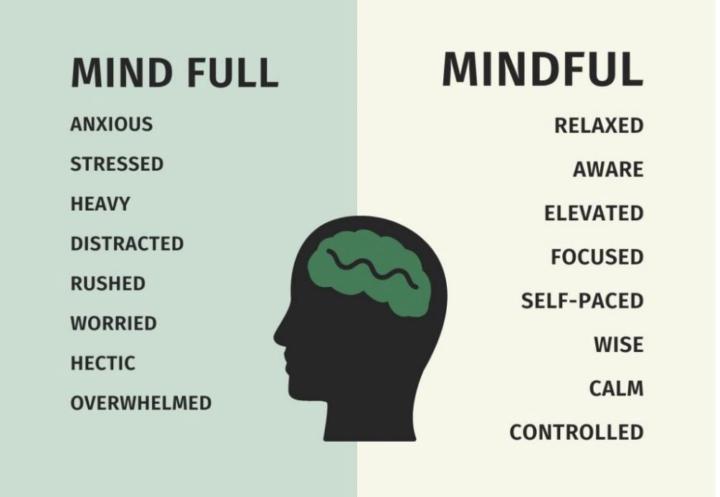
You Are What You Consume: Take Command of Your Mental Diet
As high performers, we are aware of our physical health. But what are we feeding our minds? Here is the hard truth: if you are not actively feeding your mind with good information and making deliberate choices, your mind is still being fed. It is just being fed by someone else. We are drowning in a tsunami of digital chaos, and when you default to passive consumption, you allow algorithms, media companies, and societal expectations to program your thoughts. You end up reacting to the noise instead of aiming at your targets, leaving you feeling anxious, inadequate, and stuck spinning your wheels. From a neurobiological perspective, to keep you safe from threats, your brain naturally pays far more attention to high-arousal negative content—such as drama, fear, and outrage—than it does to positive content. Your mind literally takes the shape of what you frequently hold in thought. If you constantly feed your brain "mental junk food," your neural pathways adapt to that input, triggering your brain's fear center (the amygdala) and trapping you in a loop of anxiety, rumination, and chronic stress. However, because of neuroplasticity, your brain is highly adaptable. By actively changing your information inputs, you can physically rewire your brain's circuitry to favor focus, resilience, and clear decision-making. Your time and attention are your most valuable resources. Guard your mental diet like a Sharpshooter. Take immediate command of what you consume. Guard your focus ruthlessly. Stop searching for the newest shiny hack or secret algorithm. Instead, actively feed your mind timeless wisdom, proven mental models, and actionable strategies. Don't just acquire knowledge—apply it. Shift your energy from passively reacting to the world's noise to actively building the foundation for your own personal targets. Stop letting the world decide what you think. Guard your mind, feed it with purpose, and get back on target. Let's gooo!
1 like • Mar 18
This really resonates. A lot of what we consume daily is framed as information, but it’s often just layered opinions presented with confidence. When everything competes for our attention at once, it becomes harder to tell what’s actually grounded in fact versus what’s just noise. That constant pull in different directions makes focus feel limited and valuable. Being more intentional about what we engage with isn’t just helpful anymore, it’s necessary.
1-5 of 5

@gabi-garcia-8553
Chicago-based leader with 15+ years advancing small businesses, equity, and growth through strategic partnerships.
Active 12d ago
Joined Feb 2, 2026