Activity
Mon
Wed
Fri
Sun
Nov
Dec
Jan
Feb
Mar
Apr
May
Jun
Jul
Aug
Sep
Oct
What is this?
Less
More
Owned by Frances
A remembering space before the world told you who to be. When I found my edge it changed my life. What could yours do for you?
Business Clarity Lab
5
Free
BYOB: Bring Your Own Business
1.5k
5.0
$99/m
Business For Healers
27
5.0
$47/y
Spiritual Awakening Academy™
972
5.0
Free
9D Breathwork Schools
55
Free
🌎Our Peaceful Liberation🖖🏽
103
5.0
Free
Ask Lynne's Health Exchange
164
5.0
Free
Pick Your Online Business
1.4k
Free
The Presence Pathway
144
5.0
$11/m
69 contributions to BlissBrain 💕🧠💥💗

Sep 5 •
New home ...
Okay, it threw me off track a little — actually, quite a bit... We moved on September 1, 2026. It was only across our little town, but we’re still far from finished with everything that needs to be done. But we’re getting there. So please forgive me for being away for far too long. I hope you won’t hold it against me too much. I’ll make it up to you... So, what else has been happening? Well, now that we’ve decided to stay in Germany for the time being, I’m becoming more actively involved here and paying closer attention to the way things are developing. Perhaps there is still something for us to do here — a task to take on. Who knows? Maybe you could bring me up to speed on the topics and issues that are currently on your minds. Then, together, we can find a great way to reconnect and get back into the flow. Warm regards, Stefan

1 like • Sep 5
Hi Stefan. Great to see you back. I moved July 1 and am still settling in. You were missed,
Jun 23 •
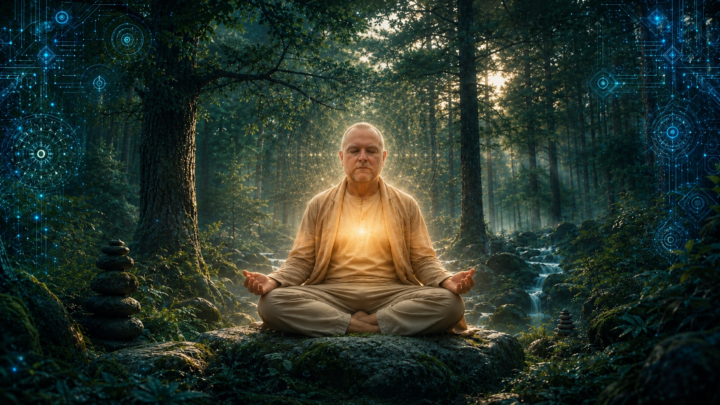
🧲 You were not designed for this "system."
Your body knows it. We live in a perfectly optimized, artificial world. Smart homes, 24/7 light, scheduled productivity. But what I consistently observe is this: the further we distance ourselves from our natural environment, the louder our body’s call for its roots becomes. For generations, we've been conditioned to believe that nature is dangerous and that we need experts and institutions to tell us what's good for us. Yet, in practice, it's clear these systems often follow their own logic—one that isn't always aligned with our well-being. 🔍 3 Observations on Our Alienation (and How to Counter It): - The Pacemaker is Artificial: Your biorhythm isn't governed by the sun, but by alarm clocks, deadlines, and artificial light. This often leads to a feeling of constant exhaustion because your body is fighting its own internal clock. - Safety is an Illusion: We're told to trust the food industry, the pharmaceutical industry, and the state. But anyone who looks behind the curtain quickly realizes that their primary goal isn't always your health, but often the maximization of profit and control. - The Connection is Missing: We've unlearned how to rely on our intuition and the signals from nature. Instead, we seek answers in apps, studies, and from experts, rather than simply walking barefoot across a meadow to feel what it does to us. 💬 QUESTION: Where do you most strongly feel the conflict between the demands of the "system" and your own natural rhythm in your daily life? At what point do you say, "I'm not playing along with this anymore"? ✅ EXERCISE (5 minutes for you): 1. Go outside right now. Whether it's a balcony, a park, or a garden. 2. Close your eyes for 60 seconds and just notice: What do you hear, smell, and feel? (The wind on your skin, birds, the scent of grass?) 3. Post one thing you noticed in the comments below.
1 like • Jun 23
I went outside and the sun after days of rain is glorious. The smell of fresh air after rain, the birds singing, a slight wind blowing my hair, the heat of the morning sun that is just right. What a beautiful day.

1 like • Jun 20
A great foundation to have in life. Thank you for sharing this @Stefan Bösebeck 🙏❤️
Jun 6 •
What 🐙 do we learn from Octopuses?
Tell me what we can learn from this wonderful creatures? Could it be that this 9 brained being is more intelligent than us? What would you do if your legs and arms have their own brain? What octopus superpower is your favorite?
Poll
3 members have voted
2 likes • Jun 6
I recently watched the movies "My Octopus Teacher" and "Remarkably Bright Creatures". I also love the YouTube videos by octopus owners. They are a trickier pet to own. I just love their intelligence.
Mar 11 •
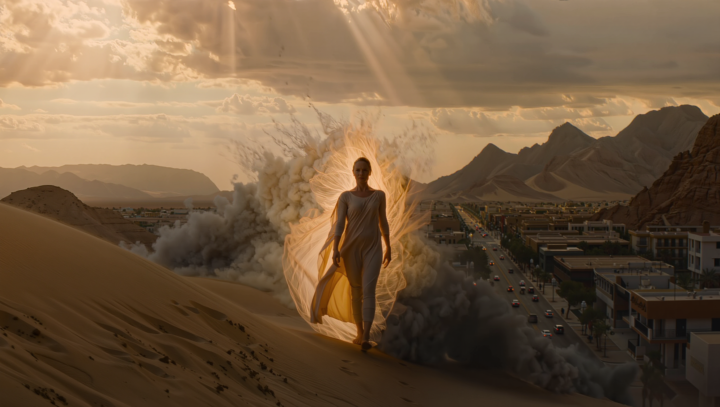
Psalm 91 as a power code: program protection 🛡️🧠🙏
From an NLSP view, Psalm 91 is more than “text”. It’s a state code: words + imagery + repetition = your subconscious learns safety. 🔁🧬 When your system feels safe, it becomes less hackable by fear triggers. 🔒😨 And “quantum physics” here as a lens/metaphor: Your focus is a signal 📡, your state is a field 🌊. The more coherent (calm, grateful) you become, the clearer your perception, decisions, and behavior get. 🧘✨ No proof-claims — just a powerful lever. ✅ Power code (90 seconds, spoken or silent) 🗣️🫧 Replace “God” with “Source / Life / Love” if you prefer. 🌿 I dwell in the shelter of God/Source. 🫧 I am covered and held. 🤍 Fear has no seat in me. 🛑 My mind stays clear, my heart stays calm. 🧠 ❤️I choose trust. I choose peace. 🕊️ Only what serves me may enter my field. 🔐 Mini use ⏱️🛡️ 1. Hand on heart ❤️ 2. 6 calm breaths 🌬️ 3. Repeat the code 3x 🔁 4. Anchor line: I am safe. I am guided. ✅ 👇 Question: Which word works like an instant shield for you? (one word is enough) 🛡️
1 like • Jun 5
Held
1-10 of 69

@frances
Curious, discovering, co-creating, with a little laughter along the way.
Online now
Joined Jan 1, 2026
INFJ