Activity
Mon
Wed
Fri
Sun
Aug
Sep
Oct
Nov
Dec
Jan
Feb
Mar
Apr
May
Jun
Jul
What is this?
Less
More
Owned by Felicitas
A living container for women remembering their power - where ancient wisdom, sacred feminine magick and nature's cycles become lived truth.
Memberships
WELL-LOVED CIRCLE
8 members • $47/month
Rewilding the Soul
2.5k members • Free
The Golden Room
248 members • Free
The Feminine Renaissance
154 members • Free
The Herb Witch
352 members • Free
The Mystic Path
569 members • Free
Hagwitch Herbals
81 members • Free
pHERmission public
4k members • Free
Skoolers
167.1k members • Free
5 contributions to Hagwitch Herbals

23d •
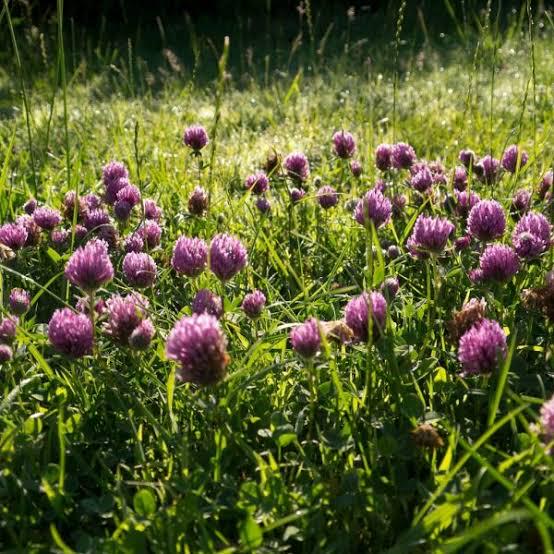
Red Clover- Trifolium pratense
Red clover is a plant many people see growing in fields, yards, and roadsides without realising the medicine sitting right there in front of them. Red Clover (Trifolium pratense) is a member of the pea family, and its pink-purple flower heads have been used for generations as food, tea, animal forage, soil repair, pollination source for bees, and medicine. Traditionally, red clover has been known as a blood-cleansing and lymph-moving herb. Old herbalists turned to it when the body needed help moving waste, clearing the skin, and supporting the natural drainage systems. It was often used for skin eruptions, eczema-type skin complaints, psoriasis-type dryness, boils, sluggish lymph, and other chronic skin complaints. This is why red clover became one of the classic herbs in old “spring tonic” formulas. It was not because the plant magically cleans the blood overnight, but because it supports the natural routes of elimination and detoxification— primarily the lymph, liver, kidneys, skin, and bowels. Red clover has also been traditionally used for the lungs and as a cough remedy. The blossoms were made into teas and syrups for dry coughs, irritating coughs, bronchial discomfort, and lingering chest congestion. It has a gentle soothing quality and was often paired with herbs like mullein, marshmallow, violet, plantain, elecampane, and licorice depending on the need. It is not a harsh herb. It works more like a gentle helper. One of the biggest reasons red clover became famous in modern herbalism is because of its connection to women’s health. Red clover contains natural plant compounds called isoflavones, including compounds such as genistein, daidzein, biochanin A, and formononetin. These are often called phytoestrogens because they can lightly interact with estrogen pathways in the body. Because of this, red clover has been studied for menopause support, especially hot flashes, night sweats, mood changes, and bone health. Some studies show benefit, some show mixed results, but there is enough research behind red clover that it cannot be dismissed as just an old wives’ herb.

4 likes • 23d
As a child, I used to pick them and eat the flower heads (by pulling out each petal). They are quite sweet.
May 23 •
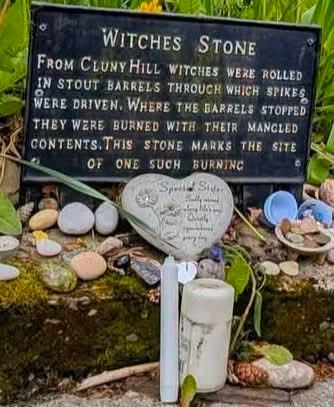
CLUNY HILL WITCH BARRELS
Hidden beneath the trees of Cluny Hill in Forres stands a stone tied to one of Scotland’s darkest chapters… The Witches Stone marks the place where accused women were executed during the Scottish witch trials of the 1500s and 1600s. Local legend says the victims were forced into spiked barrels and rolled down the hill before being burned where the barrels finally stopped. The stone itself is cracked apart and held together with iron staples. And the old story says that when someone once tried to break pieces from it for building material… sickness followed until the stone was returned. Whether you believe in curses, restless energy, or simply the weight of history… places like this remind us how fear can turn ordinary people into monsters. Scotland is filled with beauty, mystery, folklore… and scars that time never fully erased. Let's all remember it was women they murdered not 'witches'.
0 likes • May 24
It’s important to remember… to honour those women who were made to suffer AND to recognize signs of intolerance within our current society - which are there.
May 24 •
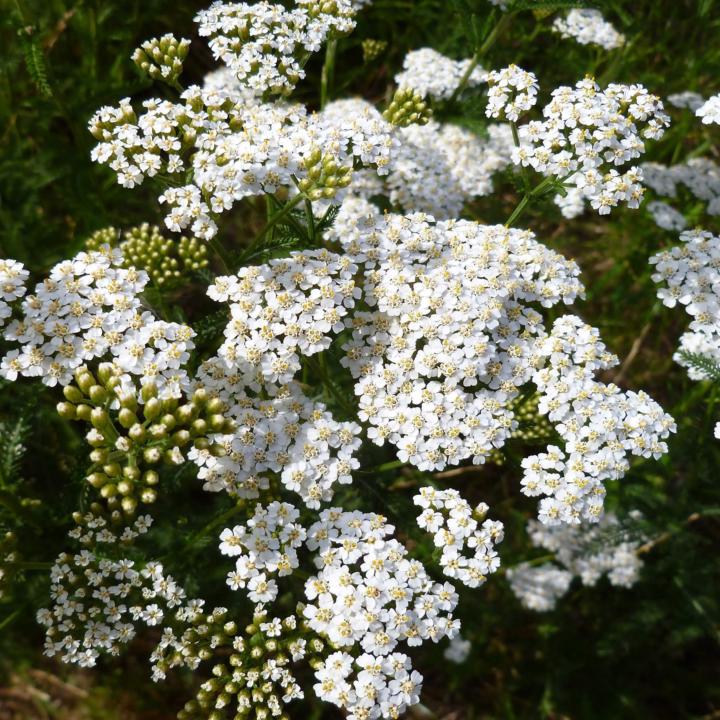
Yarrow- Achillea millefolium
The Warrior’s Herb • The Witch’s Shield • The Seer’s Companion. Yarrow is one of those plants that feels like it has always belonged to witches, healers, warriors, and diviners. Botanical name: Achillea millefolium Common names: Yarrow, Woundwort, Soldier’s Herb, Bloodwort, Nosebleed Plant, Thousand‑Leaf Family: Asteraceae Habitat: Meadows, roadsides, pastures, wild fields across Europe, Asia, and North America Appearance: Feather‑fine leaves (“mille‑folium” = thousand leaves), flat-topped umbels of white (sometimes pink) flowers, strong aromatic scent Yarrow is a plant of thresholds — between life and death, war and peace, body and spirit, sight and prophecy. Myth & Folklore Greek Myth Yarrow is sacred to Achilles, who was said to have used it to staunch the wounds of his soldiers during the Trojan War. Hence its name: Achillea. Celtic & British Isles Carried as a love charm; young women placed it under their pillow to dream of their future spouse. Burned to banish fear and protect against wandering spirits. Hung over cradles to protect infants from the Fae. Used in weather magic — especially to call or calm winds. Norse Tradition Associated with Odin, especially in matters of: battle, divination and runic sight Chinese Tradition Yarrow stalks were used for I Ching divination — considered the most spiritually potent plant for contacting the unseen. In Traditional Chinese Medicine (TCM), yarrow is known as “ai yao” and has been used for its medicinal properties. It is believed to have cooling and anti-inflammatory properties and has been used to treat conditions like fevers, wounds and skin issues, among other health concerns. Indigenous Americans: Yarrow has a long history of use in Native American traditional medicine. Various Native American tribes used yarrow for its medicinal properties. It was employed to treat a range of ailments, including wounds, fevers, digestive issues, and respiratory conditions. The plant’s leaves and flowers were often prepared as infusions or poultices for medicinal use.
2 likes • May 24
So much fantastic information! You’ve convinced me to plant more yarrow.
Apr 18 •
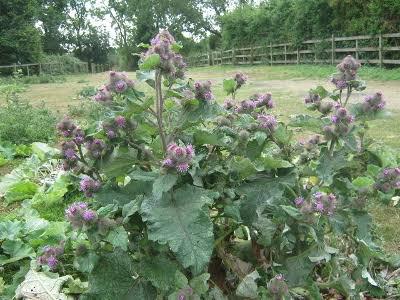
Burdock
BURDOCK (Arctium lappa & Arctium minus) Also called: Beggar’s Buttons, Burr, Cocklebur, Sticky‑Willie, Clot‑bur, Gobo (Japan) Essence: A plant of tenacity, purification, grounding, protection, and ancestral strength. Nature: Earthy, stubborn, persistent — a plant that clings, endures, and draws out what is hidden. Folklore & Myth European & British Isles Burdock burrs were believed to catch evil spirits, preventing them from following a person home. Children sometimes wore them on clothing as accidental amulets. In rural English lore, burdock was a witch’s herb of binding — its clinging burrs symbolised spells that “stick” or intentions that cannot be shaken off. In Scottish tradition, burdock was used to protect cattle from faery mischief; burrs were hung in barns to repel “elf‑shot”. Some old charms used burdock root as a ward against envy and ill‑will, especially from neighbours or rivals. Slavic Traditions Burdock was considered a plant of resilience and survival, associated with ancestors who endured hardship. It was used in banishing rituals to remove curses, illness, or lingering negativity. In some regions, burdock leaves were placed on the forehead to “draw out” fevers or bad spirits. East Asian Lore In Japan, burdock (gobo) is a symbol of strength, longevity, and nourishment. It is associated with family lineage, deep roots, and the ability to thrive in adversity. Symbolic Themes Clinging → Binding, attachment, persistence Deep roots → Ancestral memory, grounding, endurance Bitter root → Purification, detoxification, truth‑revealing Magical Associations & Uses Primary Magical Virtues Protection (especially from envy, malice, and spiritual intrusion) Purification & cleansing Grounding & stabilising energy Banishing negativity, illness, or harmful influences Breaking hexes or bindings Strengthening willpower and resilience Shadow work & ancestral healing Magical Uses in Ritual & Spellcraft Protection & Warding Scatter dried burdock around the home to repel harmful energies.
0 likes • Apr 23
Wow! So much great information!
Apr 3 •
Family herbalism
In this generation... How important do you guys think it is to teach our children about natural healing, herbs, tinctures?
0 likes • Apr 9
So important! I raised boys this way and now at 27 and 29 they are super contentious about their health.
1-5 of 5

@felicitas-ritter-8842
Initiated Priestess & Spiritual Mentor guiding women through ancient wisdom & nature-based practices for healing, growth & alignment.
Active 3d ago
Joined Apr 9, 2026
INFP
London, ON