
Write something
Pinned
Jan 26 •
Welcome
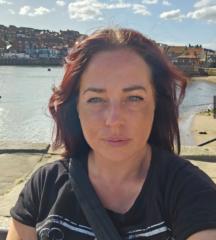
Welcome to Hagwitch Herbals and the Dark Moon Rising. Before you dive into the community I wanted to introduce myself and the ethos here, it's core purpose. Dark moon rising is a development group (in-person) I began to facilitate decades ago. However meeting the demands of the time I am moving everything online in a bid to open the community up so we can support more people on their individual unique healing and spiritual journey through life. This group originated in liverpool because people were looking for more, searching for more and desperate for truth. As a group we have delved together and grown together over many years, also as individuals with hectic family lives. I have been facilitating pagan spiritual development groups and rites of passage for decades. I am currently studying a bsc in clinical herbalism and have recently rejoined the QWA (quantum wellness academy) team again. I am a fully qualified reiki master and holistic therapist, with ptlls and dtlls qualifications. Quite a few of my family members are pagan so I was very lucky growing up to have that awareness of certain topics readily available. Real wholistic healing doesn’t happen overnight its a journey of growth and development. 'It's only when you realise you have given your power away that you can reclaim it' hawkshadow 2004 (c) This is a space to do just that alongside others who are reclaiming their power, growing and learning together, empowering their health, wellbeing and spiritual grounding. I started my journey into spirituality, holistic therapies, energy healing and recognising vibration at a very young age. My grandad was a great believer in nature, breathing correctly, energy and believed in the power of the mind. Going so far as to have surgery under self hypnosis. The man was beyond ahead of his time and I was incredibly blessed he shared his knowledge and support with me. At 26 I was stuck in a bed for 3 years, bedbound, with 3 young children. It was a slow journey of nutrigenomics, herbalism, ddp yoga and deep shadow work. I am still on that healing journey with continual self improvement and growth. I was diagnosed with asthma, type 2 diabetes, behcets disease, ehlers danos syndrome, pots, mast cell disease, fibro, hidradenitis supporativa and tietary adrenal insufficiency (both my adrenals and pituitary gland where killed off due to prescription oral ateroid medications). As I said I am still on my journey, however, after several years of walking my talk and implementing what I have learned along the way I have my EDS well managed and the Addisons under control, my hidradenitis has gone from stage 3 back to stage 1 but everything else including the T2D has gone into remission or reversed. I intend for them to stay in remission and to continue my healing journey. It has been a long journey to get to this stage that is for sure, a lot of those years spent deep in scientific research seeking answers and guidance. In 2014 I was offered the liverpool pathway by the NHS my body was failing drastically, system by system, I am so thankful I declined and finally listened to relatives advice on natural remedies that I incorporated into my day to day wellness regime. In the interest of honesty i am still steroid dependent as my pituitary and adrenal glands produce no hormones, so I have to take hydrocortisone steroid tablets daily to replace this action. Without the steroids I would go into a coma and die. I have managed to reduce them down gradually over the last few years however, but this has to be a very slow journey as a result and can't be rushed. It's a fine dance between stimulating my glands and taking enough steroids to stay alive. Which is why in this group we stick to the science, and there is official scientific research out their proving the medicinal effects plants have for our physical, mental and emotional health.
4d •
Dryads- post by Echoes of Myths
In Greek mythology, a dryad was a nymph associated with trees, particularly oak trees. But the idea of spirits inhabiting trees reaches far beyond Greece. In Celtic folklore, sacred trees held an important place in the relationship between people and the natural world. The oak, ash and yew each carried their own associations, appearing in traditions, beliefs and stories passed down through generations. It is worth making one distinction: dryads belong to Greek tradition, rather than Celtic mythology specifically. Yet the belief that certain trees were inhabited, protected or somehow set apart appears in Celtic folklore too. In Ireland and Scotland, for example, solitary hawthorn trees have long been associated with the Aos Sí, the fairy folk, and disturbing them was traditionally considered bad luck. Perhaps these beliefs tell us something about how earlier communities understood the landscape around them. A tree was not always just a tree. Sometimes, it was a place where the human world and the supernatural were thought to meet. Have you ever come across a local legend about a tree that should never be disturbed? #EchoesOfMyths #CelticFolklore #Dryads #IrishFolklore #ScottishFolklore #FolkloreAndMythology I loved this video so had to share


1-30 of 144
powered by
skool.com/hagwitch-herbals-3611
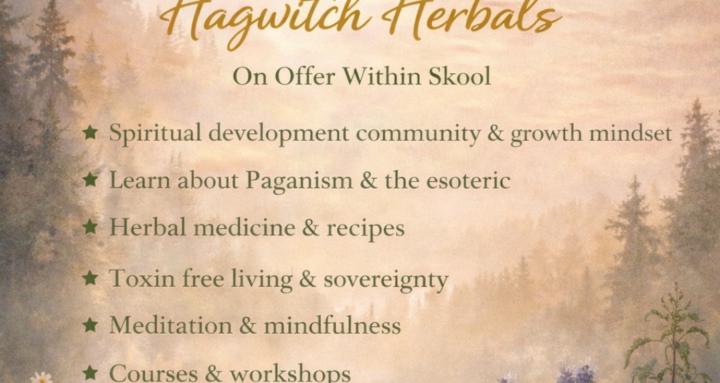
An alternative health and spiritual wellness community. Online accredited workshops & courses, pagan/ spiritual development, home ed and sovereignty.
Suggested communities
Powered by