Activity
Mon
Wed
Fri
Sun
Feb
Mar
Apr
May
Jun
Jul
Aug
Sep
Oct
Nov
Dec
Jan
What is this?
Less
More
Memberships
RéKnowology
38 members • Free
T.B.Y.E. (The Best You Ever)
180 members • Free
61 contributions to T.B.Y.E. (The Best You Ever)

10h •
1/17/26 GOAL FOCUSED
I am committing to writing in my journal consistently, recognizing the importance of journaling as a tool for clarity, reflection, and personal growth.
2
0

23h •
Saturday 💐😄 1/17/26
Dale Carnegie How to Win friends and Influence people researching the principles of Dale Carnegie on gratitude Attitude affirmations motivational speech 💬Dale Carnegie’s philosophy, most famously captured in How to Win Friends and Influence People, is built on the idea that success is 15% professional knowledge and 85% the ability to express ideas, assume leadership, and arouse enthusiasm among people. While often associated with "social hacking," Carnegie’s true focus was on a sincere shift in mindset. Here is a breakdown of his principles regarding gratitude, attitude, and affirmations. 1. Gratitude: The "Legal Tender of the Soul" Carnegie viewed gratitude not just as a polite gesture, but as a fundamental human need. He famously noted that while we wouldn't let our families go six days without food, we often let them go six decades without the "hearty appreciation" they crave. * Sincerity vs. Flattery: Carnegie drew a sharp line here. Flattery is "from the teeth out" (insincere), while appreciation is "from the heart out." * The Ingratitude Shield: He advised expecting ingratitude. If you do something for others expecting a "thank you" and don't get it, you'll be miserable. Instead, give for the joy of giving. * Daily Practice: He advocated for "leaving a friendly trail of little sparks of gratitude" in your daily travels—to the postman, the waiter, or a coworker. 2. Attitude: The Internal Governor Carnegie believed that your mental attitude is the primary creator of your reality. He often quoted Marcus Aurelius: "Our life is what our thoughts make it." * Happiness is Internal: He taught that happiness doesn't depend on outward conditions (wealth or status) but on inner mental attitudes. * The Power of the Smile: A smile isn't just for others; it's a physical trigger to improve your own mood. It says, "I like you. You make me happy. I am glad to see you." * Assuming the Best: His principles on "Winning People to Your Way of Thinking" require a calm, friendly attitude. He argued that "a drop of honey catches more flies than a gallon of gall."
1 like • 10h
I Love this I was listening to it last night

1d •
Affirmations
1/15/26 I am a person of consistency and everyday I recite my concise statement in the mirror. I am person of consistency and everyday I recite my concise statement in the mirror. I am person of consistency and everyday I recite my concise statement in the mirror. I am committed to my goals and I take steady steps toward them every single day. I am committed to my goals and I take steady steps toward them every single day. I am committed to my goals and I take steady steps toward them every single day. I am the architect of my success and consistentcy is the foundation upon which I build my dreams. I am the architect of my success and consistentcy is the foundation upon which I build my dreams. I am the architect of my success and consistentcy is the foundation upon which I build my dreams.
0 likes • 10h
Awesome keep going
Feb '25 •
Official Daily Accountability Thread
Everyday Post in the Comments: The Date? What you did good today? What you can do better? What did you learn today?

0 likes • 23h
@Shonnieta Burley
0 likes • 10h
1/17/26 accountability What did I do good today? Helped my sister over come a Fear she had What can I do better? That I’ll be fearless and know Fear doesn’t mean stop. Fear means keep going. What did I learn today? The quote Everything you want is on the other side of fear" and "If you go to work on your goals, your goals will go to work on you". Jack Canfield
2d •
Level 🎚️ up
Hello 👋 🤗 everyone 🤠 🤗 watch ⌚ @Yolunda Jester 😅 😅 she's making herself seen she's almost at level 🎚️ 4 let's cheer her on
2 likes • 2d
Awww the you l’m learning how to navigate the site thank you for your help
2 likes • 10h
@Heather Boughton thank you
1-10 of 61
@yolunda-jester-3147
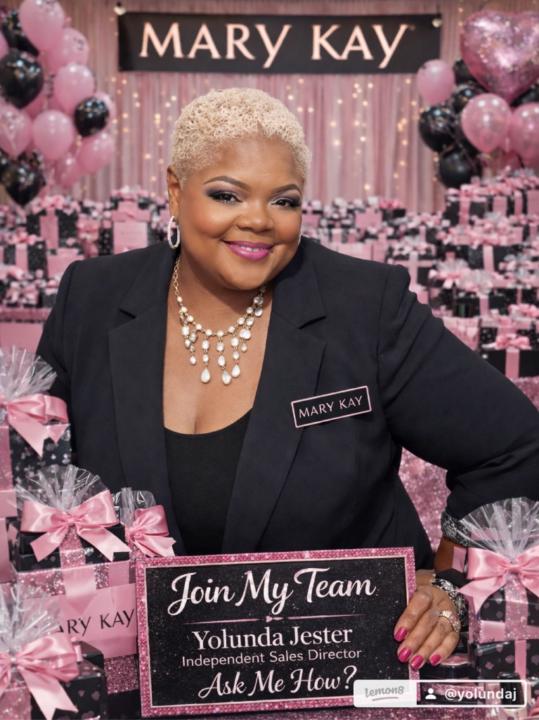
Beauty advisor, Mary Kay sales director and license Esthetician
Active 10h ago
Joined Jan 6, 2026
Powered by