Activity
Mon
Wed
Fri
Sun
Aug
Sep
Oct
Nov
Dec
Jan
Feb
Mar
Apr
May
Jun
Jul
What is this?
Less
More
Memberships
Permanent Jewelry Network
9.8k members • Free
Bedrock Nation
169 members • Free
1 contribution to Bedrock Nation

Jan 23 •
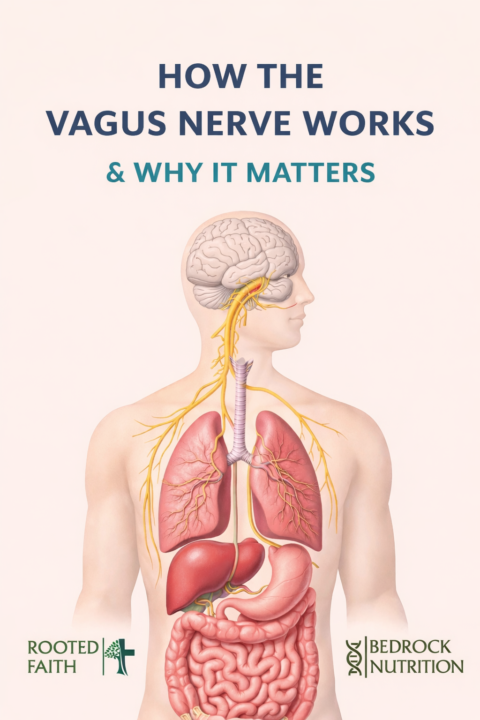
How the Vagus Nerve Works
How the brain talks to the immune system (and why this changes everything) If you’ve ever noticed that stress makes your gut worse, your sleep worse, your mood shorter, and your inflammation louder… you’re not imagining it. One of the main “communication highways” tying all of that together is the vagus nerve—the longest cranial nerve in the body, connecting the brainstem to the heart, lungs, digestive tract, and immune signaling hubs. What the vagus nerve does (in plain English) Think of the vagus nerve as a two-way radio between your brain and your body: - It carries information UP to the brain about what’s happening in your gut, organs, and immune system. - It carries signals DOWN from the brain that influence heart rate, digestion, inflammation, and recovery. This is why vagal tone (how well this system “communicates”) is so closely tied to stress resilience, digestion, mood stability, immune balance, and inflammation. The inflammatory reflex The brain’s built-in “inflammation brake” Researchers describe a specific neuro-immune circuit called the inflammatory reflex—a pathway where the nervous system can turn down inflammatory cytokine output in the body. Here’s the simplified sequence (matching the concept shown in that diagram): 1) The signal starts in the brainstem When the vagus nerve is activated (think: slow breathing, relaxation response), the brain sends output down vagal pathways that can influence immune signaling. 2) The spleen acts like a relay station The vagus nerve interfaces with splenic immune circuitry through the splenic nerve. In this pathway, signaling ultimately leads to norepinephrine release in the spleen, which then activates a specific subset of T-cells. 3) Immune T-cells release acetylcholine This is one of the coolest parts: certain T-cells can produce acetylcholine, which functions like the “final messenger” in this anti-inflammatory circuit. 4) Acetylcholine tells macrophages to “stand down” Acetylcholine binds to receptors (including α7 nicotinic acetylcholine receptors) on macrophages and can reduce inflammatory cytokine release, including TNF-α in experimental models.

0 likes • Feb 17
@Leanna Cappucci I was just going to ask if you had an opinion on the pulsetto! I’ve been eyeing it for a few months 👀👀
1-1 of 1
