Activity
Mon
Wed
Fri
Sun
Jan
Feb
Mar
Apr
May
Jun
Jul
Aug
Sep
Oct
Nov
What is this?
Less
More

Memberships

Al Mahero

246 members • Free

7H AI Academy

105 members • Free

24 contributions to 7H AI Academy
💡 How to Handle Difficult People (Without Losing Your Mind)
We’ve all been there… colleagues, clients, or even managers who test our patience.The key isn’t changing them — it’s managing ourselves. Here are 10 proven strategies: 1️⃣ Don’t take the bait – silence is powerful. 2️⃣ Their chaos ≠ your problem – protect your peace. 3️⃣ Set boundaries like a pro. 4️⃣ Don’t match their vibe – stay grounded. 5️⃣ Keep it factual, not emotional. 6️⃣ Stop playing therapist – it’s not your job. 7️⃣ Use strategic pauses – sometimes say nothing. 8️⃣ Redirect or shut it down – toxic chats don’t deserve your energy. 9️⃣ Stay one step ahead – predict & prepare. 🔟 Debrief with your inner circle – vent to someone you trust. ⚡ Takeaway:Dealing with difficult people is less about controlling them, and more about mastering your response. 👉 Question:Which of these strategies do you use the most?And what’s one tactic that works best for you in tough situations? #Enas_Ahmed #7H_AI_Academy
The Real Meaning of Wealth
The Real Meaning of Wealth We spend years chasing luxury — and somehow miss real wealth. True wealth isn’t measured in money. I thought luxury meant business-class flights, five-star hotels, and a calendar so packed it made me feel important. Sure, it was exciting — but I wish I could go back and shake that younger version of myself. Because now I know better. Real wealth is simpler. It’s made of things that truly matter to me: • slow mornings with no alarms • a peaceful mind that’s not constantly fighting itself • the freedom to take a walk without guilt • and people who love me for who I am, not what I achieve Today, luxury looks different. To me — and to those who truly understand — it’s time, health, peace, and presence. It’s the “boring” days that don’t need escaping. It’s home-cooked meals, deep sleep, and laughter that leaves you in tears. That’s real wealth. And it’s worth far more than anything money can buy. So let me ask you this: If you stripped away everything that looks successful… Would your life still feel rich? If not — maybe it’s time for a change. #Enas_Ahmed #7H_AI_Academy
1
0
The Real Meaning of Wealth
Where do you lead from?
From the front, the back, or the side? Most people see leadership as something that happens from the front — the leader sets the direction, defines the path, and inspires others to follow. That image is powerful but incomplete. In truth, leadership can come from three directions: the front, the back, and the side. Each reflects a different way of guiding people and shaping outcomes — with its own strengths and risks. 1-Leading from the Front is the visionary style. It’s about showing the way, bringing clarity and momentum. But when it turns into dominance, others may feel unsafe to contribute or become too dependent on one person. 2-Leading from the Back is the servant style. It focuses on empowering others, giving space, and supporting their growth. These leaders put people and purpose before visibility. Though sometimes seen as weak, it often represents a deeply mature and human approach to leadership. 3-Leading from the Side is the mentoring style. It’s about collaboration, presence, and shared thinking. These leaders build trust through teamwork and open dialogue. Yet because they’re less visible, decision-making can sometimes feel unclear. True leadership isn’t about choosing one approach — it’s about knowing when to step forward, step back, or walk beside. The art of leadership lies in sensing what the moment — and your people — truly need. So the real question isn’t which direction is best, but rather: Where do you lead from most naturally, and where could you learn to lead differently? #Enas_Ahmed #7H_AI_Academy
Where do you lead from?
Burnout isn’t random — it’s patterned.
Burnout isn’t random — it’s patterned. Some people are built for breakdown… They care too much. Work too hard. Push through everything. Until they can’t anymore. Because dedication without boundaries = exhaustion. Here are 7 personality types most likely to burn out: (save this — it’s worth revisiting) 1-The People Pleaser Always says yes — even when drowning. Try: schedule your priorities first, then others’. 2-The Perfectionist Up till 2 a.m. fixing slides no one will remember. Try: deliver at 80% — done beats perfect. 3-The Overachiever Winning feels empty — always chasing “what’s next.” Try: track energy, not hours. Rest is strategy. 4-The Control Freak Can’t delegate without hovering. Ask: “What really needs my unique skills?” 5-The Impostor First in, last out — working to prove worth. Ask: “What would I do if I actually trusted myself?” 6-The Rescuer Always there for others, never for themselves. Remember: put your oxygen mask on first. 7-The Workaholic “Vacation” means answering emails from the beach. Truth: your inbox won’t matter on your deathbed. High performance doesn’t mean self-destruction. Tiny boundaries can save your energy — and your life. Which one do you relate to most? #Enas_Ahmed #7H_AI_Academy
Burnout isn’t random — it’s patterned.
Leadership is not about power or vision.
Leadership is not about power or vision. This model reminds us that leadership is, above all, social. Every decision we make, every meeting we attend, every word we speak, affects how others feel about their place, their safety, and their belonging. David Rock’s SCARF model captures these subtle yet powerful dynamics in five simple words: Status, Certainty, Autonomy, Relatedness, and Fairness. They may sound abstract, but they define the emotional context in which people work. When any of these needs are threatened, the brain reacts as if to physical danger. When they are respected and strengthened, people become open, creative, and engaged. As leaders, we can shape that experience every day. → By recognizing someone’s contribution, we affirm their STATUS. → By communicating clearly and consistently, we build CERTAINTY. → By giving people influence over their work, we nurture AUTONOMY. → By showing genuine interest and care, we strengthen RELATEDNESS. → By treating people with integrity and transparency, we reinforce FAIRNESS. These are not "soft" or optional factors. They form the essential foundation of trust, motivation, and collaboration. When we design meetings, feedback, teams, systems, and organizations with SCARF in mind, we do not just improve morale or team spirit. We create the psychological safety that allows performance and purpose to actually happen and thrive. Which of these five factors requires more attention in your organization?
Leadership is not about power or vision.
1-10 of 24
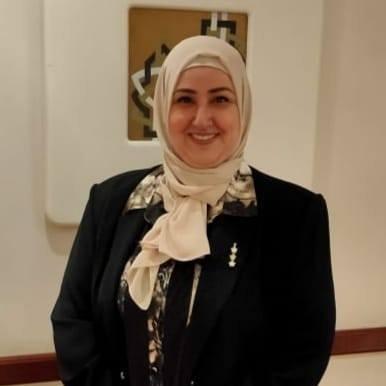
Enas Ahmed
4
57points to level up
@enas-ahmed-2216
Academic Affairs خبيرة تعليم دولي ومراجعة تعليم بريطاني معتمدة ..إعداد القادة التربويين وفقًا لمعايير المؤهلات البريطانية.

Active 19h ago
Joined Oct 12, 2025
Powered by