Activity
Mon
Wed
Fri
Sun
Oct
Nov
Dec
Jan
Feb
Mar
Apr
May
Jun
Jul
Aug
Sep
What is this?
Less
More
Owned by Emma
Learn to create inspiring ebooks with AI, from children’s moral tales to adult fiction, complete with illustrations, storytelling tips.
Archi Savvy Pro
6
Free
Oasis Builders
163
Free
Skill & Soul Studio
215
5.0
$7/m
AI Pro Writers Studio
175
5.0
Free
Amazon KDP Ads with Matt
873
Free
Crochet For Self-Care Oasis
111
$1/m
The Wildlife Lens
45
Free
Read SkoolMagazine Here
419
Free
7 contributions to Oasis Builders
🔥
4d •
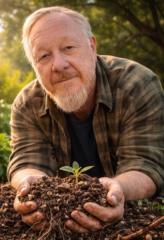
The Community Inside the Compost Pile
We have been learning to watch what a compost pile does before deciding what to change. When a pile warms, settles, changes smell, loses recognizable material, or eventually cools, we are seeing the results of processes that are mostly hidden from us. So, who is doing the work? It is tempting to think of the microorganisms in compost as one group of workers that moves into the pile and steadily breaks everything down although the actual process is much more dynamic. A compost pile contains a community of decomposers, and that community changes as the pile changes. At the beginning, fresh materials provide certain kinds of readily available food. Microorganisms suited to those materials and conditions begin using them changing the pile structure. Materials break down, heat may be produced, oxygen and moisture conditions can change, and some of the easier-to-use compounds become less available. Those changes create different conditions for the organisms that come next. This means decomposition is not simply a matter of the same organisms doing the same work until the pile is finished. Different groups become more or less active as the available food and surrounding conditions change. Bacteria and fungi are important primary decomposers, and other organisms participate as well. As decomposition progresses, the community can shift again. In an actively heating pile, organisms adapted to higher temperatures may become more prominent. As the pile cools and matures, organisms suited to cooler conditions return or become more active, and larger organisms may become increasingly noticeable. When we manage moisture, air, materials, structure, and disturbance, we are not simply managing a pile of organic matter, we are changing the habitat in which the decomposer community works. We do not need to memorize every organism to begin understanding this relationship. For now, the important principle is that as the compost pile changes, the decomposer community changes with it.
Poll
4 members have voted

🔥
5 likes • 4d
The change I notice most easily is the reduction in volume. At first, the pile can look enormous, but gradually it settles as the materials break down. I also notice that individual ingredients become harder to recognise. Leaves, vegetable scraps and garden waste slowly turn into something much darker and more uniform. Temperature is fascinating too, although you have to get a little closer to notice that! As the pile matures, I tend to see more worms and other small creatures working through it. For me, the most satisfying moment is when something that originally looked like a rather untidy heap of garden waste begins to look and smell like rich compost. It’s quite remarkable how much work that little hidden community has been doing while I’ve mostly been standing there taking the credit! 🌱😂
🔥
5d •
When Root Zones Meet
When roots from neighboring plants grow into the same soil, they are doing more than competing for water and nutrients. Living roots release sugars, organic acids, amino acids, and other compounds into the thin zone of soil around them. These root exudates provide food and signals for bacteria, fungi, and other organisms living around the roots. When the root zones of several plants overlap, their rhizospheres can overlap too. That creates a shared area where roots, microbes, nutrients, water, and plant-produced compounds are all interacting. This may help explain why root overlap is not automatically a problem. A biologically active shared root zone may support nutrient cycling and other useful plant-microbe relationships. But we should not make the opposite mistake and assume overlap is always beneficial. The same plants are also drawing resources from that shared soil. The important thing is that root overlap creates interaction, not simply competition. When root zones overlap, plants may share a biologically active rhizosphere as well as compete for resources. The outcome depends on the whole relationship. When you uncover roots from several plants growing together, think beyond where the roots are. What might be happening in the living soil between them? Two neighboring plants have roots occupying the same soil and both are contributing root exudates there. What is the strongest conclusion?
Poll
5 members have voted
🔥
4 likes • 5d
I guessed me too!
🔥
1 like • 4d
@Jim Flach Thanks!

🔥
8 likes • 5d
Jim, congratulations! Your first book launch is a major achievement, and you should definitely take a moment to enjoy it before someone asks when Book Two is coming! You’re very welcome to share it in AI Story Crafters too. I’d be delighted for our members to see what you’ve created, especially as so many of them are working towards publishing their own first books. Seeing someone actually reach the finish line is wonderfully encouraging. Very well done, Jim! 👏 How does it feel finally seeing your first book launched?
18d •
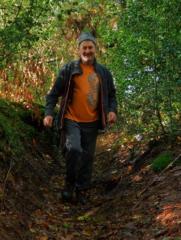
Hedge trimmings
One of my favourite jobs in September is taking cuttings from hedge and shrub trimmings, people often discard this valuable resource.

🔥
3 likes • 6d
This is exactly the sort of practical tip I enjoy. Before throwing the trimmings away, stop and see what can be given another chance to grow. My garden may eventually complain that there are simply too many residents! 🐾🥰
🔥
9d •
Traditional Skills
A lot of the skills our grandparents considered normal are becoming uncommon. The School of Traditional Skills Summit, October 12–16, is bringing many of them back together in one place, including gardening, living soil, sourdough, food preservation, herbs, livestock, and perennial food systems. What I like about it is that you do not have to become a full-time homesteader. Learn one skill, practice it at home, and you become a little less dependent and a little more capable. Might be worth checking out. https://schooloftraditionalskills.com/summit-2026-info/?_ef_transaction_id=12aec7c1ceb047b4b5f6ddb5494b16ed
🔥
5 likes • 9d
Cool thanks for sharing!
1-7 of 7

🔥
@emmawratten
Lawyer by day, I unwind through sketching and storytelling. Excited to grow my AI skills, explore new ideas, and have fun with it.
Active 6h ago
Joined Sep 17, 2026
Cambridge, United Kingdom