Activity
Mon
Wed
Fri
Sun
Jun
Jul
Aug
Sep
Oct
Nov
Dec
Jan
Feb
Mar
Apr
What is this?
Less
More
Owned by Emma
A peaceful space For learners And learnease 😉 Alike
Memberships
The Facebook Ads Clinic
4.6k members • Free
Income Builders Hub
11 members • Free
Flip Remotely Community
701 members • Free
Creators
17k members • Free
Online Business Friends
91.9k members • Free
Assets For Life Hub
9.1k members • Free
28 contributions to Green Designs

2d •
Action equates to Success
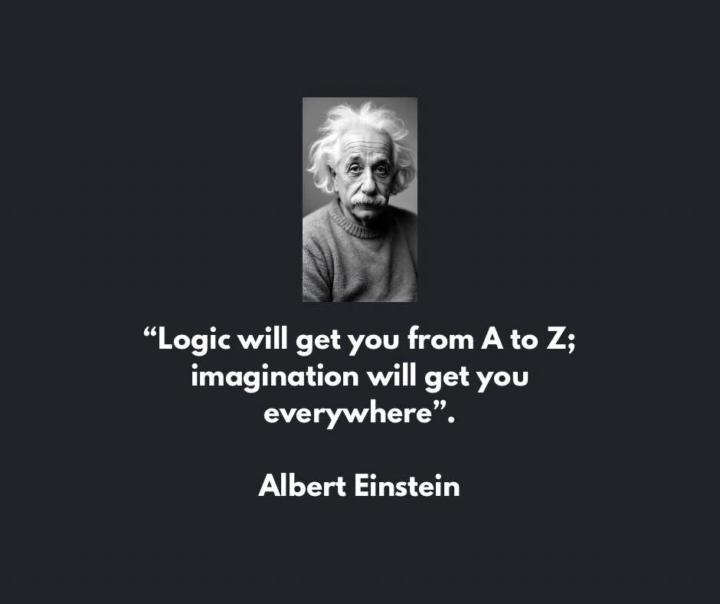
Reading furnishes the mind only with materials of knowledge; it is thinking that makes what we read ours. John Locke
0 likes • 2d
Book I of the Essay is Locke's attempt to refute the rationalist notion of innate ideas. Book II sets out Locke's theory of ideas, including his distinction between passively acquired simple ideas—such as "red", "sweet", "round"—and actively built complex ideas, such as numbers, causes and effects, abstract ideas, ideas of substances, identity, and diversity. Locke also distinguishes between the truly existing primary qualities of bodies, like shape, motion and the arrangement of minute particles, and the secondary qualities that are "powers to produce various sensations in us" such as "red" and "sweet." These secondary qualities, Locke claims, are dependent on the primary qualities. He also offers a theory of personal identity, offering a largely psychological criterion. Book III is concerned with language, and Book IV with knowledge, including intuition, mathematics, moral philosophy, natural philosophy ("science"), faith, and opinion
0 likes • 2d
Book I The main thesis is that there are "No Innate Principles." Locke wrote, "If we will attentively consider new-born children, we shall have little reason to think, that they bring many ideas into the world with them." Rather, "by degrees, afterwards, ideas come into their minds; and...they get no more, nor no other, than what experience, and the observation of things, that come in their way, furnish them with." Book I of the Essay is an attack on nativism or the doctrine of innate ideas; Locke indeed sought to rebut a prevalent view of innate ideas that was, in his words, an "established opinion" firmly held by philosophers of his time. While he allowed that some ideas are in the mind from an early age, he argued that those ideas are furnished by the senses starting in the womb—for instance, differences between colours or tastes. If we have a universal understanding of a concept like sweetness, it is not because this is an innate idea, but because we are all exposed to sweet tastes at an early age. One of Locke's fundamental arguments against innate ideas is the very fact that there is no truth to which all people attest. He took the time to argue against a number of propositions that rationalists offer as universally accepted truth, for instance the principle of identity, pointing out that at the very least children and idiots are often unaware of these propositions. In anticipating a counterargument, namely the use of reason to comprehend already existent innate ideas, Locke states that "by this means, there will be no difference between the maxims of the mathematicians, and theorems they deduce from them; all must be equally allowed innate; they being all discoveries made by the use of reason."
10d •
🫵🏼
Which Side of this Graphic Are You Living On? 👇 It’s time to be honest. The "Nan Poor" reality is exhausting. The bills, the worry, the constant feeling that the financial rules were written for someone else. It’s not your fault. But it IS your responsibility to change it. My book, Nan Rich Nan Poor, is the blueprint to help you cross that line into financial freedom and build a legacy that lasts. Here is how we get there, together: 📖 Step 1: The Blueprint. Grab your copy of Nan Rich Nan Poor exclusively on Etsy. It’s your step-by-step roadmap. 👉 Shop on Etsy: https://emmasgreendesigns.etsy.com/listing/4488585794 👭 Step 2: The Action. Join our FREE Skool Community today. This is where we implement the book together. 👉 Join Skool FREE: https://www.skool.com/education-for-everyone-1094/about 🎁 EXCLUSIVE: By joining Skool, you get a FREE seat at our upcoming major event: The Financial Freedom For Women Webinar on April 27th! Don’t wait until April 28th to wish you had started. Your "Nan Rich" life begins today.
0
0

14d •
Mastery of your own Life
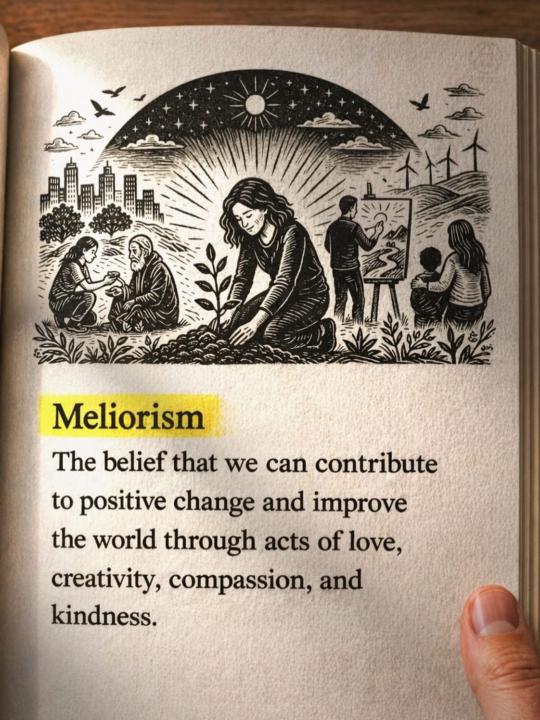
meliorism /ˈmiːliərɪz(ə)m/ Meliorism is the philosophical belief that the world can be made better through intentional human effort and action. Derived from the Latin melior ("better") It suggests that progress is real and achievable, acting as a middle ground between optimism and pessimism. Usage Examples & Contexts Social Reform: Utilizing education, policy, and community organization to actively improve societal conditions. Personal Growth: Setting goals to become a better version of oneself. Daily Action: Taking ownership of decisions and consciously choosing to be kind or to act positively to impact the world. Problem Solving: Focusing on actionable improvements rather than aiming for unrealistic perfection.
0
0
Jan 31 •
Welcome! Introduce yourself + share a pic of your workspace 🎉
Let's get to know each other! Comment below sharing where you are in the world, a photo of your workspace, and something you like to do for fun. 😊 As for myself, as I write this I am @ my local train station waiting to collect a couple o students. I am based in the Garden of England (Kent). Most of All.. I like practicing the Arts and the Sciences ie. Working, for Multiple (Fun) 🤓

0 likes • 17d
My Home Office filing system, elevated within And by a busy family space.
0 likes • 16d
https://www.facebook.com/share/v/1DxvuzWL7d/?mibextid=wwXIfr
17d •
Do You Feel Safe?
The idea of seven levels of consciousness is a powerful map to understand how human beings move from unconscious reaction to intentional living. It’s not “spiritual fluff”; it’s a way to describe how the brain, nervous system, and body co‑organise around different kinds of internal signals. At the lower levels, life is often driven by: Fear and survival pressure Unconscious conditioning Blame and externalising Habitual emotional loops From a neuroscientific perspective, this is the amygdala‑dominant brain and body: hypervigilant, scanning for threat, rehearsing old stories, and organising behaviour around what feels safe rather than what’s actually true. The brain is doing its job in a rigid way, it’s extremely efficient, but it’s not evolving. At the higher levels, you see: Clarity and discernment Self‑reflection and responsibility Compassion and empathy Inner freedom and choice This is the prefrontal cortex and limbic system in a more integrated, flexible state: the brain is no longer locked in survival mode. It can pause, regulate, re‑evaluate, and choose. Consciousness is not just “thinking positive”; it’s the brain’s capacity to update its internal model of reality, and the nervous system’s capacity to feel safe enough to change.
0 likes • 16d
[attachment]
1-10 of 28

Active 8h ago
Joined Sep 28, 2025
Edenbridge