Activity
Mon
Wed
Fri
Sun
Oct
Nov
Dec
Jan
Feb
Mar
Apr
May
Jun
Jul
Aug
Sep
What is this?
Less
More
The Facebook Ads Clinic
6.8k members • Free
AI Online Educators & Coaches
3.5k members • Free
Coaching Resource Room
1.7k members • Free
Fulltime Freedom
6.5k members • Free
Content 2 Millions Training
4.3k members • Free
Useful AI • AI For Business
34.6k members • Free
AI Side Hustle Academy
2.7k members • Free
AI Business School
3.9k members • Free
The Founders Club
61.7k members • Free
40 contributions to Lifestyle Founders Group™

15h •
Quick question for the founders in here 👀
What’s something about running your business that you didn’t expect when you first started? Maybe it’s managing clients,doing sales,staying consistent,hiring people,handling everything yourself… or something completely different 😂 I think we learn some of the biggest lessons once we’re actually in the game. What’s yours? 👇

0 likes • 15h
One thing I definitely didn’t expect was how many different roles you end up handling as a founder. Some days you’re doing sales,other days you’re fixing things you never thought you’d have to 😂
0 likes • 26m
@Joshua Goldhorn Yeah,that’s a good point 😅 Building something people actually want is one thing,scaling it consistently is a whole different challenge. What kind of business are you currently working on?

👑
14h •
9 reasons people leave your workshop before the pitch
Quick story. For years my monthly workshops looked exactly like everyone else's. Open Zoom. Share a Google Slides deck. Talk at a wall of tiny faces for 90 minutes. Hope people stay. And I'd get to the pitch, look at the attendee count, and wonder where everybody went. I blamed the content. Rewrote the deck. Added more slides. Added a better story. Same result. Here's what I eventually figured out... A workshop doesn't lose the room at the pitch. It loses the room one small leak at a time. Nobody leaves because of one thing. They leave because ten tiny things told them "this isn't worth my full attention," and by minute 60 they're in their inbox with you playing in the background. None of these leaks will cost you the room on their own. All nine together will. So here's the audit. Pull up your last replay and score yourself honestly. The 9 Attention Leaks 1. "Can everyone see my screen?" The first 90 seconds decide whether people lean in or lean back. If you open with tech fumbling, you've told them the next hour is going to be fumbly too. Fix: Open in your slides scene already loaded. Test it before the doors open, not after. 2. The alt-tab. You're hunting for the browser window. They're watching your desktop, your bookmarks bar, and a Slack notification from your wife. Fix: One button per scene. Slides, screen share, camera. Tap, done. 3. The disappearing face. The second you hit share, you shrink to a thumbnail in the corner. People don't watch slides. People watch people. Fix: Float your camera over your slides so you never leave the frame. 4. Reading the slides. If the words are on the screen, you don't need to say them. If you're saying them, they don't need to be on the screen. Pick one. Fix: Slides are signposts, not scripts. Five words max. You are the content. 5. The dead slide. Four minutes on one static slide. Nothing moves. The brain checks out because nothing is happening. Fix: Draw on it. An iPad and a pen turn a slide into a whiteboard, and movement holds attention.

5 likes • 14h
This is such a useful breakdown 👏 The point about small attention leaks really makes sense. Sometimes it’s not the content itself,it’s all those little moments that slowly lose people. The Q&A scramble one definitely stood out to me 😅

Mar 20 •
🌟Chat Closer Workshop this week
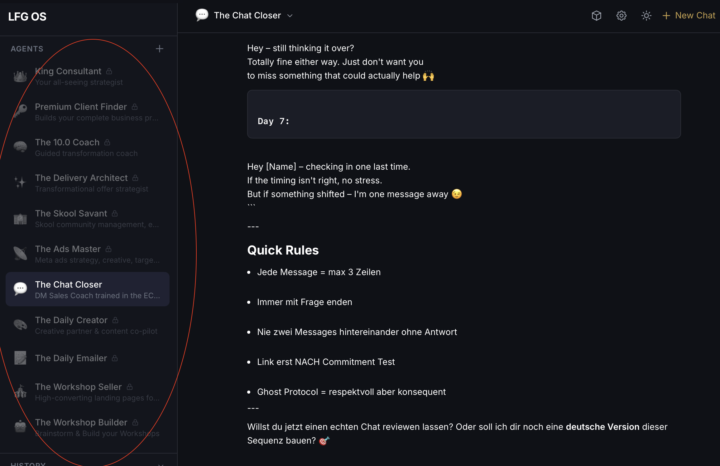
@Dan Harrison - This was an amazing workshop, again in your world, thank you so much! I now used the Chat-Closer you offered us to use it several times, and I can only tell, that finally the conversations in my DMs create fun and happy feelings again! THANK YOU You know what? Your closer even supports me on Substack, which is awe! AND I can chat in German, but create english messages, I am almost through the moon about that! For everyone, not really booked the this week workshop; I can only recommend it. Because it allows you to jump over all your inner objections, why not to do DMS; But then to really serve! Because in the end we all want to really serve, right? Lot of love from Dubai Chantal Oh, almost forget, @Dan Harrison : Do you mind to tell how we can get access to all the other agents too? 😆💁♀️ (see screenshot)
2 likes • 16h
@Chantal Perrinjaquet Sounds like the Chat Closer has made a real difference for you 😄 I love that you can use it across different languages too!
0 likes • 14h
@Chantal Perrinjaquet Not yet 😊 I’ve been curious about it though. How have you found it so far,and what do you use it for the most?

Apr 29 •
A few words about working with Dan
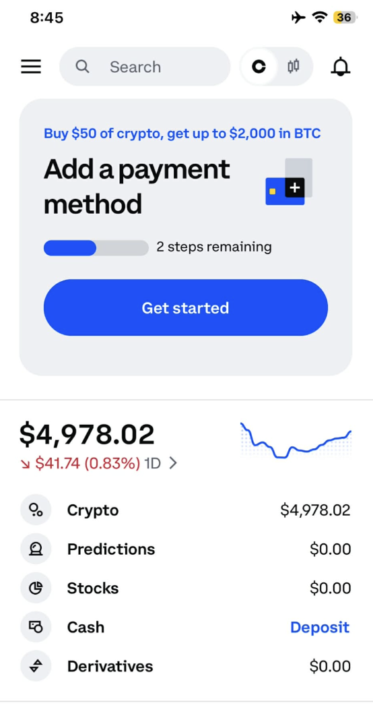
I started working with Dan in December, and I had a lot of internal work to figure out. I’m grateful for the guidance he gave me to work through that side of things (which, let’s be real, is always ongoing). Had no idea that's where we would start when I signed up. I went all in on what he laid out — Self Leadership, 10.0 Coach, 10X Vision… all gold. When I started, I didn’t even have a free Skool community. We were running everything through Facebook, and I never found much success with ads. I wasn’t even sure I wanted to take the leap to a free skool community — but I’m glad I did. Fast forward to now — we’ve got just under 700 members in our free Skool community. The community is rockin and I'm nurturing leads every day. February had one new client (down payment + monthly installments) and a few resigns. 3k, nothing to be too excited about. Then March hit: $15K CAD in coaching revenue and $13K CAD in supplements I’ve hit $30K months before… but those came with burnout. Exhausted, stressed, and feeling like I’d never be able to repeat it. This time was different. With systems in place — and not sending 100 DMs a day — it felt more structured and sustainable. I spent more time with family than I usually do (which Dan actually encourages), and things are running smoothly. And I have the extra time to work on the supplement business. In past cases I'd only have time to grow one of them. This month: We ran a paid workshop — something Dan suggests doing monthly: $300 USD front-end $10K USD backend I also made my first crypto sale this month — which was one of the paid-in-fulls — and my first USD sale (also PIF). That alone was a pretty cool moment. It broke a mental barrier I’ve had for a long time around pricing and currency. On top of that, I finally made a move I’ve wanted to make for years — I raised my prices by switched from CAD to USD. Two PIF clients = $10K USD (and close to last month in CAD ($14k) revenue for just the coaching side.
1 like • 16h
@Drew Taddia This is such a powerful transformation 👏 The part about building systems without burning out really stood out to me. Glad to hear things are growing in a more sustainable way!
0 likes • 14h
@Drew Taddia Absolutely,Drew! 😊 I think finding that balance is a big part of building something sustainable. What kind of work or business are you mainly focused on these days?

🔥
Feb 8 •
Winning Metrics with Skool
If you pop over to Skoolers, you'll see viral posts over: - "I opened my Skool community and got 100 new members in a week!!" - "I got my first paid member!!" Way to go! Bravo. 🔥 And here's where the real work is as a community host. ENGAGEMENT I have been fixated on this over the last few months. Engagement Metrics: - Daily Activities of 800+ (or for some start up or paid communities 200+) - Past 30 days engagement: 50% or higher - Level 1: Less than 25% in paid communities; less than 50% in free communities How are you driving these metrics in your Skool community?

1 like • 16h
@Brenda Rigney Those are some interesting metrics 👀 What have you found works best for keeping members consistently active in your community?
1-10 of 40

Active 22m ago
Joined Sep 7, 2026
United States
Powered by