Activity
Mon
Wed
Fri
Sun
Aug
Sep
Oct
Nov
Dec
Jan
Feb
Mar
Apr
May
Jun
Jul
What is this?
Less
More
Owned by Elle
Stories made with my dementia day centre, shared with the world, with bracelets made by clients to hold the story close.
Memberships
care for the caregiver
9 members • Free
Care Caribbean
147 members • Free
Dementia Care Exchange
210 members • Free
6 contributions to Together Through Dementia
Jan 5 •
Why I created the Stimulation & Wellbeing course
I wanted to share a little about a course I’ve created around stimulation and wellbeing for people living with dementia — and why it matters so much to me. Over time, I’ve seen how often people with dementia are unintentionally under-stimulated. Not because carers don’t care, but because it’s hard to know what to do, when to do it, or how to do it without causing distress. I created this course to gently guide people through: - understanding why stimulation matters - recognising when someone is saying “no” out of overwhelm, not refusal - using simple, everyday activities to support wellbeing - keeping people involved in daily life in ways that feel safe and dignified - reducing anxiety, boredom, and low mood through connection and routine This course isn’t about complicated activities or getting things “perfect.” It’s about meeting people where they are, using what’s already around you, and focusing on emotional safety, purpose, and quality of life. Whether you’re a family carer or a professional, my hope is that this course gives you confidence, reassurance, and practical ideas you can use straight away. If you’ve ever wondered “Am I doing enough?” or “What else can I try?” — this course was made with you in mind. 💬 If you have any questions about it, or want to know if it’s right for you, feel free to ask. Thank you for being part of this community 💛
3
0
Jan 3 •
Let’s talk about therapeutic lying
This can be a difficult and sometimes uncomfortable topic, but I think it’s an important one. Therapeutic lying is often misunderstood. The word lying can feel wrong, especially when honesty matters so much to us. And yes — when used incorrectly, it can be misleading or harmful. But when used with kindness, intention, and compassion, it can sometimes be the best option for the person living with dementia. Dementia can change how someone experiences reality. Repeatedly correcting someone or forcing the “truth” can cause distress, fear, and repeated grief — especially when the brain can no longer process or retain that information. I want to share a personal example. My great-grandma had Alzheimer’s and needed to live in a care home for her safety, and for my great-grandad’s as well — he was in his 90s at the time. Every single day at 10 o’clock, my great-grandad would go to see her and spend the day with her. This routine became something she never forgot. After my great-grandad passed away, my great-grandma would still ask for him. She would ask why he was late and sometimes say he must be in trouble for not being there yet. And we went along with it. We would gently tell her he wouldn’t be long, or that he was just around the corner. To some people, this may seem like the worst thing to do — because yes, technically, it is lying. But reminding her every ten minutes that her husband had passed away would have meant forcing her to relive that loss again and again. That would have caused far more pain. In moments like these, therapeutic lying isn’t about deception. It’s about: - protecting emotional wellbeing - preventing repeated trauma - keeping someone calm and safe - preserving dignity Simply put, making sure someone feels safe and at peace is the most essential part of supporting a person with dementia. Every situation is different, and this approach should never be used to control, dismiss, or manipulate someone. The intention always matters.
1 like • Jan 4
@E. V. Wright it really is
1 like • Jan 5
@E. V. Wright Thank you so much for sharing this — it’s incredibly thoughtful, and it really shows how deeply you care about your grandma. What you said about realising that your need to be truthful was causing her unnecessary suffering is something so many people struggle with but rarely say out loud. That awareness alone is such a compassionate step. I love what you shared about taking her out, getting her dressed up, doing her hair, and giving her dignity and connection. That isn’t “distraction” — that’s meeting a human need. Stimulation, purpose, routine, and feeling seen all matter so much, and you’ve clearly noticed how quickly that can change someone’s mood and outlook. You’re absolutely right — this isn’t about lying. It’s about meeting her where she is instead of forcing her into a reality that only causes fear or sadness. Reducing anxiety, boredom, and emotional distress is just as important as any medical care. The way you reassure her — letting her know she’s safe, cared for, and doesn’t need to worry anymore — is such a grounding approach. Sometimes that sense of security is far more meaningful than facts or explanations. And please don’t feel guilty about needing time to work or rest. The dry erase board, even if she doesn’t always read it, shows intention and care — and that matters too. Thank you for being so open and for trusting this space with something so personal. You’re doing something incredibly important, even when it doesn’t always feel clear or easy 💛
Jan 1 •
Let’s learn from each other 💛
I’d love to open up a conversation today. There are so many different therapies and approaches used when supporting people living with dementia, and no two individuals are the same. What works beautifully for one person might not work at all for another. In our work, we often focus on connection, comfort, and what helps in the moment—but I know many of you use different therapies, techniques, and ideas. 💬 I’d really love to hear from you: - What therapies or approaches do you use when supporting someone with dementia? - Have you found anything that’s been especially meaningful or effective? - Are there any therapies you’d like to learn more about? There’s no right or wrong answer here—just shared experience and support. Thank you for being part of this community 💛
1 like • Jan 3
@Misty DeSelms yes I agree. When it comes to reaching milestones if other people aren’t in bored with the plan that can make it take much longer to hit tha goal. So I as our day centres team leader make print outs and try to get all the people involved to stick to the same plan yes it’s not always that easy but if they have a clear plan that they can refer back to this definitely helps.
2 likes • Jan 4
@Alena Pacheco Hey I’ll make a post on this for you best ways to support someone.
Jan 1 •
Some days are heavier than others
Today, I want to tell a small story. This morning, someone forgot a name they’ve said a thousand times before. It wasn’t dramatic. No big moment. Just a pause… and a quiet frustration that settled in their chest. The person supporting them noticed. They didn’t rush. They didn’t correct. They simply stayed. And that mattered more than getting the name “right.” This story is for: - those supporting a loved one with dementia - professionals who show up every day with patience and care - and those living with dementia who know how these quiet moments feel If you’re living with dementia, or supporting someone who is, please remember this: ✨ Being present is powerful. ✨ Patience is care. ✨ You are doing enough—even on the hard days. If today feels heavy, you’re not alone
3
0
Dec '25 •
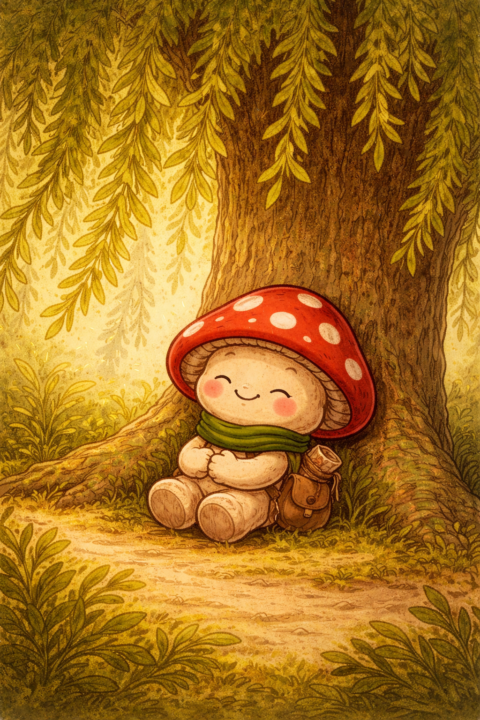
Pip and the Forgetful Willow
At the quiet edge of the Glimmerwoods stood a willow tree with long, flowing branches. Its leaves brushed the ground like soft green curtains. This was the Forgetful Willow. The willow was very old. It had watched many seasons come and go. But lately, it had begun to forget. Some mornings, it forgot where its roots were. Some afternoons, it forgot which way the sun moved. And sometimes, it forgot its own name. One gentle morning, Pip heard a soft, worried whisper drifting through the forest. “I know I am a willow… but I can’t remember how to be one.” Pip followed the sound until he reached the tree. The willow’s branches drooped low, swaying slowly, as if tired. Pip placed his small mushroom hand against the tree’s bark. “Hello,” he said softly. “My name is Pip. You are a willow tree. And you are safe.” The willow sighed, a long leafy sigh. “I forget so much,” the tree whispered. “It makes me feel lost.” Pip nodded. “That’s okay,” he said kindly. “We can remember together.” Pip sat at the base of the willow. He spoke slowly. He spoke gently. “You are a willow,” Pip said. “Your branches are long. Your leaves are soft. You give shade when the sun is warm.” The willow’s leaves rustled. “I… give shade,” it repeated. “Yes,” Pip smiled. “And your roots are deep in the earth. They hold you steady. They keep you safe.” The tree hummed softly, as if the words felt familiar. The willow whispered again, “What time is it? Is it morning or evening?” Pip looked at the light filtering through the leaves. “It is morning,” he said calmly. “The light is soft. The birds are waking up.” The willow relaxed its branches. “Morning,” it echoed. Pip stayed with the willow for a long while. When it forgot again, he repeated the same gentle words. “You are a willow.” “You are safe.” “I am here.” Each time, the tree listened. Each time, it calmed a little more. By the time the sun moved higher, the willow’s branches swayed peacefully in the breeze. “Thank you, Pip,” the willow whispered.
4
0
1-6 of 6

@elle-moores-donaldson-6349
Creating dementia-friendly books with handcrafted jewellery, where story and touch come together to support comfort, memory, and connection.
Active 183d ago
Joined Dec 25, 2025
ISTJ
Powered by