Activity
Mon
Wed
Fri
Sun
Dec
Jan
Feb
Mar
Apr
May
Jun
Jul
Aug
Sep
Oct
What is this?
Less
More
Owned by Elisha
Basic, advanced, service dog and medical alert training
4 contributions to Owen Army

Jan 13 •
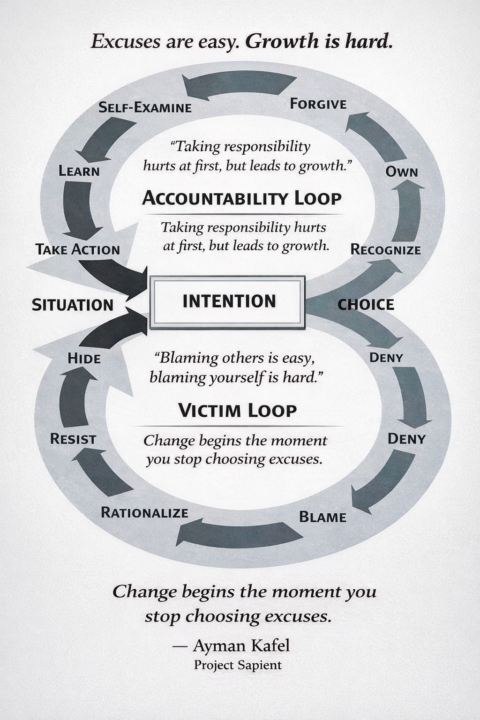
Accountability Loop and Victim Loop
I’ve seen this loop more times than I can count. ➡️ Not on a whiteboard. ➡️ Not in a classroom. But in living rooms at 2 a.m., on the side of the road, in kitchens turned into crime scenes, and in the aftermath of choices people refuse to own. This image captures something policing teaches you very quickly: Every situation gives you two paths. 🔁 One is the Accountability Loop. 🔁 The other is the Victim Loop. In policing, we respond to the situation—the call for service. What happens next is rarely about lack of options. It’s about intention. I’ve stood across from people who: • ignored every warning • denied obvious facts • blamed everyone but themselves • rationalized harmful behavior • resisted help • hid behind excuses Not because they couldn’t choose differently—but because accountability is uncomfortable. ▪️The victim loop is seductive. ▪️It protects the ego. ▪️It removes responsibility. ▪️It gives people someone else to blame: the system, their upbringing, their partner, the economy, the police, society. And the longer someone stays in that loop, the harder it becomes to break free. The accountability loop is harder—but it’s the only one that leads anywhere worth going. It requires: • recognizing reality • owning your role • making a choice • taking action • learning from failure • self-examination • forgiveness (of self and others) I’ve watched people change their lives when they step into that loop. I’ve also watched people burn every bridge available because they refused to. This isn’t just policing. ‼️It’s leadership. ‼️It’s parenting. ‼️It’s relationships. ‼️It’s life. And if we’re honest, this image is also a mirror for society right now. We increasingly reward excuses, elevate victimhood, and treat accountability as cruelty instead of growth. We explain behavior away instead of confronting it. We externalize everything—then wonder why nothing changes. Policing doesn’t create this reality. It just encounters it earlier and more often than most.
1 like • Jan 15
I can’t begin to tell you how spot on this photo is. Hope it’s ok I use this in my pop smoke k9 skool community!
Jan 7 •
What can I get VS What can I give mindset
If you transform your mindset—and your life—from “What can I get?” to “What can I give?”, something fundamental shifts. When your focus is on taking, every interaction becomes transactional. Every role becomes a position of leverage. Every setback feels personal. But when you shift toward giving— Giving effort when no one is watching. Giving clarity when others are overwhelmed. Giving steadiness when chaos is loud. You stop chasing outcomes and start shaping environments. Giving doesn’t mean weakness. It means responsibility. It means carrying weight so others can move forward. And here’s the paradox most people miss: When you commit to giving—your time, your discipline, your presence—you don’t lose anything. You gain purpose, influence, and a legacy that outlasts the moment. The strongest leaders I’ve known weren’t focused on being served. They were focused on serving well. That mindset changes everything.
0 likes • Jan 11
I see this a lot since starting and running my own nonprofit especially in the veteran community. There is often a focus on what is owed what was taken and who should fix the damage. I understand where that comes from but staying there keeps people stuck. When the hand is always held out for help it delays the harder work of taking responsibility for healing. Support is important but it cannot replace ownership. Real progress started for me when I stopped waiting to be rescued and started asking what I was willing to do for myself. Healing is not passive and it is not something someone else can complete for you. The shift from victim to participant is uncomfortable but it is also where strength and dignity come back.
Jan 9 •
Who are you if you don’t have your story.
This is more of a general discussion post. I was asked this question a while back and it forced me to really look internally and my answer was a simple I am who I am regardless of the story. I’m curious, what would your answers be?
1 like • Jan 11
Really great question... I took my time to really think honestly about this one. If I did not have a story no past to justify me no pain to explain me and no victories to prove me, I would be stripped down to choice. I would be the person who still shows up when no one is watching who does the work without needing credit and who decides who they are by what they do today not by what happened before. Without a story I am not my wounds or my wins I am my standards my actions and the promises I keep to myself.
Nov '25 •
Preparing for what’s coming by Sarah Superbad Adams
Build It Now, Stay Steady When It Matters Most As we face the possibility of upcoming homeland plotting by terrorist groups, psychological readiness is your foundation. These skills help you stay calm, think clearly, and support each other in any crisis, whether it’s an attack, a natural disaster, or life suddenly going off the rails. If you’ve spent the past year building emergency plans, running drills, and practicing “what if” scenarios, you’re exactly where you need to be. Keep going. You’re not just preparing, you’re building real resilience for yourself, your family, and your community when it matters most. Here’s what we can do next to prepare and stay resilient. Educate Without Fear: When we talk to others about preparedness, the tone matters. The goal is not fear-based. The goal is to give them information, tools, and then most importantly, confidence. Within your family, for example, controlling the narrative means framing the conversation around what you can control, even during something as overwhelming as a terrorist attack. Replace fear-driven talk with practical direction. Use clear, strong language: “Here’s what we do if X happens,” or “We’re safe right now, let’s stick to our plan.” Walk each member of your family through actionable steps: getting to shelter, locking down a workspace, identifying exits, staying put until it’s safe to move. When people have rehearsed actions, their bodies and minds switch into those patterns automatically, even under extreme stress. Helping Children Cope: Children can and do process events very differently, and they depend heavily on the adults around them to set the emotional tone. Keep discussions age appropriate and grounded in the calmest way possible. Do not expose them to graphic news footage or frightening speculation. It overwhelms them and provides no useful information. Instead, focus on safety: who they stay with, where they go, how adults will protect them. Small gestures like holding a hand, offering a hug, sitting beside them all have a very real grounding effect. Use simple, straightforward language: “We have a plan. We know what to do. You’re safe with me.” That sense of predictable structure is what helps kids stay emotionally balanced during and after a crisis.
0 likes • Dec '25
Great info….This is a good reminder that preparedness is more about how we show up than having everything perfect. Staying calm using clear plans and leaning on the people around us makes a real difference especially for kids. Fear spreads fast but so does steadiness. What we build now helps us get through whatever comes next together.
1-4 of 4
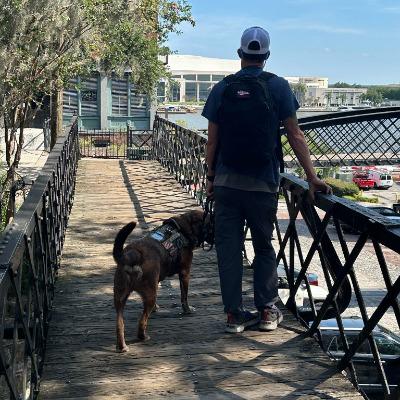
@elisha-perkins-1361
I’m an Army veteran, cancer survivor, and founder of Pop Smoke K9 for Veterans Inc., a nonprofit that provides service dogs to veterans with PTSD.
Active 22h ago
Joined Dec 27, 2025
Powered by