Activity
Mon
Wed
Fri
Sun
Jan
Feb
Mar
Apr
May
Jun
Jul
Aug
Sep
Oct
Nov
What is this?
Less
More
Owned by Doug
Memberships
Modern Marriage with Monica
366 members • Free
Options Seller Zone Membership
68 members • $147/month
Skoolers
181.5k members • Free
(Skool) Teacher's Lounge
184 members • $9/m
Plant Powered Path
98 members • Free
Unblock Your Brilliance
173 members • Free
Arlan's All-Access
370 members • $100/month
List Builder PRO
714 members • $149
Ultimate Networking Blueprint
1.5k members • Free
3 contributions to JavaScript

Aug 17 •
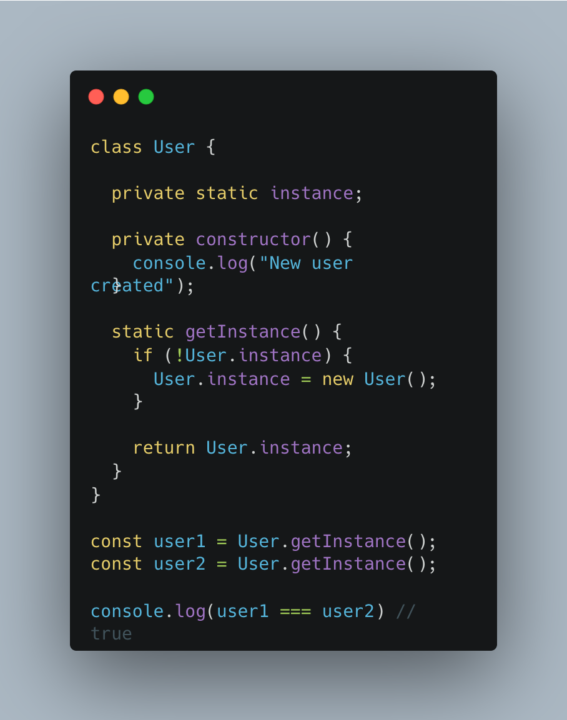
The wonders of Singletons
I love singletons. It's a great way to prevent multiple instances of the same object. Think about it... DO you really need 10 different user connections? No. Do you want 5 different logging systems all writing to different files? No. Instead, create one instance – the single source of truth and everything points back to it. Simple. Efficient. Clear. These patterns come in really useful with like DB connections, loggers, and probably configs.

1 like • Aug 17
How did you know that I could benefit from this post??
Aug 9 •
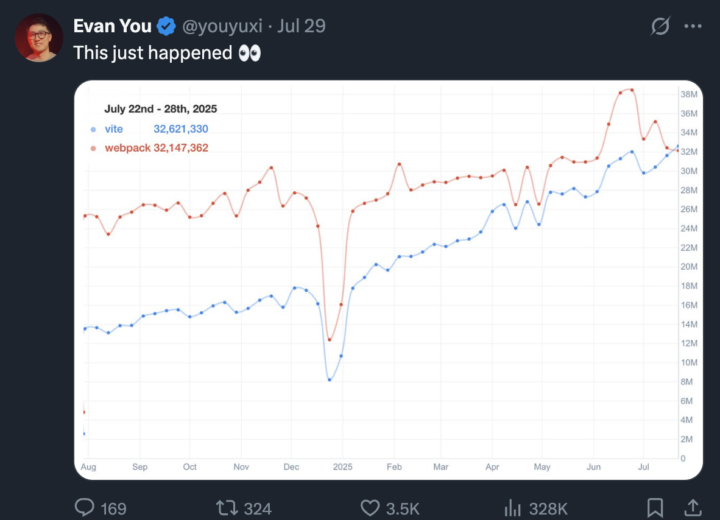
VITE just beat WEBPACK
I remember using Browserify and Webpack early in my engineering days. Crazy to see VITE finally taking the throne.
2 likes • Aug 9
I hope that Vite is easier to figure out than Webpack.
Apr 20 •
Tutorials are making you a worst JS engineer
Okay. I’ve been fortunate enough to have worked across the spectrum—from small digital agencies building government sites, to mid-sized companies like Rosetta Stone, to corporate giants like Verizon, AOL, and Yahoo. And throughout those years, I’ve seen every kind of engineer walk through the door. When I first started programming, there were no tutorials. No YouTube. No ChatGPT. You had to dig through documentation, forums, or straight-up reverse-engineer broken code. It was brutal—but it forced you to understand the why. Fast forward to today: you can Google a tutorial for almost anything. You can ask ChatGPT and get a clean answer in seconds. But here's the problem—real life isn’t ideal. Tutorials are. And when you rely on those ideal scenarios, you miss the actual muscle behind engineering: critical thinking. I’ve interviewed countless engineers. Many of them looked great on paper, some could even code live decently—but the moment a problem wasn’t cookie-cutter, their lack of foundational understanding showed. They didn’t know how to ask the right questions. They couldn’t navigate the real-world constraints of deadlines, compliance, technical debt, or cross-team communication. Most engineers today don’t remember the days of float layouts or clearfix hacks. Now it’s all Flex and Grid. The tools have gotten easier, but the industry? It’s only gotten more complex. Here’s my advice to every aspiring developer: - Don’t start with tutorials. Start with an idea in your head. A small one. - Build it. - Then add to it. Layer by layer. - Every time something breaks, stop and ask why. Not just how to fix it—but why it broke. That’s the essence of engineering. Because in business, you rarely start from scratch. You inherit messes. You work with existing systems. You stack new features onto aging infrastructure. You deal with teams, deadlines, EC2 servers, CORS errors, payment systems, WebSockets, compliance layers—and no tutorial prepares you for that. Gextron didn’t start as complex as it is today. Back when I was making videos about it, it was simpler. Now, with real paying users, it's grown into something no tutorial could explain. It’s got layers of real-world complexity—and only someone who’s built and built upon it over time can navigate that.
0 likes • Apr 27
Won't I starve first? I'll only last a week coding without food.
1-3 of 3

@doug-franklin-1665
Guide for enthusiasts to acquire software development skills. We'll create mobile, desktop, and web apps, coordinate them, and understand the process.
Active 13h ago
Joined Apr 27, 2025
Maryland, USA
Powered by