Activity
Mon
Wed
Fri
Sun
Mar
Apr
May
Jun
Jul
Aug
Sep
Oct
Nov
Dec
Jan
What is this?
Less
More
Memberships
Peptide Price
8.7k members • Free
Double R Labs
207 members • Free
Grey Matters Research LLC
328 members • Free
Castore: Built to Adapt
722 members • Free
Women's Peptide Collective
1.2k members • Free
Midwest Peptide
177 members • Free
Level Up Fitness Community
1.8k members • Free
GLP-1 Real Talk Community
771 members • Free
Pep Talk - For Better Health
2.5k members • Free
3 contributions to Peptide Price

🔥
2d •
🧪 NEW Feature: Cycle Planner is LIVE on PeptidePrice.store
One of the most common questions I get: "How many vials do I need for my research protocol?" So I built something to make this dead simple. Introducing the Cycle Planner — find it under the "More" tab on the website. Here's how it works: 1. Search for any peptide (SS-31, HCG, whatever you're researching) 2. Select your unit type (mg, mcg, or IU) 3. Choose your frequency (daily, 3x/week, or custom) 4. Set your duration The magic is in the dosing options: You can do a simple single dose throughout, OR use the advanced option to plan titration schedules. Want to start at 2.5mg for two weeks then bump to 5mg? Just fill it in and hit the copy button to apply doses down the line. What you'll see: - Weekly breakdown of total amounts - Total doses calculated - Vials required for different sizes (with leftover amounts) - One-click "Shop Now" that auto-filters to the exact vial size you need Works with IU-based peptides too — perfect for planning HCG protocols or anything else. I'll be adding blends support soon, just like the reconstitution calculator. Check it out and let me know what you think below — always looking for feedback on what else would make your research easier. Stay warm out there 🥶 📹 Quick demo walkthrough: https://vimeo.com/1157945003/6246cdec3d Try It Now: https://peptideprice.store/cycle-planner

0 likes • 4h
Do you have HCG? Wow I never knew that.. I used to go to an anti-aging clinic and pay a lot of money for that. I got so crazy expensive. Last time I checked here in the Midwest it was about $1000 a month. It’s used for weight loss.
🔥
3d •
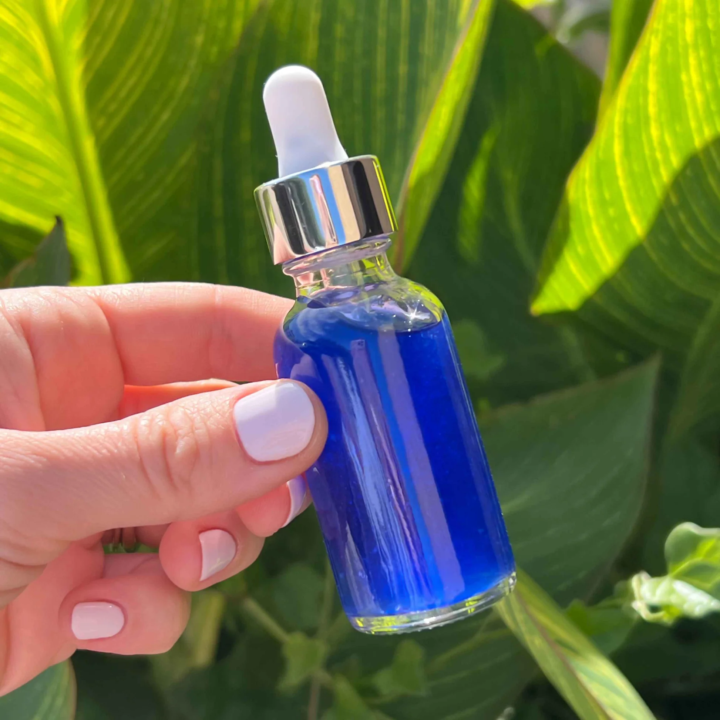
GHK-Cu: Topical vs SubQ vs Oral For Best Skin Effects
For research and educational purposes only. Not for human consumption. GHK-Cu is one of the most studied peptides for skin, wound healing, and anti-aging research. But there's a lot of confusion about HOW to administer it. Let's break down all three routes in plain terms so you understand what's actually happening with each one. The Three Ways GHK-Cu Is Administered 1. Topical (Creams/Serums) What it is: Applying GHK-Cu directly to the skin mixed into a serum or cream base. The idea: Get the peptide right where you want it—directly on the skin. The problem: Your skin is really good at keeping things OUT. That's literally its job. The outer layer (epidermis) acts as a barrier, and peptides have a hard time getting through it. Even with fancy penetration enhancers, absorption is hit or miss. A lot of what you apply just sits on the surface. To actually stimulate collagen and see skin benefits, the peptide needs to reach the deeper layer (dermis)—and there's no guarantee it gets there. Best use case: Targeted support for specific areas, ideally combined with another administration route. 2. SubQ (Subcutaneous) What it is: Reconstituted GHK-Cu administered subq, just under the skin into the fatty tissue. The idea: Bypass the skin barrier entirely and deliver the peptide directly into the system. Why this works: 100% of the peptide gets into circulation. No guessing about absorption. From there, it distributes throughout the entire system—skin, hair follicles, organs, everywhere. Research on GHK-Cu shows benefits beyond just skin: lung tissue repair, wound healing, anti-inflammatory effects, and even potential cognitive benefits. SubQ administration is how you actually access all of that. Best use case: When the goal is systemic benefits—skin improvement from the inside out, plus all the other researched effects. 3. Oral (Capsules) What it is: Swallowing GHK-Cu in capsule form. The idea: Easy administration, just swallow a capsule. The reality: This is where people get misled. Here's what happens when you swallow a peptide:
0 likes • 3d
@Laura PepFitCoach what exactly do you take and how much milligrams?
🔥
15d •
How to Reconstitute Any Peptide Answered
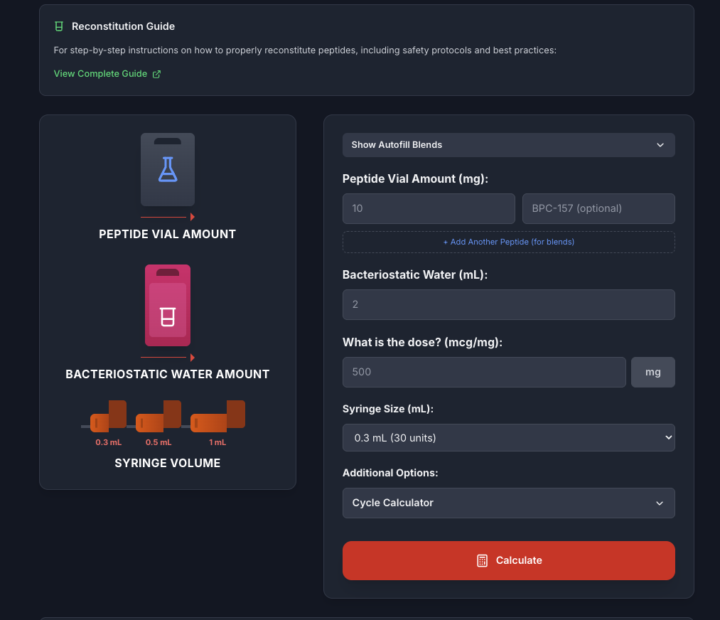
I get questions about reconstitution and research dosing constantly, so here's everything you need to know in one place. I'm building out a comprehensive FAQs section in the Classroom to answer all the common questions I get. If you're still confused after reading this, head over to the Reconstitution FAQ here: https://www.skool.com/peptide-price-9771/classroom/b7dcc989?md=5ef850cf36f5467b9fbb9811f9b69cbf The Most Important Thing to Understand The amount of BAC water you use is entirely up to you. There is no single "correct" amount—you're just choosing how concentrated you want the peptide to be. That said, there are practical guidelines that make the process much easier. My Simple Rule of Thumb (for peptides under 30mg) For every 1 mg of peptide, use 10 units of BAC water. Example with a single peptide: - 20 mg peptide - 10 units per mg - 20 × 10 = 200 units - 200 units = 2 mL of BAC water So you'd reconstitute a 20 mg vial with 2 mL of BAC water. Important Vial Size Rule For anything in a small vial that's over 30 mg, always use 3 mL of BAC water. That's simply the most that will fit in a standard small peptide vial. Once you go past 30 mg, you're no longer choosing concentration freely—you're limited by physical vial volume. What About Blends? For blends, add up the total peptide amount first, then apply the same logic. Example with a blend: - 10 mg BPC-157 - 10 mg TB-500 - Total peptide = 20 mg Now apply the rule: - 20 mg × 10 units = 200 units - 200 units = 2 mL BAC water Blends are reconstituted based on total mg, not each peptide individually. If the total blend exceeds 30 mg in a small vial, use 3 mL. Make It Even Easier With the Calculator I built a calculator specifically for this: https://peptideprice.store/calculator How to use it for a single peptide: 1. Enter Peptide Vial Amount (mg) 2. Enter BAC Water amount (mL) 3. Enter your desired dose 4. Select syringe size 5. Hit Calculate
0 likes • 3d
@Derek Pruski hi you just added me to the group and I’m so grateful. Thank you so much. Looks like there’s a lot of good information in here. I’m a newbie to Peptides and just started TRIZ. But I cannot access this link. It says I have to be a level two.
1 like • 3d
@Serena Coleman same here I was not able to access because I have to be a level two
1-3 of 3
@donna-glover-4914
I love staying fit all of the days in my life. I’ve Been highly successful so far.
Active 42m ago
Joined Jan 23, 2026
ESTJ
Iowa