Activity
Mon
Wed
Fri
Sun
Apr
May
Jun
Jul
Aug
Sep
Oct
Nov
Dec
Jan
Feb
Mar
What is this?
Less
More

Memberships

Amplify Views

28.2k members • Free

AI Automation Society

295.4k members • Free

AI Automation (A-Z)

144.6k members • Free

78 contributions to AI Automation Society

Need some suggestions on this Signal Analyzer
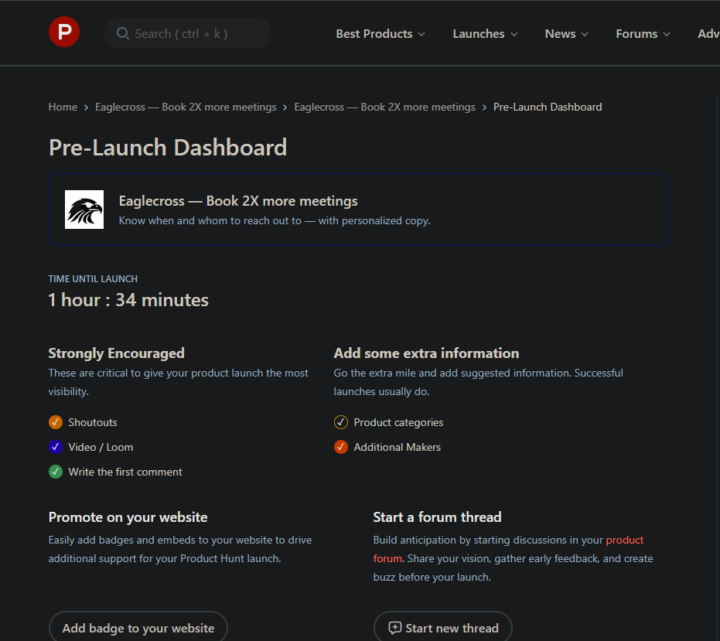
My cold emails were failing. My “personalization” was too. “Loved your post…” = ignored. So I built a signal-based system instead: Hiring spikes Product launches Role changes Real problems across the internet Now it’s: Saw you’re hiring fast — scaling issue? That gets replies. Core is done. Still improving hiring signals. Would mind sharing what signals could get some replies in your niche?
Need some suggestions on this Signal Analyzer
0 likes • 2h
@Kyan Cordes Banger! taking notes man. And... I already implemented most of those. Just refining everything for the highest quality possible.
Kill Negotiation From Calls
They negotiate because they’re scared of you. “Price is high.” “Let me think about it.” Different words. Same root problem. They don’t clearly see the ROI. So stop pitching for a moment. Change your role. Your job is not to sell. Your job is to de-risk and prove ROI. De-riskification Humans avoid loss before they chase upside. Buyers worry about: Money → “What if this doesn’t work?” Time → “What if this drags on for months?” Effort → “What if this eats 3h a day?” Data → “What if my data gets messed up?” Not every deal has all four. Your mistake is trying to defend against all four. Identify the real fear. Neutralize only that. Examples: Time risk → “X outcome in Y days or you pay $0” Money risk → “I’ll do X or I work free until it’s done” Effort risk → “3 short inputs. No internal workload” Data risk → Read-only access. Reversible changes. Clear scope Prove ROI We don’t sell AI by saying “trust us”. We make ROI obvious before commitment. Two entry paths. Different friction. Same goal. 28-day AI audit for fast movers 7-day AI sprint for cautious buyers Both do the same thing: expose growth constraints identify real leverage deliver a clear roadmap By the time the main offer shows up: risk is already reduced ROI is already visible trust is already built The yes or no question turns into a strategy question. TL;DR Lower the barrier. Prove ROI first. Once trust is built, the core offer sells itself. Drop the objection you hear most. Others should be taking notes here.
What Clawdbot Taught Us (as entrepreneurs)
A real example of how non-AI B2B founders fall into hype and lose momentum. I’m betting you’ve been here. Last week, ClawdBot launched. Within 48 hours, it was everywhere. TikTok. X. LinkedIn. Instagram. “Replaces entire teams.” “Solo founder, $M scale.” “Fully autonomous.” I tried it myself. It’s powerful. Power ≠ priority. Shiny tools don’t automatically reflect on your revenue, team speed, or delivery quality. The AI space moves faster than any industry I’ve seen. Even Elena Verna called this out on Lenny’s Podcast. What actually works is boring clarity. Ask this instead: Where do deals get stuck in your pipeline? Onboarding? Delivery? Where is your team bleeding hours every week? Admin? Support? Follow-ups? What task survives only because “this is how we’ve always done it”? Copy pasting data. Sheets to CRM. Manual checks. Answer those first. Then pick ONE. While fixing it: you might use AI a few times you might use basic automation Most of the leverage comes from decision redesign. Fixing how work flows. This pattern shows up in almost every one of the 30+ systems I’ve implemented. P.S. ClawdBot is strong. Adoption takes time. Set it up once, then go fix your real growth constraint. Over time, tools adapt. Bottlenecks kill momentum fast.
A wrong assumption of B2B founders
B2B owners think they lack AI talent. Most of the time, they don’t. After building 30+ internal AI systems and talking to dozens of execs, I noticed a pattern. Teams spend months and serious money hiring AI roles they never needed. The cost stacks up fast: expensive salaries long hiring cycles recruiter fees Yet the teams actually moving forward with AI are doing something simpler. They change how work is structured. I call this DECISION REDESIGN. The wrong assumption Being AI-first means hiring AI specialists. That belief slows teams down. What works instead 1) Redesign roles around human strengths Most roles are bloated with repetitive work. AI should remove that. Free people to focus on: decisions context communication If AI adds work, you designed it wrong. 2) Teach teams how to work with AI Teams should be comfortable using modern tools. More important than tools: They must know when to use automation and when to stop it. Weekly internal sessions work well. Short. Practical. Role-specific. 3) Assign clear ownership One person owns AI adoption. Not strategy slides. Not tools. Adoption. Someone who understands how work actually happens and has authority to change it. This is the most critical part. We once shipped a lead qualification system that worked perfectly. Technically flawless. And then nothing happened. Slowly, the team stopped using it. Why? No owner. No one responsible for making the change stick. TL;DR Decision redesign comes before AI transformation Making your existing team AI-native beats hiring an AI-native team Tag the person responsible for AI adoption in your team, if you have one.
"AI READY" Means?
“We’re ready to transform our business with AI.” That’s a lie most B2B teams tell themselves. I know because I’ve heard it from 20+ execs in the last few months. Most B2Bs define “AI readiness” as: hiring AI engineers buying more tools waiting for exec buy-in running prompt workshops None of that makes you AI-ready. AI readiness has nothing to do with: best tools big headcount high budgets training everyone on prompting Real AI readiness looks boring. It looks like: your data is not scattered across sheets, inboxes, and Slack threads your workflows actually exist and can be explained end to end there’s one painful, repetitive process everyone agrees to fix seniors are willing to adapt fully, not “experiment” on the side AI mirrors what you feed it. Clean data in → strategic outputs Messy inputs → automated chaos Quick self-check for B2B leaders thinking about “introducing AI”: → If I asked for last quarter’s customer data, could you give me one source of truth without reconciling five files? → If a new hire joined tomorrow, could they understand how work flows without asking three people? → Is there one traditional task your team keeps doing just because it’s always been done that way, even though everyone hates it? If these questions feel uncomfortable, notice that. That discomfort is the signal. The move right now is not adding AI. The move is redesigning decisions, data, and workflows. Drop what broke when you ran this self-check. I’ll help you think through the fix in the comments.
1-10 of 78
Diptamoy Barman
6
1,365points to level up
@dipt-barman
On a mission to generate $1M+ for sales teams and founders leveraging AI. Your AI Transformation Partner

Active 2h ago
Joined Jul 30, 2025
Powered by