Activity
Mon
Wed
Fri
Sun
May
Jun
Jul
Aug
Sep
Oct
Nov
Dec
Jan
Feb
Mar
Apr
What is this?
Less
More
Memberships
The AI Advantage
97.2k members • Free
119 contributions to The AI Advantage

⭐
8d •
⚡ The AI Advantage: What It Means to Be Ahead in 2026
Being ahead in 2026 is no longer about simply using AI. That bar is too low. The real advantage now comes from using AI in a way that changes how work gets done, how fast decisions get made, and how much time gets reclaimed across the business. The conversation has moved beyond experimentation. Leading organizations are redesigning workflows around human and AI collaboration, increasing AI investment, and focusing on turning pilots into real operating leverage. That is the shift more people need to understand. In the early phase, being ahead meant trying the tools. Testing prompts. Seeing what was possible. In 2026, that is baseline behavior. The people and teams creating distance now are doing something more meaningful. They are building systems where AI reduces time-to-first-draft, shortens time-to-decision, lowers rework, and removes avoidable admin from the week. They are not just adopting AI. They are redesigning work around it. That is what makes this urgent. Because the gap is widening between those who casually use AI and those who operationalize it. Global AI adoption continued to rise through 2025, and employers increasingly expect AI-related capability, alongside analytical, creative, and adaptive human skills. At the same time, leaders are placing more weight on AI literacy, process redesign, and human oversight, not just access to tools. So what does it actually mean to be ahead? It means knowing where time is leaking and fixing that first. It means spotting the work that slows teams down, scattered planning, repetitive communication, slow handoffs, weak documentation, delayed decisions, and using AI to compress those cycle times. It means turning AI into a working layer inside the business, not a side tool people use occasionally when they remember. The real winners are not the ones generating the most content. They are the ones creating the most useful momentum. It also means keeping human judgment in the loop. That part matters even more now. Recent workplace research points to the need for selective delegation, calibrated reliance, and stronger human oversight as AI becomes more embedded in workflows. The advantage is not speed alone. It is speed with standards. Speed with context. Speed without creating expensive mistakes that have to be fixed later.

0 likes • 8d
I have achieved using AI as a regular everyday tool, looking forward to round 2 of the AI Summit as I continue to level up my strategy here in April.
0 likes • 6d
@AI Advantage Team Less minutia and time on communication checking emails and more time on leadership and higher level thinking, more time back in the day to do the higher level tasks that my team needs. Working on building more momentum until there is a break through.
⭐
9d •
🛠️ Freedom Isn’t Given. It’s Engineered.
A lot of people talk about freedom like it is something that arrives one day. A milestone. A lucky break. A finish line. Something earned after enough hard work, long hours, and sacrifice. But in reality, freedom rarely appears on its own. It is not handed out by the market, by clients, by growth, or by success. Freedom is engineered. It is built through the choices we make every day about how we work, what we prioritize, and what we refuse to keep doing the hard way. It comes from designing a business and a life that create more space, not just more activity. More margin, not just more movement. More control over our time, energy, and attention. That is where the shift begins. At first, many entrepreneurs chase freedom by chasing growth. More revenue. More clients. More opportunities. But growth without structure often creates a different kind of trap. More demands. More complexity. More decisions. More time spent reacting instead of leading. The business grows, but freedom shrinks. That is why freedom has to be designed on purpose. It comes from building systems that reduce friction. Creating workflows that lower rework. Making decisions that protect focus. Delegating what should not depend on us. Using tools like AI to shorten time-to-first-draft, speed up planning, reduce admin, and create breathing room for higher-value work. These are not small operational choices. They are how freedom gets built in real life. Every time we simplify a process, we earn time back. Every time we remove a bottleneck, we create more momentum. Every time we stop doing manually what could be automated or streamlined, we expand our capacity without expanding chaos. That is the practical side of freedom. And the inspiring side is this: engineered freedom compounds. One better system saves an hour a week. One improved workflow removes recurring friction. One smarter handoff reduces delays. One protected block of focused time creates better thinking. These changes may look small in the moment, but over months they turn into reclaimed hours, cleaner execution, and more control over how our days actually feel.
1 like • 8d
I am ready for our 2nd Summit, engineering my plan 😉

1 like • 8d
I am currently subscribing personally or through work to utilize Chat, Claude, Gemini, M365 & Plaud. Finding my way in this AI world we are all exploring.

11d •
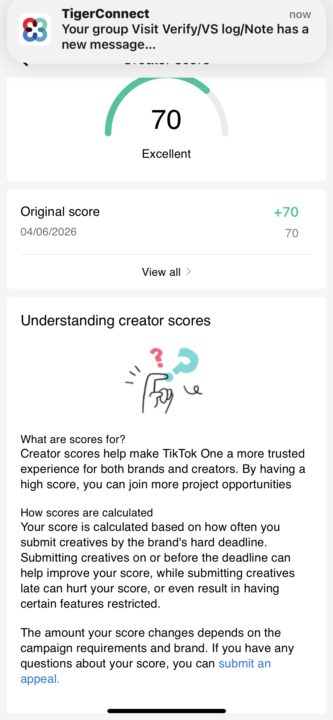
Small wins turning into bigger opportunities 🔥
Just wanted to share a small win on my journey 💻✨ I’m only about a month in, still learning every day, but seeing progress like this reminds me why I started. It may not look like much to others, but to me it shows consistency, growth, and that I’m on the right path. I’m balancing being a nurse, a mom, and building something new… and I’m proud of myself for showing up. Small wins lead to bigger opportunities 🙏🏽 Staying consistent and trusting the process 🔥
1 like • 11d
Keep it up Leioni, those small wins will keep adding up, we create our own luck, and the harder we work the luckier we are!! And much respect for the nurse and Mom responsibilities, with Mom being the most important of them all! ❣️
0 likes • 8d
@Leioni Bolton That is a great why! 😁

13d •
Newbie
Hello, Everyone I'm Tanaka. I recently began using AI and I'm excited about the advantages I've experienced so far. It has helped me to become more comfortable with joining the group. I look forward to chatting with you as I learn more about technology.
0 likes • 10d
Welcome Tanaka, between this forum and the AI Advantage Club the learning seems endless, do you have a main goal or business/profession you are supporting?
0 likes • 9d
@Tanaka Travis All great initiatives, I work in higher education now and have been helping kids in different settings for some time. Best wishes!
1-10 of 119
@dan-lamagna-8155
AVP of Student Engagement at Lackawanna College, High School Football Coach and Co-Host Dynasty Theory Football podcast.
Active 6d ago
Joined Oct 31, 2025
Pennyslvania
Powered by