Activity
Mon
Wed
Fri
Sun
Jul
Aug
Sep
Oct
Nov
Dec
Jan
Feb
Mar
Apr
May
What is this?
Less
More
Memberships
Pre-Vet Skool
38 members • Free
9 contributions to Pre-Vet Skool
16d •
Origin Story Question of the Week
Happy Friday everyone! Help me and other members get to know you! Was there a veterinarian or other adult who inspired you? What did they do or say that stuck with you? I’ll start in the comments😊

0 likes • 12d
@Nisana Miller Wow! That's such a cool story.
1 like • 12d
Although I have always had a strong connection to animals, I think I realized I wanted to be a Small Animal Veterinarian when I was in middle school. I started volunteering at my local SPCA and just fell in love with all of the animals. Sometimes when the vet was there to check on the animals he would talk to me and tell me about some cool cases that he worked on. I think seeing all of these animals with no homes yet so much love to give helped me to realize that I wanted to dedicate my life to helping animals. Now that I am older and work at my county animal shelter, I foster dogs to help them find homes. Fostering dogs has been so rewarding, especially as you see their little personalities start to come through as they feel safer and more comfortable.
15d •
Happy Sabbath! Sabbath Skool Animal Trivia
Happy Sabbath, Everyone! Welcome back to Sabbath Skool Animal Trivia! This week we’re looking at one of the most tender animal images Jesus ever used to describe Himself, and as future professional who have dedicated your lives to the care of animals, this one might hit a little differently. We spend a lot of time talking about the Lion of Judah, the Lamb of God, the Eagle that bears us on its wings. But one day Jesus looked out over a city that had rejected Him, a city that had stoned the prophets and turned its back on heaven, and the image that came from His heart was not a lion. Not an eagle. It was a creature you may one day treat, study, or raise yourself. This wasn’t a symbol of power or conquest. It was a picture of a mother’s longing. Of shelter freely offered. Of love that grieves when it is refused. Anyone who has spent time around a protective mother animal spreading herself over her young knows exactly what Jesus was describing. That instinct to cover, protect, and gather is woven into creation itself, and Jesus used it to show us His own heart. This Week’s Question: What animal did Jesus use to describe His own heart for Jerusalem and His people? Hint: Look in Matthew 23 and Luke 13. 🌟 Fun Extra: After answering, share one interesting fact, scientific, behavioral, or clinical, about this animal! Bonus points if it connects to something you have studied or observed! May your Sabbath be filled with rest and the reminder that the same God who designed every creature you will one day care for is the same God who longs to gather you under His wings! 🙏
1 like • 12d
Jesus compared Himself to a hen gathering her chicks under her wings (Matthew 23:37; Luke 13:34). The image reflects protection, comfort, and a desire to shelter His people despite their rejection. 🐔 Fun Fact: Hens communicate with their chicks before they even hatch.
13d •
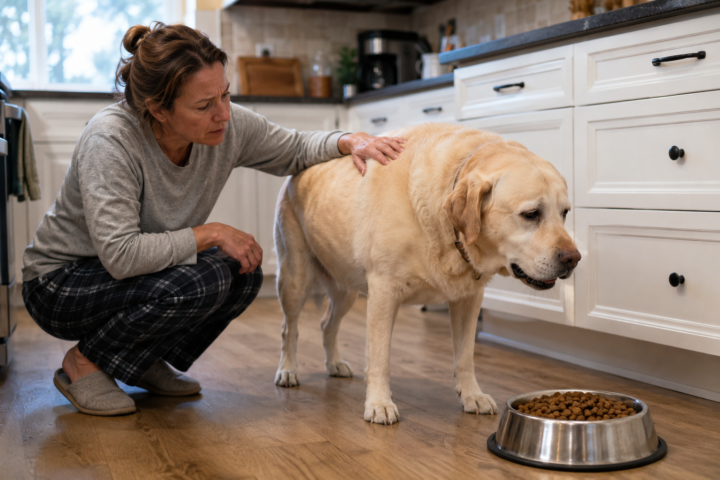
🐕 Case Study: Why Is Cooper Coughing After His Treatment?
Meet Cooper, a 5-year-old Labrador Retriever from Tennessee who tested positive for heartworm disease three weeks ago. His owner followed every instruction. Doxycycline for thirty days, then the first melarsomine injection right on schedule. Twelve days after that injection Cooper started coughing hard enough to wake the whole house. By morning he was breathing at 50 breaths per minute and refused his breakfast. His owner calls panicking, convinced the treatment failed. You examine Cooper. His temperature is 103.4°F. Both lung fields have crackles throughout. His radiographs show a new bilateral alveolar pattern in the caudal lung lobes that was not there before treatment. You reassure the owner that this is not failure. This is pulmonary thromboembolism, and it means the melarsomine worked. The adult worms are dying and fragmenting, and the pieces are lodging in Cooper’s small pulmonary arteries causing acute inflammation and hemorrhage. It happens in 10 to 30 percent of treated dogs. The peak window is exactly where Cooper is right now, 10 to 14 days post-injection. Your most important prescription costs nothing. Strict cage rest. No walks, no excitement, no stairs. Oxygen support and a short course of prednisone for the inflammation. 💡 The takeaway: Exercise restriction after heartworm treatment is not optional. It is the difference between recovery and a fatal pulmonary crisis. For a full module on this course see the classroom or follow the link below: https://www.skool.com/pre-vet-skool-9535/classroom/1f1964f8?md=8472e71899e04d1b9fd151aaa569d8c2
1 like • 12d
This case was interesting! Working at the animal shelter I have seen so many dogs, especially hounds, with heartworms. Often times it is hard to tell if the dog might have kennel cough or heartworms, showing the importance of heartworm tests.
27d •
🌶️ Happy Cinco de Mayo from Pre-Vet Skool!
For those who may not know — Cinco de Mayo is a Mexican-American holiday celebrated on May 5th, commemorating a historic Mexican military victory. In the U.S., it’s become a celebration of Mexican culture and heritage… and an excuse to eat really good food. 🇲🇽 Today we’re looking at one of Mexico’s most iconic ingredients through a science lens, because yes, even your hot sauce has biology in it. 😉 Did you know the compound that makes cayenne pepper spicy is actually used in medicine? It’s called capsaicin, and it works by binding to a specific protein in your body called a receptor. Think of receptors like locks, and capsaicin is the key. When capsaicin fits into this particular lock (called TRPV1), your body reads it as heat and pain. That burning sensation is not imaginary. Your nervous system genuinely thinks something hot is touching you. But here’s where it gets interesting. Use capsaicin repeatedly in the same spot, and eventually that receptor gets so overwhelmed it stops responding. No more signal. No more pain. Scientists figured out how to use that trick medically. 🔬 Here is what capsaicin actually does in the body: 🌶️ It can relieve pain — Creams and patches containing capsaicin are used in human medicine for conditions like arthritis and nerve pain. Veterinary compounding pharmacies make similar formulations for dogs and horses with chronic pain. The key is that repeated exposure quiets the pain signal rather than amplifying it. 🌶️ It affects blood flow — Capsaicin causes blood vessels to widen (called vasodilation) by triggering a chain reaction that increases nitric oxide, a molecule that relaxes the walls of blood vessels. More blood flow means better tissue healing. This is part of why cayenne has been used topically for sore muscles and cold extremities. 🌶️ It affects platelets — Platelets are the cells responsible for clotting your blood when you get a cut. Research shows capsaicin actually slows platelet clumping, similar to how aspirin works. This makes it a subject of interest in cardiovascular disease research.
2 likes • 26d
🌶️This is so interesting! Fun fact: Water doesn’t actually help when your mouth is burning from spicy food, which I always thought was interesting. Capsaicin is oil-based, so water just spreads it around, while milk works better because it actually helps wash it away. It’s also cool that it’s not real heat. It’s just your nervous system being tricked.
27d •
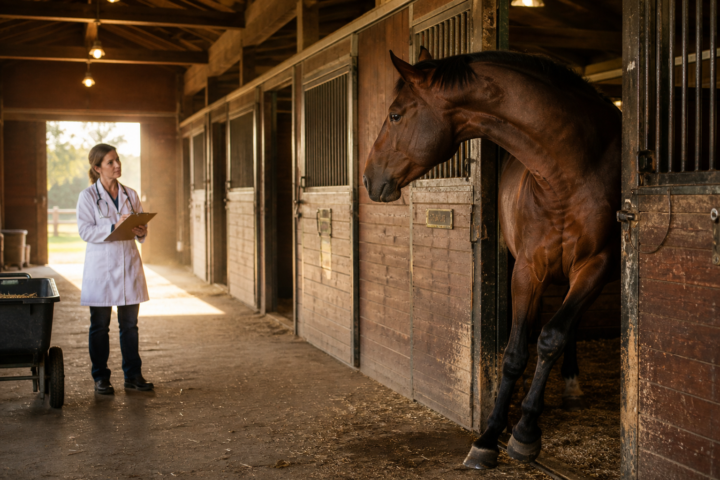
🐴 Case Study: Why Does Atlas Rock Like a Metronome?
Meet Atlas, a 7-year-old Warmblood gelding whose new owner calls because she is worried he might have a neurological problem. He sways rhythmically at his stall door every morning before breakfast, shifting his weight from one foreleg to the other like a pendulum, head and neck swinging side to side in perfect time. She asks if something is wrong with his brain or spine. You arrive at morning feeding time and watch Atlas for yourself. The swaying begins the moment the feed cart appears at the end of the aisle. It stops twenty minutes after he finishes eating. You perform a complete neurological exam. In-hand trot on a straight line, tight circles both directions, backing, tail pull. Atlas is perfect. Not a single stumble, no toe dragging, no proprioceptive deficit anywhere. This is weaving, a locomotor stereotypy. His basal ganglia have been permanently reorganized by years of social isolation and twice-daily grain feeding with minimal hay. The behavior is not neurological. It is behavioral. And it is irreversible. You counsel the owner honestly: increase turnout, add slow feeder hay nets, allow social contact. The frequency may improve. The behavior will not disappear. 💡 The takeaway: A horse that sways only at the stall door before feeding is not broken neurologically. It is telling you something went wrong long before you arrived. For more information on this condition see the classroom or follow the link below: https://www.skool.com/pre-vet-skool-9535/classroom/eada0165?md=e818bf20993643c49143555284796a86
2 likes • 26d
I really like this case on Atlas. I think this is a great example of how important it is to look beyond neurological causes and consider management factors. The fact that it’s irreversible really emphasizes how early conditions can have lasting effects on behavior.
1-9 of 9

@cristal-perdomo-4888
Graduate student in Animal Health at the University of Delaware with a focus on small animal health and clinical care
Active 10d ago
Joined Apr 19, 2026