Activity
Mon
Wed
Fri
Sun
Jul
Aug
Sep
Oct
Nov
Dec
Jan
Feb
Mar
Apr
May
What is this?
Less
More
Memberships
Bedrock Nation
163 members • Free
5 contributions to Bedrock Nation

26d •
Food for Faith 5/4/26: Surrender Sucks
I’m going to be really honest with you today… Life… just feels heavy right now. If I’m being real—what I want more than anything is to disappear for a while. To go quiet. To isolate. To just… hibernate until things feel better. But at the same time,I can feel God pressing on my heart… “Let go of control.” And I know that voice.I’ve taught that message.I’ve shared it.I believe it. But right now? I’m struggling to live it. Because the truth is—I don’t like how things look right now. This isn’t where I want to be.This isn’t how I thought things would go.This isn’t how I want to feel. And there’s a part of met that’s still clinging tightly to how I think this should all play out. And if I’m being even more honest… That tension? It’s making me feel bitter. Broken. Even… a little hypocritical. Because how do you tell people to trust God—when your own mind is fighting it? But I think this is the part we don’t talk about enough. Surrender isn’t a one-time decision. It’s a battle. A daily, sometimes moment-by-moment choice between control… and trust. And right now,I’m in that fight. Not on a stage. Not from a place of having it all figured out. But right in the middle of it. And maybe that’s the lesson. That faith isn’t proven when everything makes sense. It’s built when everything in you is resisting—and you choose to soften anyway. So today… I’m not coming to you with answers. I’m coming to you in the process. Learning—again—that God doesn’t need my control. He’s asking for my surrender. Even when I don’t like it. Even when I don’t understand it. Even when I’d rather run the other direction. And maybe you’re there too. Feeling stuck. Resisting what is. Holding to what you wish it looked If that’s you… You’re not alone. We’re both learning this together: Let go…so God can actually move. Scripture: 📖 Proverbs 3:5–6 📖 Matthew 11:28


1 like • 17d
@Leanna Cappucci I agree with being intentional and purposeful…I told my kids as they are growing up all the time: God is in Control in our family; you can make a choice but you CANNOT choose your consequence. Therefore, I pray for wisdom, guidance and discernment daily.🙏
24d •
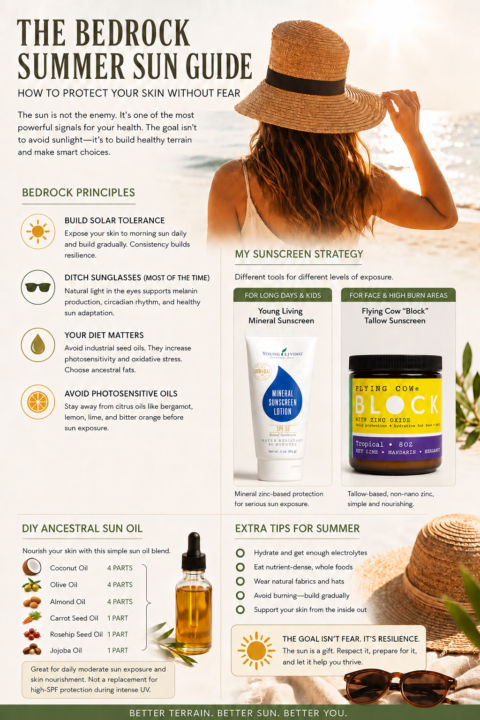
THE BEDROCK SUMMER SUN GUIDE
THE BEDROCK SUMMER SUN GUIDE How to Protect Your Skin Without Fear For years, we’ve been taught to fear the sun. Avoid it. Block it. Hide from it. But the truth is more nuanced than that. The sun is not the enemy. Sunlight is one of the most biologically important signals your body receives: * It regulates circadian rhythm * Supports mitochondrial function * Helps regulate hormones * Supports nitric oxide production * Helps produce vitamin D * Improves mood, metabolism, sleep, and immune function The problem is not the sun itself. The problem is modern terrain. Today’s skin is often: * inflamed * overexposed to processed seed oils * nutrient depleted * chemically burdened * disconnected from natural light cycles That combination changes how the body responds to UV exposure. So instead of fearing the sun… we should focus on building healthier terrain. ⸻ ☀️ BEDROCK PRINCIPLES FOR HEALTHIER SUN EXPOSURE 1. Build Your Solar Tolerance Gradually Your skin adapts to sunlight over time. One of the worst things you can do is: ❌ spend months indoors → then suddenly spend 8 hours in intense summer sun That is not ancestral living. Healthy sun adaptation looks more like: * daily morning sunlight * regular outdoor exposure * gradual seasonal adaptation * avoiding sudden overexposure The body builds resilience when exposure is consistent. ⸻ 😎 2. Avoid Wearing Sunglasses During Normal Daily Sun Exposure This one surprises people. Your eyes help regulate your body’s response to sunlight. Light entering the eyes influences: * circadian rhythm * melanin signaling * hormone production * seasonal adaptation Constantly blocking natural light with dark lenses may interfere with these adaptive signals. Now to be clear: This does NOT mean stare into the sun. And there are situations where eye protection absolutely makes sense: * snow glare * high-altitude reflection * boating/open water * safety/work environments But for normal daily outdoor exposure, allowing natural light into the eyes may support healthier light adaptation and melanin signaling.
0 likes • 18d
I don’t use sunscreen because I don’t get burn; but I do notice that I have more spots on my legs and arms, some on face also. This maybe another area of discussion….
Apr 17 •
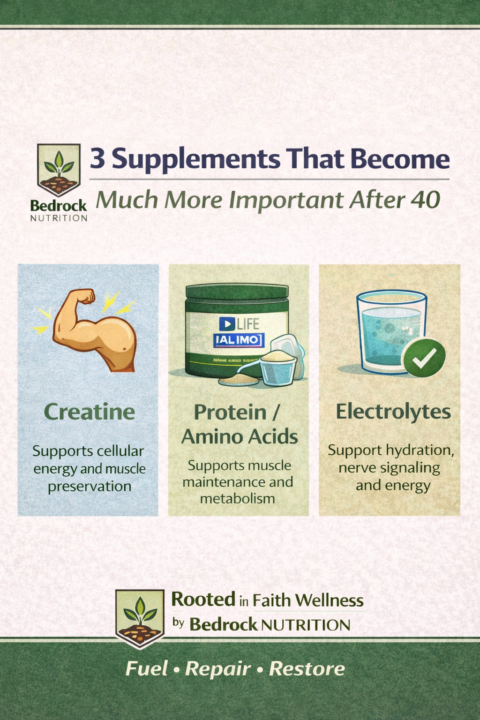
Part 1: The 3 Supplements That Become Even More Important After 40
One of the biggest shifts that happens after 40 is not just hormonal… It’s metabolic and muscular. Many men & women notice: • slower recovery• increased fatigue• more difficulty maintaining muscle• changes in metabolism• brain fog or lower resilience to stress While lifestyle is always the foundation, there are a few key nutritional tools that can make a meaningful difference when used appropriately. Three in particular stand out. 1️⃣ Creatine For decades creatine was treated as a bodybuilding supplement. But research has increasingly shown that creatine plays a much bigger role in the body. Creatine supports cellular energy production by helping regenerate ATP — the energy molecule every cell depends on. This is important for: • muscle strength and recovery• mitochondrial function• brain energy metabolism• fatigue resistance• healthy aging Your brain alone uses more than 20% of your body’s energy, and creatine helps support that demand. If you want to go deeper on this topic, read this post: 👉 Creatine Is Not Just for the Gymhttps://www.skool.com/bedrock-nation-8489/creatine-is-not-just-for-the-gym?p=6421708f 2️⃣ Protein / Essential Amino Acids Muscle preservation becomes increasingly important with age. After about age 35–40, we naturally begin losing muscle mass if we are not intentionally supporting it. Adequate protein intake helps: • maintain lean muscle mass• support metabolism• stabilize blood sugar• support recovery and repair Many people struggle to hit their protein targets, especially early in the day. This is one reason I often recommend essential amino acids in the morning as an easy way to support muscle protein synthesis and help people reach their daily protein goals. 3️⃣ Electrolytes Electrolytes are one of the most overlooked pieces of metabolic health. They play a critical role in: • hydration• nerve signaling• muscle contraction• energy production• blood pressure regulation
0 likes • Apr 18
I have not used the I Am amino yet, not sure if I get the essential amino acids. I mixed Collagen, Load (only 1 scoop) and slim+ and drink first thing in the morning. (used to only drink slim+ by itself for gut health when it first came out). I drink 2 servings of electrolytes daily. Not sure if I get enough of creatine daily…
0 likes • Apr 20
@Leanna Cappucci I think the minimum of 1pound of meat daily for me. I don’t take the slim+ for suppressing my appetite or for energy, I drink slim+ for the healthy gut benefit ever since IDlife launched slim+
Jan 14 •
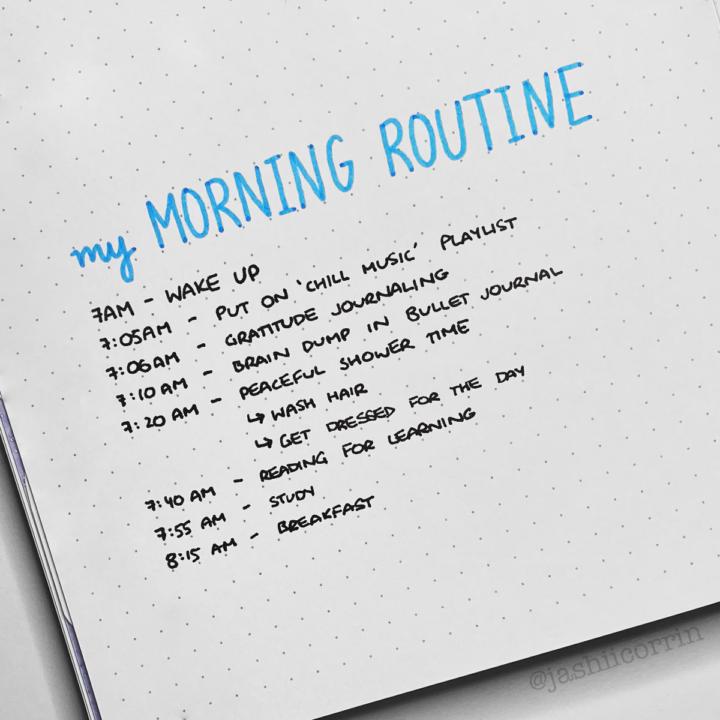
MORNING — Simple/Beginner Routine (10–30 minutes)
MORNING — Simple/Beginner Routine (10–30 minutes, no perfection needed) Today I posted my own morning routine on Facebook - for those interested in a paired down beginner version to create consistency and build better habits, I’m posting one here! (my original facebook post is here: https://www.facebook.com/share/p/1MkfaGhPCc/?mibextid=wwXIfr) If you’re overwhelmed, start here. This is the “minimum effective dose” morning routine that builds energy + blood sugar stability. Step 1 (first 5 minutes): Hydrate - 16–24 oz water - Add a pinch of sea salt or electrolytes if you have them Step 2 (within 30–60 minutes): Protein-first Pick ONE: - 3 eggs + fruit (or sautéed veggies) - FAGE full fat (5%) plain Greek yogurt + berries (or Good Cultures full fat fermented cottage cheese) - 1 scoop of I Am Amino - Leftovers: meat + avocado - Goal: ~25–35g protein (start with 20g if that feels hard) Step 3 (10 minutes): Light movement Pick ONE: - 10–20 min easy walk - 5–10 min mobility + stretching - 10 minutes on LifePro Vibration Plate - 3 rounds: 10 squats + 10 wall pushups + 30 sec plank(Keep it easy. Consistency > intensity.) Step 4: Caffeine rules (optional) If you drink coffee: - Have it after water + some protein - Add electrolytes later in the morning if you tend to feel shaky/tired and to replace magnesium loss. Step 5: One anchor habit Choose ONE for the next 7 days: - Protein-first breakfast - 10-minute walk - No phone for the first 10 minutes - In bed 30 minutes earlier That’s it. Do this 5 days/week and you’ll feel a difference. If you want me to personalize this to your body + schedule, fill out the free assessment: https://adobe.ly/41cHOYw Comment back with your biggest struggle: 1. mornings are chaotic 2. not hungry early 3. cravings / coffee dependence 4. fatigue / brain fog…and I’ll tell you which tweak to start with.
0 likes • Jan 14
Drink a full glass of water before I get out of bed; do morning routine. Drink slim+ mixed with collagen and load eat breakfast focus on protein later (10:30 ish) For movement every day is different: fitness class, golf when it is scheduled. The day is not scheduled I don’t do anything (I need to be intentional with my day off to go to gym or walk). Is it ok to eat later for my first meal? How consistent of time of day is important? On Tuesdays & Thursdays, I may not eat until 1 or 2 pm after my round of golf and I would order a hamburger for lunch to get my protein.
Dec '25 •
Crunchy Chicken Patties (Kid-Approved + Reboot-Friendly!)
I’ve been making chicken + cheese nuggets for a few years as an easy, high-protein staple. Last week, one of our team members, Kate Springer, posted a chicken patty she made that was breaded with crushed pork rinds—and I immediately messaged her because it was such a smart, kid-friendly upgrade. After a quick chat, I blended my original recipe + her pork rind “breading” method and tested a slightly different version… and y’all—huge win. My teens crushed them, so I knew I had to share. Inside you’ll find: - The Crunchy Chicken Patties/Nuggets recipe (pan-fry + air fry for the perfect crunch) - My high-protein ranch dip + a dry ranch seasoning mix you can keep on hand Make a batch, freeze extras, and let me know how your family likes them! Note: Contains Dairy
0 likes • Dec '25
Thank you for the recipe. I was just curious, can you use ground other meat instead of chicken? I know we get stuck on chicken nuggets; but you mentioned that commercial chicken doesn’t have the same nutrients dense as other meat.
1-5 of 5