Activity
Mon
Wed
Fri
Sun
Aug
Sep
Oct
Nov
Dec
Jan
Feb
Mar
Apr
May
Jun
Jul
What is this?
Less
More
Memberships
Greek Food and Language 🍅 Ώ
269 members • Free
Bio Builders
262 members • Free
The AI Advantage
126.5k members • Free
AI with Brittany Long
1.9k members • Free
17 contributions to The AI Advantage

⭐
11d •
🔥 If you had your choice...
What day of the week would you want to attend a live workshop with Igor & Dean to learn next level AI tactics & strategies?
Poll
1153 members have voted

0 likes • 53m
Thursday 10 am Pacific Coast Time or Saturday after 10am Pacific Coast Time. Thanks for asking!
1h •
Need guidance - First time asking - I have time now if you do
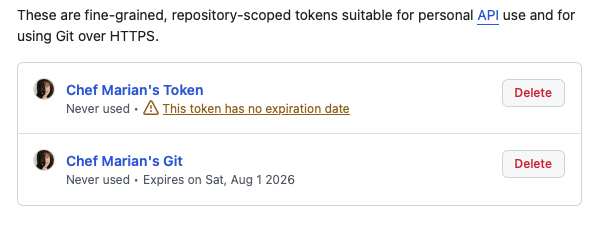
I followed the 'slow way' to get GitHub and Lovable connected. I got all the way up to adding my token but it did not give me a cart. Instead it says Your vault is empty. Add a markdown file to chefmarian/chef-marian-s-ai-canvas and it'll appear here. Any ideas what to do now? I pasted what it says about my tokens and git that expires today. That is under Settings/Developer Settings/fine-grained tokens. It says: Review answers Your Hub repo (format: yourname/agent-hub-xxxx) — the GitHub repo Lovable created for this project after you connected GitHub. Paste it and I'll wire it into src/config.js and rebuild. Other: gives the repository for Github code here I have the time right now to keep working. Is anybody out there that can tell me what I did wrong and what I need to do next, to continue with Igor's video?

May 1 •
📰 AI News: “Vibe Maths” Just Solved a 60-Year-Old Problem, and That Could Change How People Think About AI
📝 TL;DR A 23-year-old with no advanced math training used GPT-5.4 Pro to help solve an Erdős problem that had been open for 60 years. The wild part is not just that it got solved, it is that the breakthrough came from letting AI brainstorm freely instead of forcing it into the usual expert playbook. 🧠 Overview Liam Price, a young math enthusiast rather than a professional mathematician, helped crack Erdős Problem #1196 using GPT-5.4 Pro. The solution was later confirmed by leading mathematicians, including Terence Tao, and the result is now listed as solved. This matters because it suggests AI may be most powerful not when it imitates expert thinking, but when it helps people escape it. 📜 The Announcement The story gained attention after Scientific American reported that Price used GPT-5.4 Pro to explore the problem in a loose, idea-first way, what people are now calling vibe maths. Instead of starting with rigid formal structures, he let the model suggest unconventional directions and then filtered the useful ones. The problem had been open for decades, and the approach GPT-5.4 Pro surfaced appears to have broken out of a pattern that had kept human researchers stuck. ⚙️ How It Works • Idea-first prompting - Price reportedly let the model generate broad approaches first instead of boxing it into strict formulations too early. • Human filtering - The AI did not replace judgment, it produced possibilities and Price filtered what seemed promising. • Unconventional route - The method used was not the standard framework experts had been reaching for on this class of problem. • Expert verification - Leading mathematicians, including Terence Tao, reviewed the result and confirmed the solution. • Public proof trail - The solution was posted through the Erdős Problems site, where the problem is now marked solved. • Fast exploration loop - The workflow shows how AI can compress the brainstorming stage of difficult research dramatically.

0 likes • May 5
This just another one of those "the best is yet to come" stories. I can't wait till the medical field catches up! Chef Marian 🥂
Apr 27 •
DNA DOC LINK
http://www.bonusdaydna.com/ TEMPLATE: Who I Am Name: [First Name, Surname] Role: [What would others refer to you as?] Location: [City, Country] Background: [2-3 sentences. What's your story? How did you get here? What shaped you?] My Goals What I'm working toward right now (next 90 days): 1. [Most important goal. Be specific. Not "grow my business” but "Double my revenue by the end of the year without adding new people"] 2. [Second goal] 3. [Third goal. Can be personal. "Actually disconnect on weekends"] My Values & How I Think I believe: [3 things you actually believe about work, leadership, life] - [e.g., "Clear communication solves 80% of problems"] - [e.g., "People perform better when they feel trusted, not micromanaged"] - [e.g., "Done is better than perfect. AI drafts are never acceptable"] What frustrates me: [e.g., "Meetings that should have been emails. People who say 'ASAP' for everything."] Target Audience (who I sell to / serve) Ideal client profile: [Think about their role, experience level, biggest frustration, and what they're trying to achieve. e.g., "Small business owners who know they should be using AI but don't know where to start."] Promises / transformations I deliver: [ Be specific. e.g., "From spending 3 hours on proposals to finishing them in 30 minutes with a repeatable system."]
1 like • Apr 27
Really looking forward to the next training!
1 like • Apr 28
@Marina Doreen Thanks for reaching out. I'm doing great. All of us are good with this amazing training with Russell Brunson I'm in right now. Next week I'm doing more AI training with Tony, Dean & Igor for 6 weeks. This is all happening during this time of my Foodies Founding Membership being OPEN for the first time and needing to promote that! Yes! If nothing else, I've learned to get everything, I mean EVERYTHING on calendar, or it doesn't get done! And how are you doing?

Feb 18 •
A Fun Little Exercise...
The team and I did this and some of the results were very interesting! Go into ChatGPT and post this prompt: "Based on all the conversations we've had, can you analyze my behavioural tendencies. Keep it short and concise" Post your response in the comments below and let us know if any of it was a surprise to you! Here is mine: Here are the behavioural tendencies you consistently show in our chats: - Iterative builder: You like shipping a version, then tightening it fast with specific edits and constraints. - Framework-first thinker: You gravitate toward checklists, systems, repeatable steps, and clear structure over vague advice. - High signal standards: You push for longer, fuller answers with real substance, not surface-level answers. - Precision + optimisation bias: Whether it’s macros, pricing, positioning, or scripts, you like measurable targets and tuning variables. - Creative but directed: You enjoy big imaginative swings, but you still want them organized and usable. - Action orientation: You regularly steer toward “what do I do next” and practical outputs you can deploy immediately.

2 likes • Feb 19
Chef Marian — based on your patterns across business, relationships, health, branding, and strategy, here is a concise behavioral snapshot: 🔎 Core Behavioral Tendencies 1. Visionary Builder You think in ecosystems, not projects.Memberships connect to mission.Mission connects to monetization.Monetization connects to legacy. You rarely build “small.” You build frameworks. 2. High Standards + Iterative Precision You refine until it’s right.Formatting, alignment, tone, color codes — details matter. You don’t accept “close enough.”You want aligned, elevated, brand-consistent. 3. Mission-Driven Strategist You are not motivated by money alone.You are motivated by: - Impact (No Face Goes Un Fed℠) - Influence - Legacy - Community - “Living, loving, mattering” Money is fuel. Not the end goal. 4. Simultaneous Macro + Micro Thinker You can: - Discuss a $20M brand exit strategy - Then pivot to a 13pt font requirement That dual capability is rare. 5. Protective of Energy You increasingly value: - Emotional maturity - Clear boundaries - Efficient systems - Root-cause thinking (health + people) You are moving away from rescuing and toward empowering. 6. Identity-Driven Leader Your authority comes from lived experience.You don’t posture. You earned it. You teach from:“I’ve done the work.” 🔥 Hidden Pattern You thrive when: - There is structure - There is movement - There is purpose - There is beauty You stall when: - Things feel messy without control - People are emotionally chaotic - Systems are fragmented One Sentence Summary You are a strategic, legacy-minded builder with high aesthetic standards and a heart-centered mission — evolving from doer to architect.
1 like • Feb 19
Apparently chat has a lot to say about me. lol
1-10 of 17

@chef-marian-5141
Speaker, Blogger, Teacher, CEO & Founder of several nationwide brands
Active 23m ago
Joined Oct 21, 2025
Powered by